Manual vs. Drone Cleaning Solar Panels, Which One Is More Cost-effective?

Dust and pollution make it necessary to clean solar panels which people install on rooftop solar systems and solar power plants. According to the China Photovoltaic Industry Association (CPIA), dust can reduce panel efficiency by 15–30%, and corrosive particles like salt and PM2.5 can cause hot spots, shortening panel lifespan by 2–5 years.
The two main cleaning methods which exist today include manual cleaning with brushes and water and drone cleaning for solar panels. Both methods remove dirt from surfaces but the main question which needs to be answered is about which method provides better operational efficiency.
Advantages and Limitations of Manual Cleaning
Advantages
Solar panels require traditional manual cleaning which uses professional cleaners to operate high-pressure water guns and soft brushes and special cleaning products. The method enables workers to see different types of dirt which exists on solar panel surfaces because they can observe various types of contamination. The experienced workers can effectively protect all glass surfaces and backsheet components from damage which current drone systems cannot fully ensure.
The manual cleaning method serves as the most effective technique for controlling operations in large-scale photovoltaic power plants. The skilled cleaning teams can achieve complete panel cleaning through their ability to control water pressure and brush hardness and cleaning sequence methods. The “Photovoltaic Operation and Maintenance Technology Guide” states that manual cleaning methods enable small-scale photovoltaic systems to achieve above 95% cleaning efficiency.

Limitation
The process of manually cleaning solar panels provides operational flexibility but presents specific restrictions. First, this method requires many workers to operate continuously for multiple days to achieve photovoltaic power plant cleaning, which leads to low operational efficiency. Second, it carries significant safety risks, as many solar panels are installed on rooftops or elevated structures, which creates hazards who maintenance workers who need to clean these panels. The cleaning costs of a project can change because the maintenance expenses depend on the labor costs and the costs associated with peak time scheduling.
Advantages and Applications of Drone Cleaning
Efficiency and Data Support
The Drone uses drone cleaning with high-pressure water mist and brush head cleaning systems to clean photovoltaic panels which it tracks through its predefined cleaning routes. The 2022 report from SolarPower Europe demonstrates that drone cleaning with large-scale photovoltaic power plants enables three to five times faster cleaning operations than traditional manual cleaning methods. The long-term advantages of drones include both decreased labor expenses and simplified operational planning which makes them ideal for remote and elevated photovoltaic systems.

Safety and Authority
Drones operate in high-risk environments, avoiding accidents which occur when personnel work at heights. Research from Fraunhofer ISE in Germany shows that two years of drone cleaning operations at large photovoltaic power plants resulted in a power generation efficiency increase of approximately 5% which occurred more frequently in arid and dusty conditions.
The International Renewable Energy Agency recommends combining drone cleaning with periodic manual inspections for optimal operation and maintenance results.
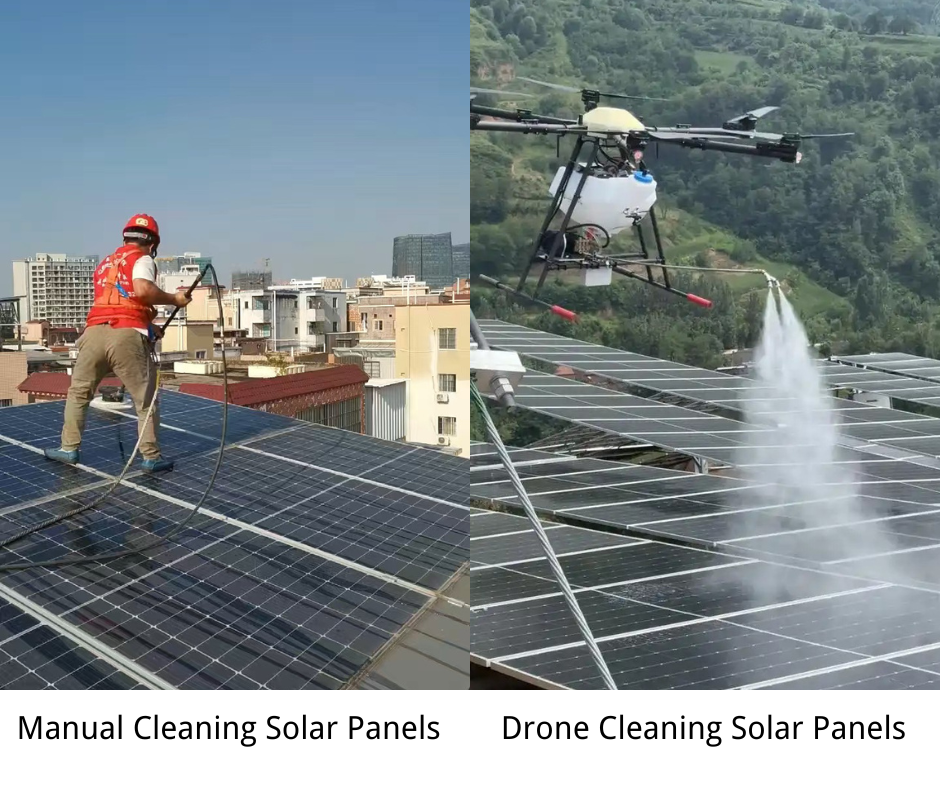
Manual vs. Drone Cleaning Solar Panels
| Metric | Manual Cleaning | Drone Cleaning |
| Cleaning Efficiency | High (best for small areas) | High (best for large areas) |
| Time Cost | High | Low |
| Safety Risk | High | Low |
| Cost Stability | Highly variable | Stable in the long term |
| Technical Requirements | Cleaning experience | Drone operation and maintenance skills |
| Suitable Scenarios | Small solar plants, complex environments | Large solar farms, elevated or remote locations |
The table shows that manual cleaning works better with small-scale solar panels which use precision processing. The cleaning process becomes more efficient and safer with drone cleaning solar panels when applied to large-scale continuous arrays and dangerous operational spaces.
Best Practices Recommendations
The current cleaning method used in photovoltaic systems does not achieve a successful balance between efficiency and cost and safety requirements. A more systematic cleaning strategy is needed to improve overall operation and maintenance efficiency.
1. Hybrid Cleaning Model Combining Manual and Drone Cleaning
The hybrid cleaning system uses both manual cleaning methods and drone technology to clean large photovoltaic power plants. Drones can efficiently perform routine solar panel cleaning tasks in wide areas of photovoltaic power plants whereas manual cleaning methods handle difficult stains and delicate equipment inspection work better. The hybrid system achieves operational efficiency while maintaining high standards of cleaning performance.
2. Developing Cleaning Cycles Based on Contamination Levels
Not all solar panels require frequent cleaning. The scientific method determines cleaning schedules through three factors which include tracking dust buildup and environmental contamination and monitoring power output changes. The system enables two benefits because it prevents extra cleaning work and it provides scheduled system checks which occur before power output starts to decline.
3. Optimizing Cleaning Efficiency with Data
Modern drone systems can record their flight paths together with their cleaning coverage information. The operational data enables the maintenance team to evaluate cleaning performance which helps them to improve their work processes. The operational time can be decreased by modifying both the drone flight paths and the cleaning sequences.
4. Prioritizing Automation in Large-Scale PV Projects
For large-scale photovoltaic power plants, automated cleaning technologies (such as drone cleaning systems) can typically significantly improve efficiency and reduce long-term operation and maintenance costs. Therefore, introducing automated cleaning solutions during the project planning phase often yields a higher return on investment.
Related Products