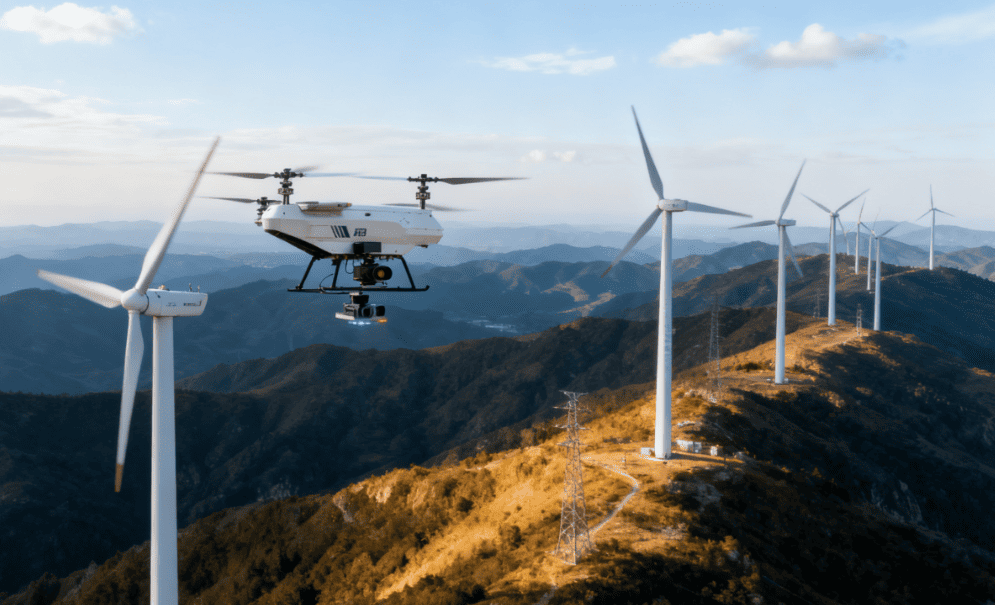
Drone Inspections Empower Mountain Wind Farms
Project Overview
Located in a mountainous area at an altitude of more than 2,000 meters, the wind farm operates 80 wind turbines, each with a rated capacity of 3 MW and blade lengths of approximately 68 meters.
Inspecting these large turbine blades in a high-altitude environment presents significant challenges for conventional manual inspection. Workers need to climb to the top of the turbines and inspect the blades at height, creating both efficiency and safety concerns.
A traditional manual inspection takes approximately 2 hours per turbine.
To improve inspection efficiency and reduce personnel exposure to work-at-height risks, the wind farm introduced drone-based blade inspection.
Equipped with high-definition zoom cameras and ultrasonic flaw detection equipment, the drones can perform a comprehensive inspection of a single turbine blade in approximately 15 minutes.
The inspection data enables maintenance teams to identify minor blade cracks, coating defects, and other potential damage at an early stage, allowing timely maintenance before defects develop into more serious failures.
The Challenge
High-Altitude Operating Environment
The wind farm is located at an altitude of more than 2,000 meters, creating additional challenges for inspection and maintenance personnel.
Working in such an environment requires careful consideration of both operational efficiency and personnel safety.
Large Turbine Blades
Each turbine has blades approximately 68 meters long, making comprehensive manual inspection difficult.
Inspectors must access elevated turbine structures and examine large blade surfaces for potential defects.
Long Manual Inspection Times
Traditional inspection requires approximately 2 hours for each turbine.
For a wind farm with 80 turbines, repeated manual inspections can require significant time and manpower.
Work-at-Height Safety Risks
Manual inspection requires workers to climb to the top of turbines and work at height, creating a potential risk of falls and increasing the complexity of inspection operations.
Difficult Detection of Early-Stage Damage
Small cracks, coating defects, and other early-stage blade damage may be difficult to identify through conventional visual inspection alone.
Detecting these defects early is essential for preventing more serious blade failures and unplanned turbine downtime.
The Drone Inspection Solution
To address these challenges, the wind farm introduced a drone-based turbine blade inspection system.
The drones are equipped with:
- High-definition zoom cameras
- Ultrasonic flaw detection equipment
- Aerial flight capabilities for turbine blade inspection
- High-resolution image acquisition
- Inspection data collection
The drone can approach and inspect large turbine blades without requiring workers to climb the turbine.
A comprehensive inspection of a single turbine blade can be completed in approximately 15 minutes, significantly reducing inspection time compared with traditional manual methods.
How the Drone Inspection Works
1. Prepare the Inspection Mission
The inspection team identifies the turbine to be inspected and establishes the required inspection area and flight plan.
2. Deploy the Inspection Drone
The drone is deployed around the turbine and approaches the blades while maintaining a safe inspection position.
3. Capture High-Resolution Images
The high-definition zoom camera captures detailed images of the blade surface.
This allows inspection personnel to examine areas that may be difficult to assess from the ground.
4. Perform Flaw Detection
Ultrasonic flaw detection equipment provides additional inspection data to help identify potential defects that may not be obvious through visual inspection alone.
5. Identify Blade Defects
The collected high-resolution images and flaw detection data are analyzed to identify issues such as:
- Minor cracks
- Surface damage
- Coating defects
- Other potential blade abnormalities
6. Support Preventive Maintenance
When defects are identified, maintenance teams can arrange repairs before the damage develops into a more serious problem. This supports a more proactive approach to wind turbine maintenance.
Key Technologies
High-Definition Zoom Camera
High-resolution imaging allows detailed inspection of large blade surfaces from an aerial position. It provides maintenance teams with visual data that can be reviewed and analyzed after the inspection.
Ultrasonic Flaw Detection
Ultrasonic inspection technology provides additional flaw detection data, supporting the identification of potential blade defects beyond conventional visual inspection.
Drone-Based Aerial Inspection
The drone provides flexible access to turbine blades without requiring inspectors to physically climb to the top of the turbine. This helps reduce the need for work at height during routine blade inspection.
High-Resolution Inspection Data
The combination of high-resolution images and flaw detection data provides maintenance teams with more detailed information for assessing blade condition.
Project Results
The implementation of drone inspection delivered significant improvements in wind turbine maintenance efficiency.
Inspection Time Reduced from 2 Hours to 15 Minutes
A comprehensive inspection of a single turbine blade can be completed in approximately 15 minutes, compared with around 2 hours using traditional manual inspection methods.
This significantly improves the efficiency of large-scale turbine inspection operations.
23 Blade Damages Identified in 2023
Drone inspections identified a total of 23 blade damages in 2023. Early detection allowed the wind farm to arrange timely repairs and reduce the risk of blade failures developing into more serious incidents.
120 Hours Less Downtime per Turbine
Each turbine reduced downtime by approximately 120 hours per year, helping improve overall equipment availability.
Approximately 360,000 kWh More Power Generation
The reduction in downtime contributed to approximately 360,000 kWh of additional annual power generation per turbine.
More Than RMB 2 Million in Annual Economic Benefits
The improved turbine availability and power generation generated more than RMB 2 million in additional annual economic benefits.
From Manual Inspection to Predictive Maintenance
Traditional wind turbine inspection often requires significant manpower, extended inspection times, and work at height.
Drone-based inspection provides a more flexible alternative by bringing inspection equipment directly to the turbine blades.
In this project, the combination of high-definition aerial imaging and ultrasonic flaw detection enabled the wind farm to identify blade defects earlier and respond before minor damage developed into more serious failures.
This creates a shift from reactive maintenance toward a more proactive and data-driven approach to wind turbine asset management.
A Smarter Way to Inspect Wind Turbine Blades
For high-altitude and mountainous wind farms, maintaining turbine blades efficiently is essential for both operational safety and power generation.
This project demonstrates how drone inspection can help wind farm operators:
- Inspect large turbine blades faster
- Reduce personnel exposure to work-at-height risks
- Identify minor defects at an early stage
- Reduce turbine downtime
- Increase annual power generation
- Improve the economic value of wind farm assets
By combining drone-based aerial inspection, high-definition imaging, and ultrasonic flaw detection, wind farm operators can gain a more efficient and proactive approach to turbine blade maintenance.