
Solar Power Inspection: Guide to Improving Inspection Efficiency

As global solar installed capacity continues to grow, ensuring the efficient and stable operation of large-scale solar farms has become increasingly vital. Because photovoltaic (PV) modules are exposed to harsh environments, such as high temperatures, wind, sand, rain, and snow, over long periods, they are highly susceptible to issues like module aging, hot spot effects, electrical failures, and soiling. These problems not only degrade power generation efficiency but also pose serious safety risks.
Consequently, solar farm inspection has become a cornerstone of solar Operation and Maintenance (O&M). With the widespread application of drones, thermal imaging, and artificial intelligence, solar inspection is rapidly evolving from traditional manual checks toward intelligent automation.
This article explores the importance of solar farm inspection, common inspection methods, and typical defects. Let’s dive in!
Table of Contents
What is Solar Farm Inspection?
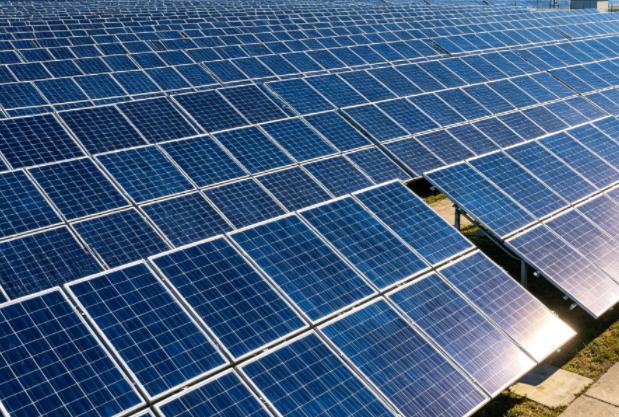
Solar farm inspection refers to the systematic, periodic health checks performed on utility-scale or commercial and industrial (C&I) solar power plants. Its core objective is to leverage advanced diagnostic tools to precisely identify latent physical or electrical defects that could compromise power generation efficiency, system safety, and equipment lifespan before total equipment failure occurs.
In a standard professional inspection workflow, the process typically covers five core systems:
- Solar Panels: Monitoring any damage or hot spots on the surface of the PV cells.
- Inverters: Verifying the operational state, cooling capacity, DC and AC conversion loss, and internal component alarms.
- Electrical Connections: Inspecting the connection points within the terminal boxes and distribution panels to identify loose connections and overheated connection points.
- Support Structures: Inspecting the support structures to determine whether they are mechanically sound, with no coating or metal corrosion damage.
- Cabling System: Measuring the insulation resistance to the earth of the DC/AC cables, determining if there is sheathing damage to the cables, and rodent bites to cause short circuits.
Why is Solar Farm Inspection Important?
Solar farms are long-term outdoor assets characterizable as “high-value assets requiring heavy O&M.” Regular professional inspections are not merely a compliance cost, they are a strategic investment directly linked to the plant’s core financial indicators:
Maximize Energy Production
Even a minor fault or localized shading on a single string can cause a drastic drop in the power output of the entire string or array due to the “barrel effect” (the bottleneck principle). Timely inspections enable rapid troubleshooting to restore the plant to its full generating capacity.
Reduce Maintenance Costs
Following a Preventative Maintenance strategy allows operators to intervene before hot spots escalate into fires or micro-cracks lead to scrapped modules. The cost of early intervention is significantly lower than that of Reactive Maintenance (emergency repairs after a failure occurs).
Improve Asset Lifespan
Solar modules are typically designed for a lifespan of 25 to 30 years. By monitoring PID degradation and structure corrosion, O&M teams can implement measures, such as installing anti-PID restoration devices or reapplying anti-corrosion coatings, to ensure the asset remains productive throughout its lifecycle.
Ensure Safety Compliance
Overheating electrical connections are the primary cause of DC arc flash fires in solar plants. Systematic inspections effectively mitigate property damage and personal injury risks. Furthermore, these checks are mandatory to satisfy insurance claims and vertical industry safety audits.
Increase Return on Investment
By boosting the system availability rate and lowering the Levelized Cost of Energy (LCOE), inspections directly shorten the payback period, making the asset manager’s financial statements far more attractive.
Common Problems Found During Solar Farm Inspection
During actual inspections, several types of defects emerge most frequently. These are the “invisible killers” behind lost power generation:
Hot Spots
The issue of hot spots is among the most damaging defects that commonly appear in solar panel inspections. The reason why some cells become unable to produce electricity and instead consume electricity themselves when they become shadowed, damaged, or experience open circuits is overheating, which often causes temperatures to rise by dozens of degrees compared to healthy cells. Hot spots can cause damage to encapsulants, break glass, and even result in fires.
Cracked Solar Panels (Module Cracks)
This defect consists of physical cracking (as well as its microscopic version, known as micro-cracking), both of which can be identified with specific equipment. Micro-cracks can develop because of natural events such as hail or strong winds, but may also appear due to inappropriate human actions, like walking on solar panels.
Delamination
Delamination occurs when the bonds fail between the solar module’s protective glass, EVA encapsulation layer, solar cells, and backsheet, causing them to separate. This separation allows air and moisture to penetrate the module, triggering cell oxidation and corrosion. In infrared imagery, this typically manifests as distinct temperature anomalies.
PID (Potential Induced Degradation)
PID is a surface degradation phenomenon driven by high potential differences between the high-voltage DC string array and the grounded frame, causing charge carriers to drift. PID can cause a catastrophic drop in a string’s output power (sometimes up to 50%). On a thermal image, it usually appears as large, uniform blocks of thermal anomalies on modules closest to the negative terminal.
String Failures
String failures occur when an entire string (typically composed of 20 to 26 series-connected modules) goes open-circuit due to a blown fuse, tripped circuit breaker, or damaged diode in a junction box. This type of fault instantly wipes out hundreds or thousands of watts of generation capacity.
Soiling
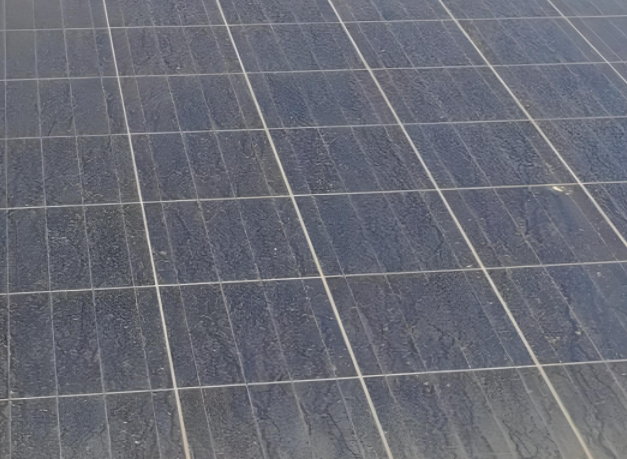
Dust, bird droppings, sand, snow, and vegetation overgrowth (soiling) are the most common causes of reduced efficiency. Long-uncleaned soiling not only blocks sunlight but also highly risks inducing localized hot spots.
Traditional vs. Drone-Based Solar Farm Inspection
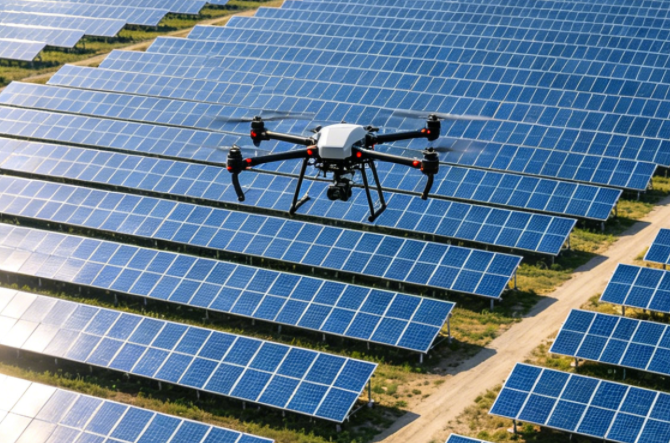
As UAVs and sensors become mature technology, manual inspection by “walking grid” is quickly becoming an outdated process compared to aerial inspection using drones. The following table will compare the two inspection types based on important indicators:
| Metrics | Manual Inspection | Drone-Based Inspection |
| Speed | Extremely Slow: Typically takes days or weeks; technicians must walk rows with handheld equipment. | Extremely Fast: Captures data across megawatt (MW) or gigawatt-scale plants within hours. |
| Coverage | Limited: Due to terrain and time constraints, usually relies on 5%–10% spot-checking, leaving blind spots. | 100% Full Coverage: Orthomosaic imagery covers the entire array, ensuring every module and joint is recorded. |
| Safety | Lower: Technicians work in high temperatures, steep terrain, or roofs, facing high-voltage and arc flash risks. | Extremely High: Operators control flights remotely from the ground, achieving contact-free high-altitude operations. |
| Data Record | Manual/Fragmented: Relies on manual photos and paper logs; data is fragmented and lacks precise spatial coordinates. | Automated/Digital: Automatically geotagged with centimeter-level GPS accuracy to create traceable Digital Twin maps. |
| Hot Spot Detection | Difficult: Handheld thermal cameras are limited by angles and distances, making it easy to miss defects due to poor field of view. | Effortless: High-altitude top-down viewing allows radiometric cameras to instantly capture thermal anomalies across arrays. |
| Overall Cost | High: Driven by long hours of labor, travel expenses, and the hidden costs of delayed fault detection. | Low: While initial equipment investment is higher, marginal costs are extremely low, dramatically speeding up revenue recovery. |
By introducing drone inspection solutions, the inspection time for utility-scale solar farms can be slashed from weeks to hours, boosting O&M efficiency by more than 10-fold.
How Drones with Thermal Imaging Improve Solar Farm Inspection?
Among all drone payloads and diagnostic methods, infrared thermal imaging is undisputedly the core technology of modern solar inspections.
What Is Thermal Imaging?
Any object with a temperature above absolute zero emits infrared radiation. Infrared thermal cameras capture this radiation, convert it into quantitative temperature data, and generate an intuitive “Thermogram.” In a solar farm, healthy modules dissipate heat evenly, whereas defective areas exhibit unique temperature elevations.
Detect Invisible Defects
Many early-stage defects, such as internal cell micro-cracks, short-circuited diodes, or poor electrical contacts, are completely invisible to the naked eye under visible light (RGB) cameras. Thermal imaging brings these “invisible defects” to light:
Hot Spots: Manifest as bright, high-temperature “white spots” on the thermogram.
Faulty Cells: Individual cells appear as rectangular hot zones due to open circuits or increased internal resistance.
Connector Heating: Electrical joints show pinpoint-isolated extreme temperatures due to excessive resistance.
String Issues: An entire disconnected string stops working and skips the heat-absorption process of photovoltaic conversion. Under specific sunlight conditions, this manifests as an entire row of modules showing a uniformly higher temperature.
Improve Inspection Accuracy
Compared to historical manual spot-checking using multimeters or I-V curve tracers, infrared thermal inspections offer higher detection confidence. They provide 100% spatial coverage and digitize temperature data from every inspection. This allows historical data comparison, enabling teams to precisely evaluate how defects evolve over time.
What is the Solar Farm Inspection Process?
A professional solar inspection compliant with international standards (such as IEC 62446-3) typically follows a standardized six-step process:
Step 1. Flight Planning
Automated flights are done according to the plant’s CAD diagrams, GIS geographical data, or satellite images made available by pilots. Overlaps should be selected with care, for instance, front overlaps greater than 80% and side overlaps above 60% to guarantee proper image stitching.
Step 2. Data Collection
During optimal weather windows (typically requiring irradiance > 600 W/m2, wind speed < 6 m/s, and clear, cloudless skies), drones equipped with synchronized orthophoto and radiometric thermal cameras execute high-altitude data capture.
Step 3. AI-Based Analysis
Thousands of captured thermal and RGB images are imported into a professional data processing platform. Trained AI computer vision algorithms automatically register, stitch, and bounding-box all areas with thermal anomalies.
Step 4. Defect Classification
Based on industry standards (such as the severity of the temperature delta ΔT ), identified defects are categorized into different severity levels (e.g., Mild, Medium, Critical) and diagnosed by fault type (e.g., hot spot, open string, or shading).
Step 5. Maintenance Recommendations
Based on defect severity, the system automatically generates a prioritized Punch List (maintenance work orders), guiding field technicians straight to the exact fault location with the correct spare parts.
Step 6. Reporting
A professional inspection report is generated for asset owners or insurance companies, featuring defect statistics charts, pinpoint localization maps, and estimated recoverable power generation revenue.
How Often Should a Solar Farm Be Inspected?
Inspection frequency is not one-size-fits-all; it requires balancing detection costs against the financial returns of early fault detection. The industry-recommended baseline frequencies are as follows:
| Inspection Type | Recommended Frequency | Key Scope |
| Visual Inspection | Monthly | Relies on on-site personnel or low-altitude flights to check for large-scale vegetation shading, fence damage, or obvious vandalism. |
| Drone Panorama (RGB) | Quarterly | Rapidly scans for module soiling, physical damage after high winds, and jammed tracking structures. |
| Thermal Imaging | Bi-annually | Conducts full-scale infrared thermal scans to troubleshoot hidden hot spots, faulty diodes, and string-level electrical defects. |
| Detailed Audits | Annually | A deep, comprehensive “health check” combining infrared scans, I-V curve spot-testing, inverter efficiency analysis, and ground resistance testing. |
Pro Tip: For solar farms located in desert environments like Inner Mongolia or the Middle East, or areas with heavy pollution and high bird populations, soiling accumulates rapidly and easily triggers hot spots. In these environments, it is highly recommended to increase drone inspection frequency to quarterly or even monthly.
How to Choose the Right Solar Farm Inspection Solution
If you are looking to introduce an inspection solution to your solar assets, whether by building an in-house team or hiring a third-party service provider, evaluate potential solutions against these core technical criteria:
Thermal Camera Resolution
According to the IEC 62446-3 standard, the resolution of infrared cameras used for solar inspection must not be lower than 640×512. Lower resolutions cannot provide sufficient Ground Sample Distance (GSD) at high flight altitudes, causing small hot spots to be missed entirely.
Drone Flight Efficiency
Evaluate the stability of the drone platform under harsh outdoor conditions like high winds, as well as its single-battery flight time (battery life) in terms of megawatts covered per flight.
AI Analytics Capability
Has the provider’s algorithm been trained on massive datasets of real-world solar defects? Can it automatically filter out “false hot spots” caused by glare or specular reflection off the module glass?
Reporting Quality
Does the report provide an interactive, cloud-based digital map? Does it support precise fault localization down to the specific Row – Column – Module ID?
Industry Experience
A professional team well-versed in high-voltage solar safety protocols (such as OSHA and NFPA 70E) ensures compliant, highly efficient on-site operations.
Final Thoughts
The inspection process at solar farms has moved from being an optional and mundane task to become a crucial component of managing assets at a modern solar farm. The utilization of technology such as drones, thermal imaging cameras, and AI will help in identifying any module defects and maximizing profitability through conversion of sunlight to green energy.
In today’s era of large-scale solar asset expansion, embracing digital and intelligent inspection solutions is the definitive key to securing a plant’s 25+ year profitability and delivering a high Return on Investment.