
What Stains Can a Cleaning Drone Remove from Solar Panels?

Cleaning drones can be very efficient in eliminating the most frequent contaminants from photovoltaic power plants like dust and bird droppings, sand pollen, salt and airborne particulate matter.
But it is not possible for all stains to be wiped away in one cleaning session. Stiff contaminants such as hard mineral scales, water stains and cement residues often require specialized care.
What staining materials are suitable for cleaning drones? What kinds of stains are the most difficult to eliminate? This article will give you detailed information.
Table of Contents
Why Cleaning Solar Panels Matters
A thin layer of dirt can have a significant impact on the performance of photovoltaic cells.
Research and studies on solar assets as well as reports indicate that soiling losses can vary between 2% to over 30% depending on the conditions, pollution levels, and frequency of cleaning.
Dirty solar panels can lead to:
- Energy consumption is reduced
- Lower Return on Investment (ROI)
- Hotspots are more likely to be a hotspot.
- Uneven panel performance
- More expensive maintenance costs
Regularly cleaning can help increase sunlight absorption as well as maintain the efficiency of the system. This is the reason why many owners are now using a cleaner drone for solar panels rather than using manual labor.
Common Stains a Solar Panel Cleaning Drone Can Remove
Contemporary solar panels cleaning drones employ controllable water spraying and soft wash, or rinsing with high volume to eliminate most contaminants from surfaces and without contact.
Dust and Sand
The most frequent contamination of solar panels around the world.
It is especially problematic in:
- Desert regions
- Construction zones
- Mining zones
- Agricultural environments
Dust builds up gradually over time and creates a thick layer which blocks sunlight.
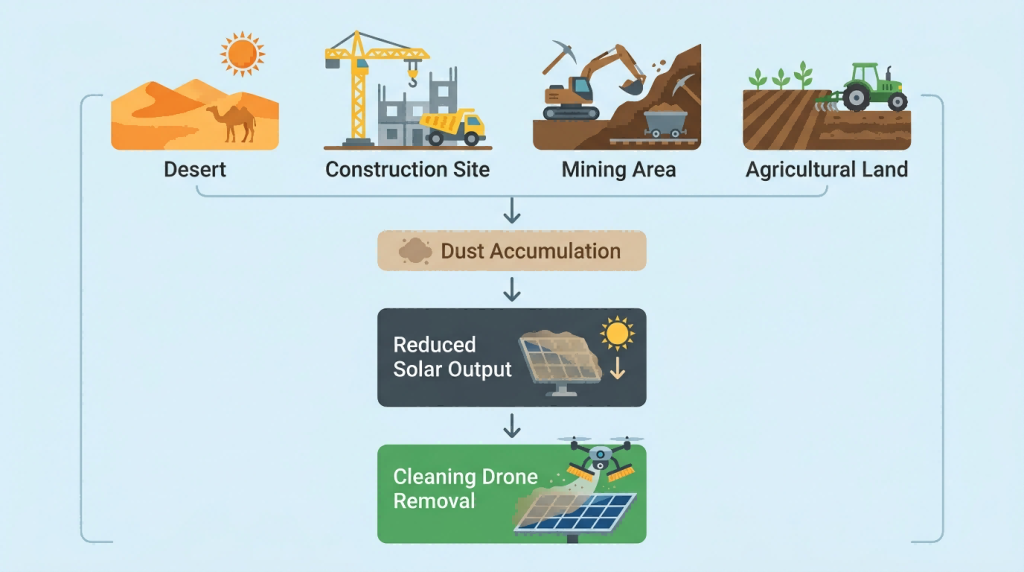
A cleaning drone can effectively remove:
- Fine dust particles
- Sand deposits that are loose
- Wind-blown soil
- Surface dirt accumulation
For large-scale solar farms with utility using a dedicated drone, such as the VA D50R is able to clean large fields of panels efficiently and return the performance of a panel in just one cleaning cycle.
Bird Droppings
In fact, bird droppings constitute one of the top harmful substances found on solar panels.
In contrast to ordinary dust, bird waste can create concentrated shade that can affect the individual cells as well as reduce the overall performance of strings.
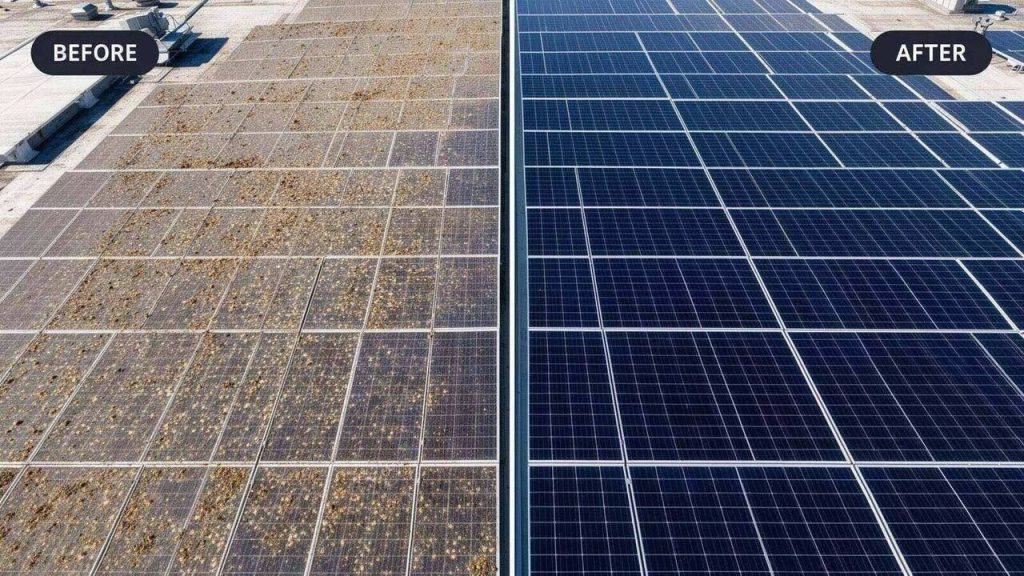
A cleaning drone can remove:
- Fresh bird droppings
- Soft organic deposits
- Surface contamination caused by birds
In many instances controlled water pressure and the correct nozzle design is sufficient to get rid of the stains with no physical contact. This makes drones particularly beneficial in large solar farms where the activity of birds is often frequent.
Pollen and Organic Debris
Pollen from the seasons can leave an adhesive layer on surfaces of solar panels.
Common organic contaminants include:
- Tree pollen
- Flower pollen
- Leaves
- Plant debris
- Insect residue
Solar panel cleaner drones will eliminate these contaminants by constant water flows along with controlled spraying.
This is especially useful for solar panels located close to forests parks, agricultural areas in areas where organic buildup could come back quickly following rainfall or winds.
Salt Deposits
Solar installations in coastal areas frequently are affected by salt accumulation.
Salt crystals can:
- Reduce light transmission
- Accelerate the surface pollution
- Cleaner frequency requirements for cleaning
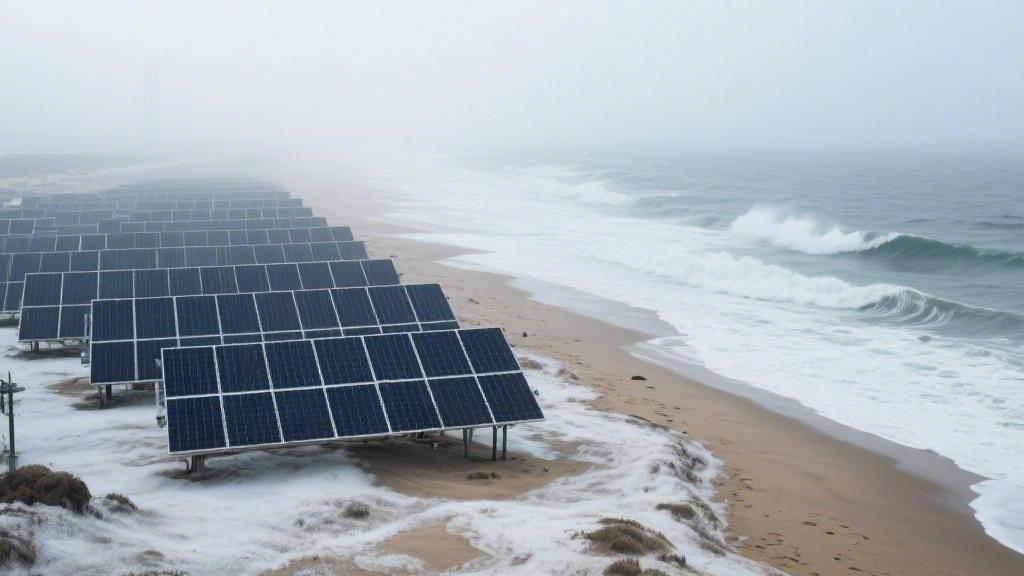
Drone cleaning systems are extremely efficient in getting rid of:
- Salt spray residue
- Surface salt crystals
- Coastal airborne deposits
Regularly rinsing can keep long-term buildup off and the surface of the panel clean. For solar farms located in coastal areas using a special photovoltaic cleaning drone could be an effective method to ensure steady output all through the entire year.
Air Pollution Residue
Solar farms located near industrial and urban areas often come across airborne pollutants.
Examples include:
- Vehicle exhaust particles
- Industrial dust
- Carbon deposits
- Smog residue
They are typically stuck to panels but are usually removed with large-scale water cleaning drones.
For companies that manage sites near factories, highways, or in urban areas, drones offer the fastest way to eliminate the buildup of pollution that is recurring and can affect the performance.
Agricultural Contamination
The solar projects that are located close to farms usually include:
- Fertilizer dust
- Crop residue
- Soil particles
- Organic matter
The majority of agricultural wastes remain on the panel’s surface and are easily removed using drone cleaning procedures.
This is especially important especially for solar farms located in rural areas where soil and dust can come back quickly following the wind or harvesting activities.
What Stains Are the Hardest for Cleaning Drones to Remove?
Cleaning drones can be extremely efficient in the routine maintenance of solar panels However, certain contaminants are harder to get rid of and might necessitate manual follow-up or specialized cleaning chemicals, or a recurring cleaning.
Hard Water Stains and Mineral Deposits
Mineral-rich water may leave behind persistent residues for example:
- Calcium deposits
- Lime scale
- Mineral spotting
- White water marks
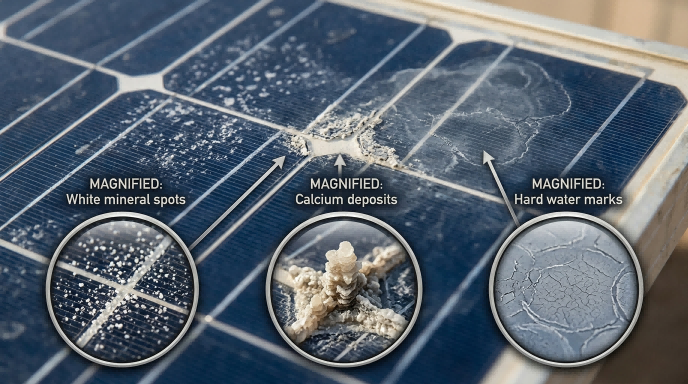
The stains may be able to bond to glass surfaces, particularly if not treated for a prolonged period of time. In many instances the water-based cleaning method isn’t enough. Purified water or specially designed descaling solutions could be required.
Oil, Grease, and Sticky Industrial Residue
The oil-based contamination is among the most difficult forms of dirt for cleaning drones to manage. It may come from:
- Nearby industrial facilities
- Machinery leaks
- Construction equipment
- Road dust mixed with oil residue
Since grease and oil don’t dissolve readily in water, normal washing may only remove a portion of the stains. The stains usually require cleaning agents that are designed to break up oily film.
Cement Dust, Concrete Splatter, and Paint Overspray
Contaminants from construction can be particularly difficult when it forms a hardening on the panel’s surface. Common examples include:
- Cement dust
- Concrete splatter
- Excessive paint application
- Adhesive residue
When these substances dry (or cure), they be permanently bonded to glass and are very difficult to remove using water by itself. In certain cases it is necessary to use manual cleaning or targeted treatment is the most efficient solution.
Bird Droppings That Have Dried and Hardened
Bird droppings that are fresh are generally easy to clean away, but baked-on or dried bird droppings can be more difficult to remove. They can:
- Stick tightly to the panel surface
- Leave behind visible stains
- Reduce light transmission even after partial cleaning
If left too long under intense sunshine, bird droppings could be hardened and make it difficult for a drone cleaning to completely remove in a single sweep.
Surface Etching and Permanent Damage
There are many visible marks that are not removable stain.
Some defects are caused by:
- Glass etching
- Chemical corrosion
- Micro-scratches
- Long-term environmental wear
They are not contaminants on the surface and therefore cannot be removed. When the actual glass is damaged and cannot be cleaned by a cleaning drone, it is impossible to make it back by washing the glass alone.
How Effective Are Cleaning Drones Compared with Manual Cleaning?
For large-scale solar installations, cleaning drones offer several advantages over traditional manual methods.
| Factor | Cleaning Drone | Manual Cleaning |
| Cleaning Speed | High | Medium |
| Labor Requirement | Low | High |
| Worker Safety | Excellent | Moderate |
| Water Coverage | Consistent | Operator Dependent |
| Large Solar Farms | Highly Suitable | Time-Consuming |
A lot of operators opt for drone cleaning due to its ability to provide the rapid removal of massive photovoltaic fields, while decreasing the cost of labor and downtime.
A system that is dedicated, such as VA-D50R Photovoltaic Cleaning Drone will be beneficial when the aim is to maintain a consistent cleaning of panels without having workers climb up rooftops or on terrain that is difficult to traverse.
How to Maximize Solar Panel Cleaning Results
To achieve the best cleaning performance:
Use Proper Water Pressure
A lack of pressure can leave traces of contamination behind, while over pressure can cause damage to the parts of the snsitive system.
Clean on a Regular Schedule
The process of preventing buildup is simpler than getting rid of dirt that has been accumulated.
Use Purified Water When Possible
Filtered or deionized water can help lessen the spotting of minerals and enhances the cleaning performance.
Choose Equipment Designed for Solar Applications
Photovoltaic cleaning drones that are specifically designed to clean the air provide uniform spray patterns and better coverage than other general-purpose systems.
For instance, the VA D50R is specifically designed to maintain solar farms which makes it simpler to adapt cleaning efficiency to the requirements of PV farms that are utility-scale.
FAQ
Q1: How often should solar panels be cleaned?
The answer depends on the surroundings of the installation site. Cleaning is performed more often in dusty, coastal, or agricultural surroundings than in pollution-free locations.
Q2: How can operators tell when solar panels need cleaning?
It could be detected by the decrease in power production, dirty panels, or information about increased losses from soiling in the monitoring report.
Q3: Does drone cleaning use a lot of water?
No, it is not, since modern cleaning drones perform their tasks by using spraying devices effectively utilizing water.
Q4: Can solar panels be cleaned while the system is operating?
In most situations, yes. But remember that cleaning needs to be done according to the operating conditions of the site.
Q5: Will regular cleaning damage solar panels?
No. Cleaning is not harmful when water pressure is appropriate and correct cleaning technique is applied.
Q6: What weather conditions are best for drone cleaning?
The perfect conditions include calm weather with low wind speeds. Extreme weather conditions like heavy rains, high winds, and high/low temperatures should be avoided.
Q7: What affects the cleaning performance of a drone?
Some of the factors that affect drone cleaning effectiveness are water pressure, spray coverage, type of contamination, weather conditions, and operator experience.
Q8: Can drone cleaning reduce operating costs?
Drone cleaning has the potential of reducing the cost of operation in large-scale solar farms.