
From Campus to Hotels Real-World Deployment of the VA-D15R in Korea

In a typical day in Seoul, a single VA-D15R cleaning drone can move from a university campus to boutique hotels, street-side cafés, and international hotel chains—cleaning glass facades, metal panels, and complex signage along the way.
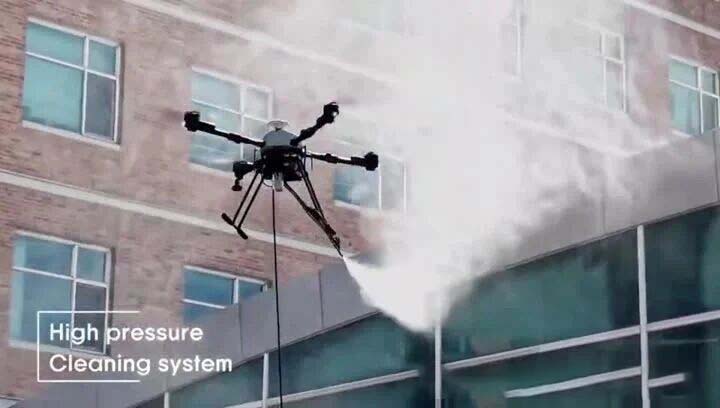
This case study follows one day of operations in South Korea, showing how the VA-D15R handles different building types, heights, and cleaning requirements while minimizing disruption to daily business. As a multi-rotor high-altitude cleaning drone with CE and relevant overseas market access certifications, the VA-D15R is designed to deliver safe, efficient, and compliant facade cleaning in regulated environments.
Table of Contents
How a Mobile Drone Cleaning Team Starts the Day in Seoul
At 6:30 a.m., the Seoul air is still cool when the VA-D15R is unloaded from its transport vehicle. The four rotors are unfolded, high-pressure water hoses and pure-water pipelines are connected, and the roof hatch of the van opens slowly. The first mission of the day is waiting.
Mounted on a mobile van that acts as a rolling base station, the VA-D15R can move quickly between job sites with minimal setup time and a small footprint. This mobility is key to handling multiple locations in a single shift and is part of why drone-based facade cleaning is increasingly attractive to facility managers and cleaning companies in dense urban areas.
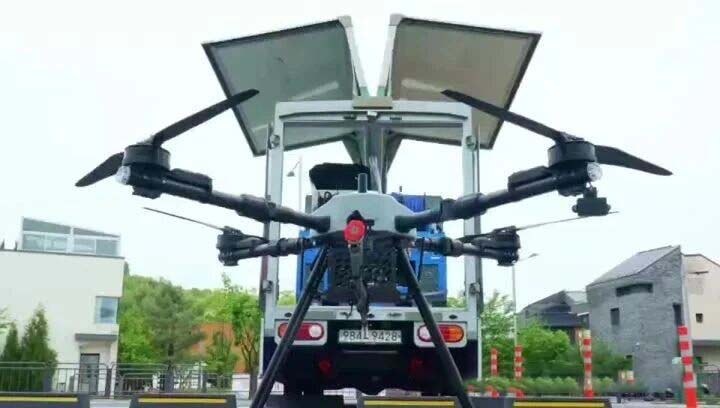
From an operational standpoint, the morning routine includes:
- Visual inspection of the drone, nozzles, and water lines
- Verification of battery status and communication links
- Briefing on the day’s sites, heights, and any known hazards
These steps reflect the same discipline used in other industrial drone applications, such as inspection and surveying, and help ensure consistent, safe performance.
Myongji College (MJC): Cleaning a Mixed Glass-and-Metal Campus Facade
The first mission takes the VA-D15R to Myongji College (MJC). The campus building features a mixed facade of glass and metal panels that have accumulated years of dust, rain stains, and airborne grime. Traditional cleaning methods—such as cradles or rope access—are time-consuming, labor-intensive, and disruptive in a busy campus environment.
The VA-D15R starts with its high-pressure cleaning system, directing a stable stream of water against the facade to strip away stubborn dirt layer by layer. Once the bulk contamination is removed, the drone switches to its pure-water cleaning system, rinsing the surface with deionized water to prevent mineral deposits and streaks.
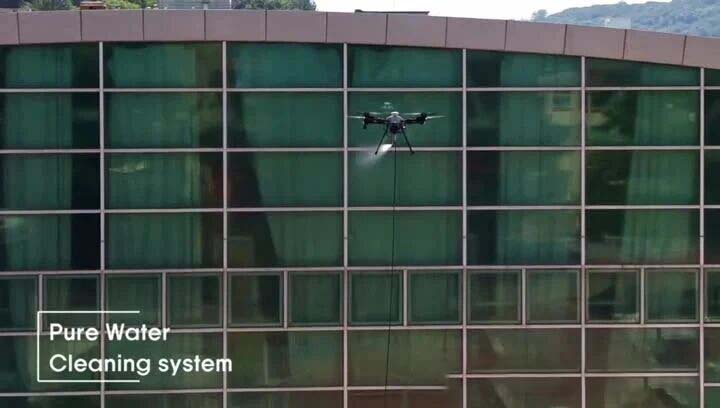
The result: glass curtain walls and metal panels that look freshly installed, with no visible water marks. The entire process is completed without the need for scaffolding or prolonged access restrictions around the building.
For educational institutions, this approach reduces:
- Risk to workers from high-altitude operations
- Noise and visual impact during term time
- Overall project duration compared to manual methods
This site demonstrates the VA-D15R’s suitability for mid- to high-rise institutional buildings where safety, speed, and minimal disruption are priorities.
METEOR Boutique Hotel: Maintaining Brand Image with High-Altitude Drone Cleaning
By midday, the VA-D15R moves to the METEOR Boutique Hotel. The hotel’s brown facade, accented with gold lettering, is the first impression guests receive. When the upper levels accumulate dust and rain stains, the overall perceived quality of the property drops.
Flying at a steady speed along the facade, the drone uses its high-pressure water jets to remove dirt without damaging the surface finish. The hotel manager, watching the operation from below, commented: “This is really impressive.”
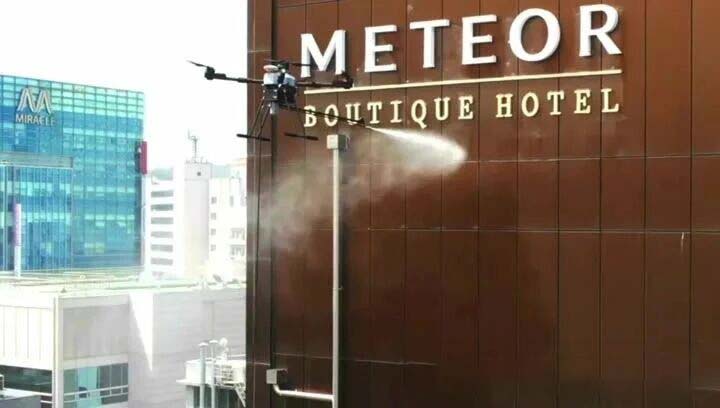
For hospitality properties, the ability to clean high and hard-to-reach areas quickly—without disrupting guests or requiring extensive safety setups—translates directly into:
- Maintained brand image and curb appeal
- Reduced need for overnight or off-hour work
- Lower exposure to work-at-height risks compared to rope access or cradles
This stop highlights how the VA-D15R can be integrated into hotel maintenance schedules as a regular, low-disruption solution for exterior cleaning.
Aroma Bakery & Café: Precision Low-Altitude Cleaning in a Busy Urban Street
In the afternoon, the VA-D15R is deployed to a street-corner Aroma Bakery & Café to clean large glass display windows. This scenario is more demanding in terms of precision:
- Low altitude
- Small cleaning area
- Close proximity to pedestrians and traffic
Such conditions require excellent hover stability and fine control over water flow. The VA-D15R maintains a steady position, directing water precisely onto the glass without splashing passersby or interfering with the café’s normal operations.
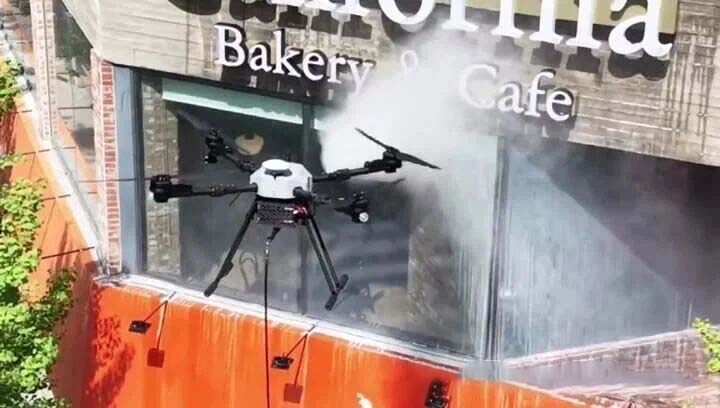
This demonstrates that the drone is not only suitable for high-rise towers, but also for low-altitude, high-precision cleaning in dense urban environments where traditional methods would be intrusive or impractical.
Key advantages in this type of setting include:
- Minimal sidewalk or street closure
- No need for ladders or scaffolding in front of the shop
- Ability to schedule cleaning during opening hours with limited impact
For retail and F&B operators, this means cleaner storefronts without losing foot traffic or sales.
Ramada by Wyndham: Removing Stubborn Water Stains from Curved Glass and Signage Areas
The final stop before evening is a Ramada by Wyndham hotel. Beneath the entrance sign, a curved glass panel has long suffered from stubborn water stains that regular cleaning could not fully remove.
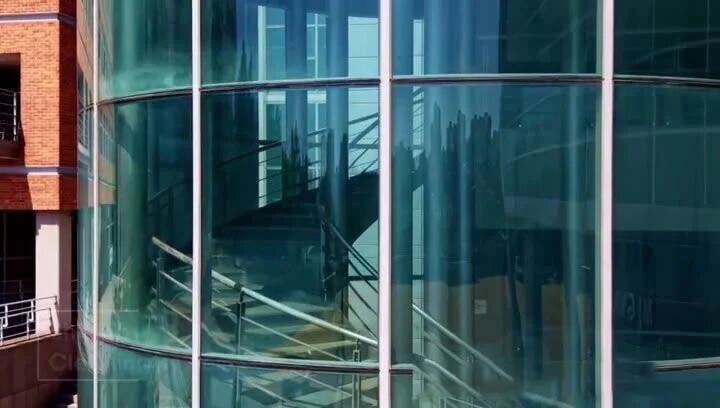
The VA-D15R tackles this in two stages:
- High-pressure cleaning to break up and remove the surface layer of grime and mineral buildup.
- Pure-water rinsing to eliminate residues and prevent new streaks from forming.
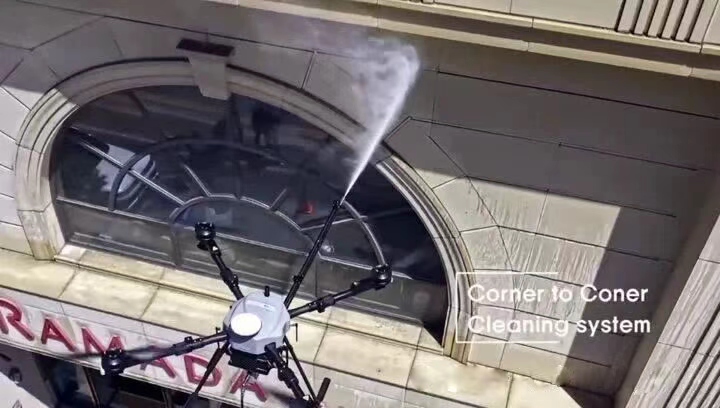
Using its Corner to Corner wall-following capability, the drone cleans edges, corners, and recessed areas systematically, ensuring no spots are missed. After the job, the hotel manager pointed to the sign area and simply said: “Excellent.”
For chain hotels and branded properties, this level of detail matters: entrance areas and signage are high-visibility zones that directly affect customer perception. The ability to:
- Target curved and irregular surfaces
- Work around signs, canopies, and architectural features
- Deliver consistent, streak-free results
makes the VA-D15R a practical tool for standardized maintenance across multiple locations.
VA-D15R Drone Technical Snapshot
Behind these daily operations is a set of integrated systems that make the VA-D15R suitable for professional facade cleaning. From an engineering and operational perspective, the key subsystems include:
High-Pressure Cleaning System
Targets stubborn dirt, dust, soot, and oily residues that ordinary washing cannot remove. Adjustable pressure allows operators to match the cleaning intensity to the surface material and contamination level.
Pure-Water Cleaning System
Uses deionized water to rinse surfaces without leaving mineral marks or secondary contamination—ideal for glass, polished stone, and coated metal facades. This helps maintain a uniform appearance and reduces the frequency of re-cleaning.
Water-Stain Removal System
Designed to address rain marks, salt deposits, and alkaline residues, helping restore the original appearance of curtain walls and panels. This is particularly valuable in coastal or industrial areas where airborne contaminants accelerate soiling.
Corner to Corner Wall-Following Flight
Millimeter-level positioning enables the drone to clean curved surfaces, corners, and recessed structures without dead zones or risky contact. The system leverages RTK positioning and millimeter-wave radar to maintain a consistent distance from the facade.
Vehicle-Based Mobile Deployment
The van serves as a mobile base station, allowing rapid relocation between sites, minimal on-ground footprint, and quick response to customer schedules. This setup mirrors best practices in other industrial drone services, where mobility and fast turnaround are critical.
Together, these systems allow the VA-D15R to handle a wide range of scenarios: from high-rise glass towers to low-altitude storefronts, from flat facades to complex architectural details.
Why the VA-D15R Can Operate Stably in Korea
The VA-D15R’s consistent performance across multiple landmarks in South Korea relies on both capability and compliance. The model deployed in Korea holds CE certification and meets key overseas market access requirements, including safety and electromagnetic compatibility standards. For local partners and customers, this means the drone is designed for regulated environments, aligns with local safety and technical expectations, and enables partners to offer drone-based cleaning services with greater confidence.
In practice, compliant operations also require trained remote pilots with documented flight hours, pre-flight risk assessments for each site (covering height, wind, obstacles, and pedestrian flow), and clear emergency procedures such as return-to-home and forced-landing protocols. Together, certified hardware, qualified operators, and standardized processes allow the VA-D15R to be used reliably in real commercial projects, not just demonstrations.
Want to See How the VA-D15R Could Work on Your Buildings?
If you are a building owner, facility manager, or cleaning company exploring drone-based facade cleaning, we can help you evaluate: To understand whether the D15R drone is suitable for your specific building type and height, the expected efficiency improvement compared to traditional methods, and the compliance and operational requirements of your market, please contact our sales team to discuss the detailed specifications of your project or equipment.