
Wind Turbine Cleaning: How Are Wind Turbines Cleaned?

In the daily operation of wind farms, asset managers and O&M contractors face a key challenge: how to maximize annual energy production (AEP) while reducing the levelized cost of energy (LCOE). However, one relatively low-cost, potentially high-value maintenance activity is sometimes overlooked, Wind Turbine Cleaning.
Wind turbine blades are continuously exposed to harsh outdoor conditions and various environmental contaminants. This article explores why wind turbines need cleaning, the main cleaning methods available, and the key factors to consider when choosing a suitable cleaning solution.
Table of Contents
What Is Wind Turbine Cleaning?
Wind Turbine Cleaning refers to the process of removing dirt, dust, salt, insects, bird droppings, and other contaminants from wind turbines using manual methods or specialized cleaning equipment.
Depending on the turbine structure and maintenance requirements, common cleaning targets include:
- Wind Turbine Blades
- Nacelle
- Hub
- Tower
- Other Exposed Components
From among these items, Wind Turbine Blade Cleaning is usually one of the most important items.
The blades of wind turbines are always exposed to the outside environment, which makes them prone to the gathering of different kinds of dirt. Wind turbine inspection and cleaning would be beneficial in helping to keep the blades clean and would also make inspection easier in the future.

Why Is Wind Turbine Cleaning Important?
Wind turbine cleaning is not simply about keeping the equipment looking clean. More importantly, it supports equipment maintenance, surface condition management, and inspection.
Maintain Blade Surface Condition
Dust, salt, insects, and other contaminants can accumulate on blade surfaces over time and affect their surface condition.
Regular cleaning helps reduce surface contamination and keep the blades in a cleaner condition.
Support Aerodynamic Performance
Wind turbine blades are closely related to aerodynamic performance. Surface contamination may alter local surface conditions, so keeping blades clean can help maintain their intended operating conditions.
However, actual power generation performance is affected by many factors, including wind speed, blade design, equipment condition, and air density. Therefore, cleaning should not be assumed to produce a fixed percentage increase in power generation.
Help Detect Surface Damage
Cleaning can also support wind turbine inspection and maintenance.
When a blade surface is heavily contaminated, certain surface issues may be more difficult to identify. After cleaning, maintenance teams can more easily inspect for:
- Surface cracks
- Leading-edge erosion
- Coating damage
- Surface wear
- Other visible defects
Support Preventive Maintenance
Preventive maintenance is usually better for large wind farms than trying to fix equipment issues once they happen.
Cleaning, inspecting, and maintaining the equipment can give operators better insight into the status of the turbines and thus make better maintenance plans.
Overcome Long-Term Maintenance Problems
Creating a cleaning and maintenance plan depending on the environment where the wind farm operates can solve problems with long-term contaminants.
Which Parts of a Wind Turbine Need Cleaning?
Not all wind turbine components require the same cleaning method. Different components have different structures, materials, and levels of contamination, so the appropriate cleaning solution should be selected according to actual conditions.
| Wind Turbine Component | Common Contaminants | Main Cleaning Requirements |
| Wind Turbine Blades | Dust, salt, insects, bird droppings | Blade surface cleaning |
| Nacelle | Dust, oil, dirt | External surface cleaning |
| Hub | Dust, insects, dirt | Removal of surface contaminants |
| Tower | Dust, salt, dirt | External surface cleaning |
| Other Components | Environmental contaminants | Determined according to actual conditions |
Among these components, blades typically have a large surface area and are installed at significant heights. Therefore, Wind Turbine Blade Cleaning places higher demands on equipment accessibility, cleaning efficiency, and operational safety.
Common Wind Turbine Cleaning Methods
There are several methods available for Wind Turbine Cleaning. The appropriate method depends on factors such as turbine height, turbine size, contaminant type, site conditions, safety requirements, and maintenance budget.
Each cleaning method has its own advantages, so practical applications should consider cleaning effectiveness, operational efficiency, worker safety, and overall maintenance costs.
1. Manual Cleaning
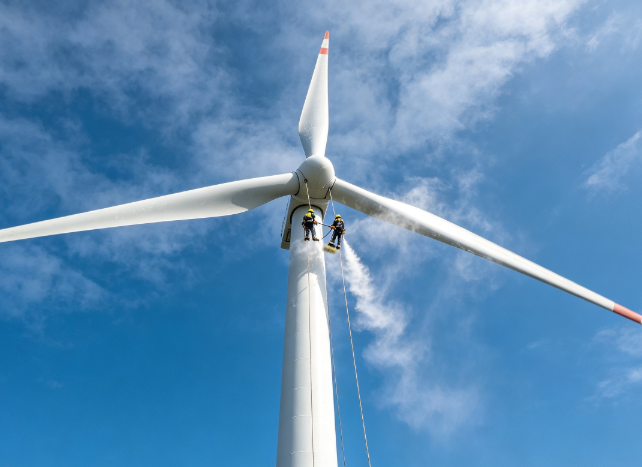
Manual cleaning is one of the conventional ways of wind turbine maintenance. It allows people to employ brushes, chemicals, water, and other devices to manually clean the turbines.
This technique possesses a high level of flexibility and could be convenient for small scale tasks or cleaning areas that are easy to reach. Nevertheless, for big wind turbines, the manual cleaning would need Rope Access, lifting equipment, or other techniques of working at height. In such way, it increases both the time of work and safety demands.
2. High-Pressure Water Cleaning
High Pressure Water Cleaning is a method that makes use of pressurized water, along with the right type of nozzles, to clean off dust, dirt, salt deposits, and other debris that accumulate on the blades of the wind turbines.
While carrying out this process, the right amount of pressure, along with the right nozzle, must be used based on the type of blade materials used and how dirty the blades are.
3. Rope Access and Lifting Equipment
The Rope Access technique, together with the use of lifting platforms and cranes or similar devices, can be applied in order to gain direct access to the target location in case of high-altitude wind turbine blades and other parts.
This technique can deal with sites that could be problematic to access using regular equipment. Nevertheless, it usually needs qualified specialists, as well as extensive preparations. For large wind farms, operators also need to consider overall work efficiency and maintenance costs.
4. Robotic Cleaning Systems
With the development of automation technology, Robotic Cleaning Systems are also being introduced into certain wind turbine cleaning applications.
Robots can perform cleaning tasks through automated or remote operation, reducing the need for workers to directly perform certain high-altitude tasks.
However, wind turbines vary in structure, blade design, and surface characteristics. Therefore, robotic cleaning systems may require adaptation to specific turbine models and cleaning requirements.
5. Cleaning Drones
Cleaning Drones are an emerging solution for certain wind turbine maintenance applications.
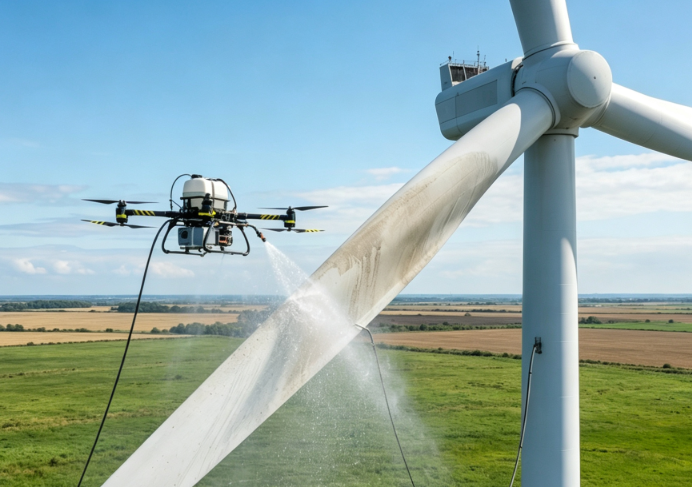
A cleaning drone can fly to elevated areas and use an integrated spraying system, high-pressure cleaning system, or other cleaning equipment to clean designated surfaces.
For large wind turbines with elevated structures that are difficult for personnel to access directly, cleaning drones can help reduce certain work-at-height requirements while providing greater flexibility for specific cleaning tasks.
However, their practical application still requires consideration of turbine structure, weather conditions, contamination levels, water supply, and local drone operation regulations. Therefore, a Cleaning Drone should be considered an available option for Wind Turbine Cleaning rather than a complete replacement for traditional cleaning methods.
What Are the Advantages of Cleaning Drones?
Cleaning drones can offer several potential advantages:
Reduced Work-at-Height Requirements: Drones can reduce the need for workers to directly enter certain high-altitude work areas.
Flexible Access: Drones can fly through the air and reach some areas that may be difficult to access using conventional equipment.
Remote Operation: Operators can control the drone remotely from a relatively safer position.
Potentially Improved Efficiency: For certain wind turbine cleaning tasks, drones may reduce some of the equipment preparation and work-at-height procedures required by traditional cleaning methods.
However, a Cleaning Drone is not necessarily the only or best option for every Wind Turbine Cleaning project. Factors such as wind speed, turbine height, contaminant type, water supply, cleaning pressure, and site safety requirements should all be evaluated before starting the project.
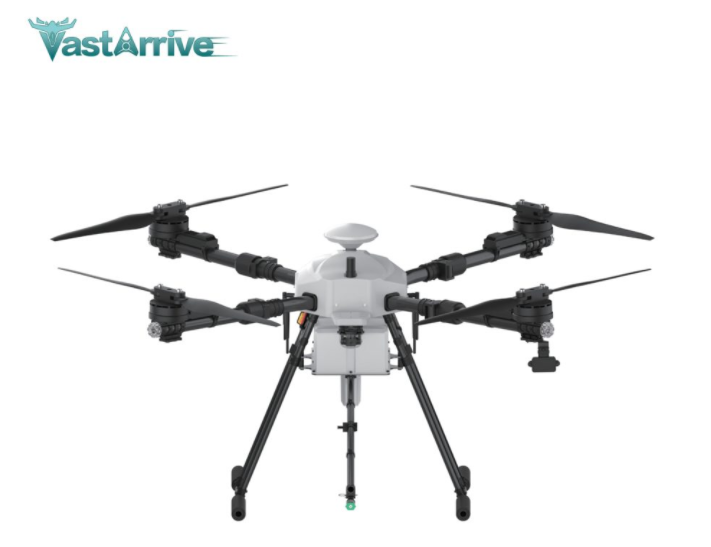
VastArrive D15R Cleaning Drone for Wind Turbine Cleaning
VastArrive D15R is designed for high-altitude cleaning applications and can be used for cleaning elevated surfaces such as Wind Turbine Blades. By reducing reliance on conventional work-at-height methods, the D15R provides a more flexible and efficient approach to wind turbine cleaning.
How to Choose the Right Wind Turbine Cleaning Method?
Wind turbines operate in different environments and have different structural designs and maintenance requirements. Therefore, there is no single Wind Turbine Cleaning Method that is suitable for every project.
When selecting a cleaning solution, consider turbine height, blade design, contaminant type, installation location, weather conditions, safety requirements, and overall maintenance costs.
Turbine Height
Turbine height directly affects the accessibility of cleaning equipment. As turbine height increases, traditional manual cleaning and work-at-height operations generally become more challenging.
For large wind turbines, particular attention should be paid to equipment working height, coverage area, and the ability to reach the target surface.
Blade Size and Design
Wind turbine blades vary in length, structure, and surface materials. Therefore, cleaning equipment needs to be compatible with the specific blade characteristics.
The appropriate cleaning pressure, nozzle design, and distance between the equipment and blade should also be considered to balance cleaning effectiveness and surface protection.
Type of Contamination
Different contaminants have different levels of adhesion and may require different cleaning approaches.
Common contaminants include:
- Dust
- Salt
- Oil
- Insects
- Bird droppings
Before selecting cleaning equipment, identify the primary contaminants and their severity, then determine the appropriate water pressure, nozzle configuration, or cleaning agent.
Onshore or Offshore Location
There are several factors that differentiate onshore and offshore wind turbines. Offshore Wind Turbines are constantly subjected to salt spray, high moisture, and harsh marine environment which may lead to increased corrosion rates.
Therefore, special care must be taken with regard to environmental protection, safety and access during the cleaning of offshore wind turbines.
Weather Conditions
Wind speed, rainfall, temperature, and humidity can all affect cleaning operations. For Cleaning Drones in particular, wind speed and weather conditions can directly affect flight stability and cleaning performance.
Therefore, cleaning should be scheduled according to the equipment’s operating capabilities and actual weather conditions.
Water Availability
The availability of water and water usage in case of high-pressure water cleaning has to be taken into account as well. In the case of offshore wind farms located at remote locations, there may not always be a steady water source available.
It is important to assess the water tank capacity, the method of supplying water, efficiency of water usage, and need for refills.
Safety Requirements
Safety should always be a priority in Wind Turbine Cleaning. High-altitude work, offshore environments, and changing weather conditions can all increase operational risks.
When selecting a cleaning method, consider worker exposure, equipment stability, work-at-height requirements, and emergency response conditions.
Cleaning Efficiency and Cost
Finally, cleaning efficiency and overall operating costs should be evaluated.
In addition to equipment purchase costs, consider:
- Labor Cost
- Setup Time
- Cleaning Time
- Water Consumption
- Maintenance Requirements
The right cleaning solution should not only effectively remove contaminants but also provide a good balance between safety, operational efficiency, and long-term maintenance costs.
How Often Should Wind Turbines Be Cleaned?
There is no fixed cleaning interval that applies to every wind turbine.
Wind Turbine Cleaning Frequency varies depending on the turbine’s geographical location, climate, operating environment, and level of contamination.
The following factors should typically be considered:
- Turbine Location
- Climate and Weather
- Dust and Pollution Levels
- Salt Exposure
- Blade Condition
- Operating Environment
- Maintenance Strategy
Wind turbines installed near the coastal area and offshore wind power plants, for instance, are constantly exposed to salt spray and humid marine environment. Thus, it may become important to consider salt and marine deposits accumulation more closely.
In contrast, wind turbines situated in dry and dusty environment may be at risk of dust and sand deposits.
Moreover, blade condition and specific environment of operation may influence the cleaning necessity. In case when contamination of the blade surface is noticeable, it may be necessary to carry out blade cleaning process in advance in order to avoid accumulation and facilitate proper maintenance.
Hence, instead of imposing some fixed interval between cleanings, for example, every few months, it is advisable to create a blade cleaning schedule based on the inspection results, contamination degree, local environment and maintenance guidelines of the turbine manufacturer.
Conclusion
Wind Turbine Cleaning is a significant aspect of the maintenance process of the wind turbines and wind farms in general.
Since wind turbines have grown in size, remote locations, and offshore applications, traditional methods of manual cleaning encounter difficulties in being efficient, easily accessible, and safe.
In cases where access is not easily achieved by using standard equipment, Cleaning Drones can provide assistance in such cleaning processes. Through remote operation and aerial access, they can provide greater flexibility for certain wind turbine cleaning tasks while reducing some direct work-at-height requirements.
If you are looking for a Cleaning Drone for wind turbine maintenance, feel free to contact VastArrive to learn more about our drone solutions and discuss your specific cleaning requirements.