
How Drone Flight Endurance Affects China UAV Export Control Classification
For overseas buyers sourcing industrial drones from China, understanding export control regulations is essential. China’s Announcement No. 49 of 2026 introduces specific flight endurance thresholds for certain UAVs capable of controlled beyond visual line of sight (BVLOS) flight.
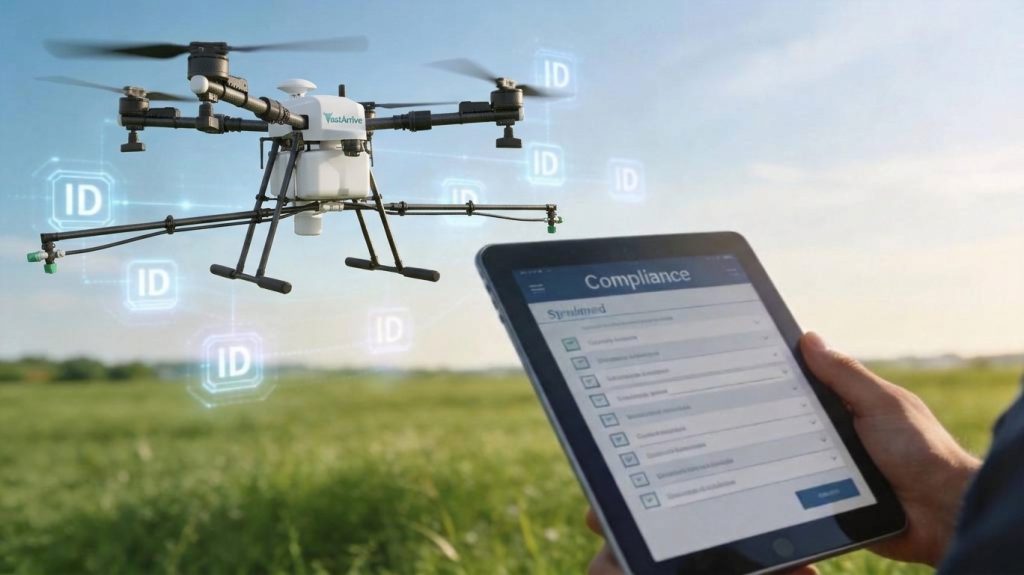
The new rules establish 30-minute and 3-hour thresholds under category 9A012.a, affecting the export classification and authorization requirements for certain UAVs. However, technical specifications are not the only consideration. Destination, end user, and intended application may also affect export eligibility.
Table of Contents
China’s 2026 UAV Export Control Rules: What Has Changed?
Issued on October 19, 2026, Announcement No. 49 takes effect on November 18, 2026. It updates export control measures for selected UAV-related products.
Under category 9A012.a, the relevant endurance thresholds are:
- 9A012.a.1: Maximum endurance of at least 30 minutes but less than 3 hours, with the specified wind resistance capability of at least 25 knots (approximately 46.3 km/h).
- 9A012.a.2: Maximum endurance of 3 hours or more.
Both categories concern UAVs with the relevant BVLOS capability. These thresholds do not automatically apply to every industrial drone.
How Do the 30-Minute and 3-Hour Thresholds Affect Export Authorization?
The two categories have different technical requirements and export authorization arrangements.
| Classification | Technical conditions | Export authorization |
| 9A012.a.1 | ≥30 minutes and <3 hours, with ≥25-knot gust capability | Eligible exports may use the registration-based export credential procedure |
| 9A012.a.2 | ≥3 hours | Applicable dual-use export license required |
For 9A012.a.1, both endurance and the specified wind resistance conditions must be met. For 9A012.a.2, the 3-hour endurance threshold applies without the additional 25-knot requirement.
Product example: VastArrive B100P
The VastArrive B100P multi-purpose heavy drone has a published flight endurance of 8–18 minutes, below the 30-minute threshold. Its published endurance therefore does not meet this particular criterion under 9A012.a. Other components or applicable restrictions may still require separate assessment.
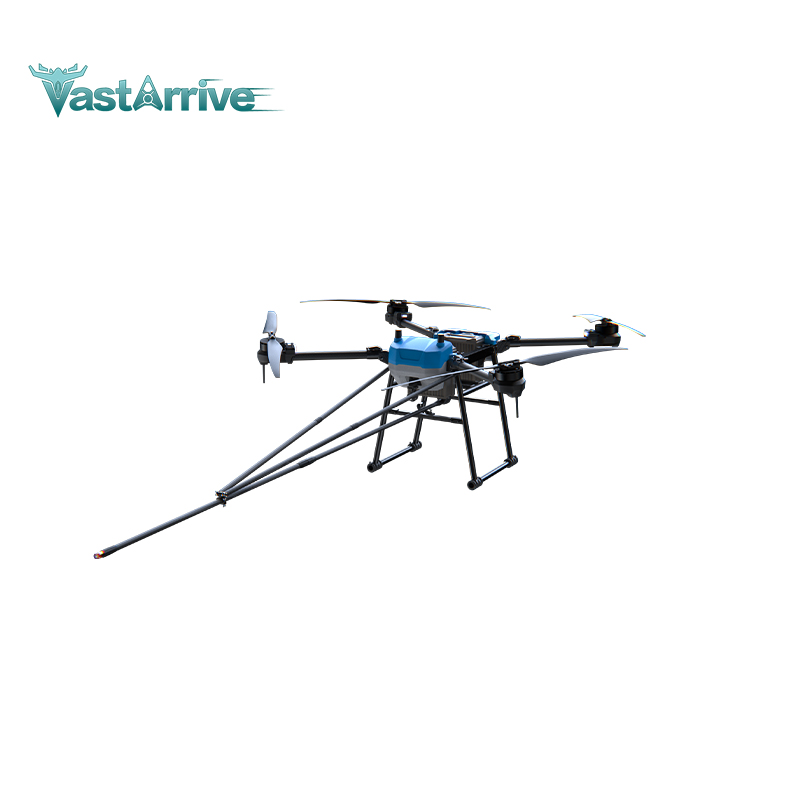
VastArrive B100P Multi-Purpose Heavy Drone
Multi-Purpose Heavy-Lift UAV
Designed for demanding industrial aerial operations, the VastArrive B100P combines heavy-load capacity with an 8–18-minute published flight endurance.
8–18 minutes
Flight Endurance
70L
Fertilizer Tank Capacity
360°
Spreading Capability
How Is Drone Flight Endurance Measured for Export Classification?
Published flight time is not necessarily the figure used for export classification.
According to the official MOFCOM FAQ, endurance under 9A012.a is assessed using the full-load level-flight testing requirements of GB/T 38058-2019. Wind resistance is assessed separately under GB/T 38930-2020.
Three factors matter:
Full-load testing: Assessment must follow the applicable loading conditions rather than unloaded demonstrations.
- Level-flight duration: Sustained level flight is measured, not simply hovering time.
- Wind resistance: The UAV must meet the applicable standardized wind resistance requirements.
For example, the VastArrive VA-D15R cleaning drone has a published endurance of approximately 40–50 minutes and wind resistance of 12 m/s. Although its endurance exceeds 30 minutes, its stated wind resistance is below 25 knots. Standardized test results are still needed for final classification.
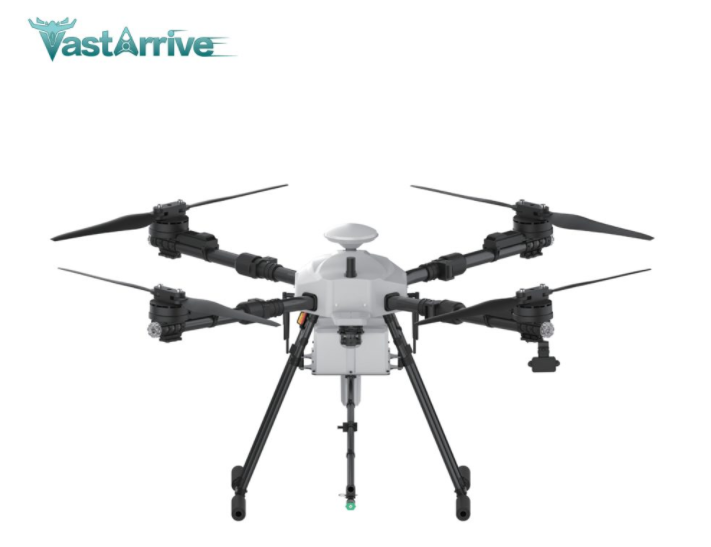
VastArrive VA-D15R Cleaning Drone
Industrial High-Altitude Cleaning UAV
Designed for high-altitude cleaning of building façades and solar panels, the VA-D15R combines stable flight control with a high-pressure cleaning system.
40–50 min
Published Flight Endurance
12 m/s
Maximum Wind Resistance
12–15 MPa
Water Pressure
100 m
Water Hose Length
What Other Restrictions Affect China’s UAV Exports?
Meeting the technical requirements of a particular classification does not guarantee export approval. Other restrictions must also be considered.
- Announcement No. 34 of 2026: US-bound transactions covered by this measure require individual dual-use export license applications.
- Announcements No. 20, 23, and 30 of 2026: Introduce export prohibitions involving designated entities, including certain entities in the United States and European Union.
- Announcement No. 28 of 2026: Prohibits exports to designated Japanese entities for military purposes. Other intended uses require closer compliance review.
- Sanctioned and high-risk destinations: Transactions involving relevant UN Security Council sanctions, proliferation risks, or high military-diversion risks may require individual licensing or may not be approved.
These restrictions are independent of flight endurance. Even a UAV outside the 9A012.a thresholds may be subject to other export controls based on its components, destination, end user, or intended use.
What Should Overseas Buyers Check Before Ordering Drones?
Before confirming an order, overseas buyers should discuss four points with their Chinese supplier:
- Product classification: Confirm the model, BVLOS capability, technical configuration, and applicable export control category.
- Endurance testing: Check whether published flight time is based on standardized full-load level-flight testing.
- Export authorization: Confirm whether registration-based procedures or an individual dual-use export license applies.
- End-user and destination: Provide accurate consignee, end-user, destination, and intended-use information to identify potential restrictions.
These checks help suppliers assess export eligibility before production and shipment arrangements are finalized.
How Do the New Rules Affect International Drone Buyers?
The main impact on overseas buyers comes from two areas.
Order eligibility: Transactions involving restricted entities, prohibited military applications, or high-risk destinations may face additional review, licensing requirements, or export prohibitions.
Delivery schedules: Certain controlled products require additional authorization before shipment. However, eligible exports under simplified procedures may need fewer supporting documents, helping Chinese suppliers prepare shipments more efficiently.
Importantly, a Chinese dual-use export license is required for the applicable export declaration process in China. It is not normally a document that overseas buyers must submit for their own import customs clearance. Buyers must still meet their destination country’s import requirements.
Conclusion
China’s Announcement No. 49 of 2026 introduces new endurance-based criteria for certain BVLOS-capable UAVs, while other announcements impose additional restrictions based on destination, end user, and intended application.
For overseas buyers, the main concerns are whether an order is eligible for export and whether additional licensing procedures will affect delivery schedules. Although some transactions face stricter controls, eligible exports may benefit from simplified documentation, reducing preparation time for Chinese suppliers and potentially speeding up shipment.
For buyers, a Chinese dual-use export license is required for the applicable export declaration in China, but is not normally required for overseas import customs clearance. At VastArrive, we recommend confirming the product configuration, destination, and end-user information before ordering to help ensure a smoother purchasing and delivery process.