
How Does Granule Size Affect Agricultural Drone Spreading Accuracy
The grain size is important in the accuracy of the agricultural drone spreading process. The difference in the sizes, weights, and fluidity of the grains impacts the delivery of the fertilizers, the flight path, and the application in the field, resulting in an uneven spread of the fertilizers.
Table of Contents
How Granule Size Influences Fertilizer Spreading
The size of the granule will affect the distribution capability of the fertilizer using the spreader. Smaller-sized granules can easily fit into the metering holes while larger-sized granules may require bigger outlets to allow even spread out of the granules. The size of the fertilizer granules will also affect how far the granules will be distributed once they come out of the spreading equipment.
An experimental study on the relationship between size of the fertilizer particles and UAV fertilizer spreading performance was done in 2026 and it was published in Agronomy. Various sizes of urea particles were used in the experiment, and the common sizes ranged from 0.85 mm to 2.80 mm and 2 mm to 4.75 mm.
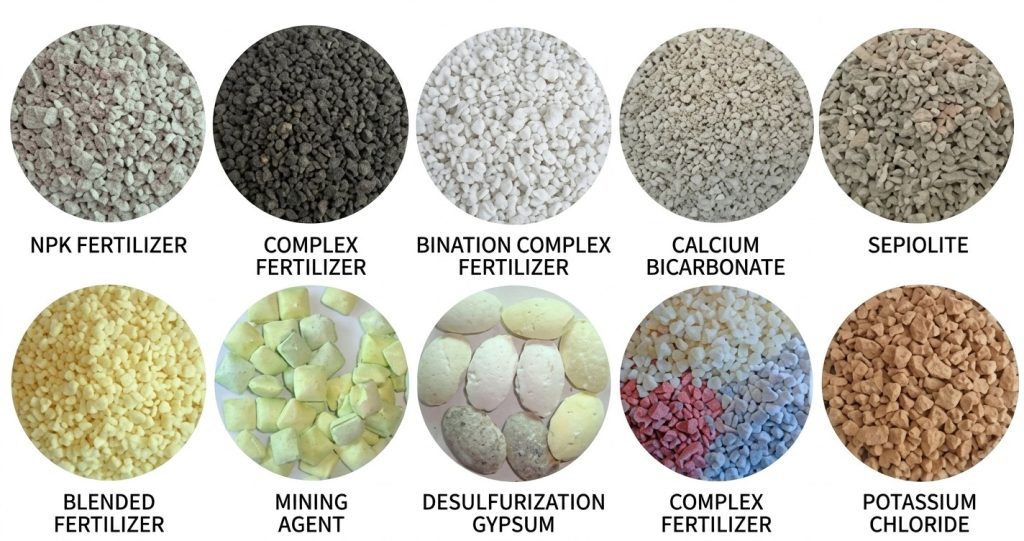
In terms of practice, there are three types that should be considered:
- Small and rather homogeneous granules: They will easily escape from the outlet, but small granules can be more susceptible to the impact of air streams and flying out.
- Large and rather homogeneous granules: Their weight normally ensures better trajectories, but the spreading system should consider the fact that they are too large to provide continuous feeding.
- Granules of various sizes: Various distances covered by different granules will result in uneven fertilizers distribution across the effective width of spreading.
This is why two fertilizers of the same rate of application will require different settings for spreading.
How Particle Weight Affects Spreading Distance and Trajectory
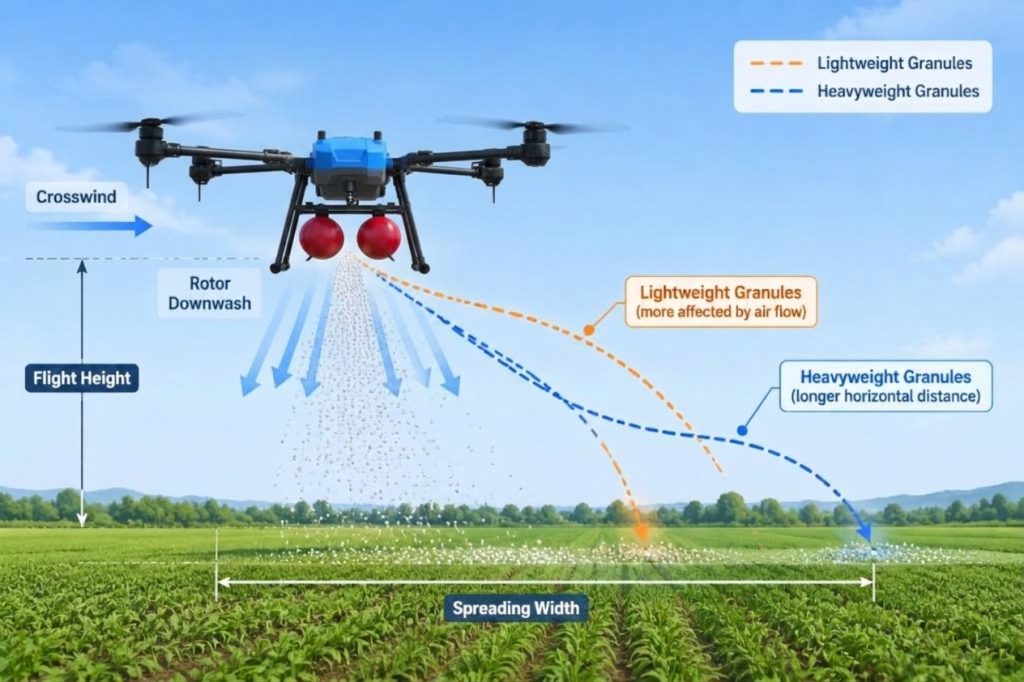
The mass of the particle affects the behavior of the fertilizer granule during the time it moves along with the flow of air while it is in motion. Its trajectory after leaving the centrifugal spreader will depend on parameters such as weight, drag, ejection velocity, and downwash by the rotor blades.
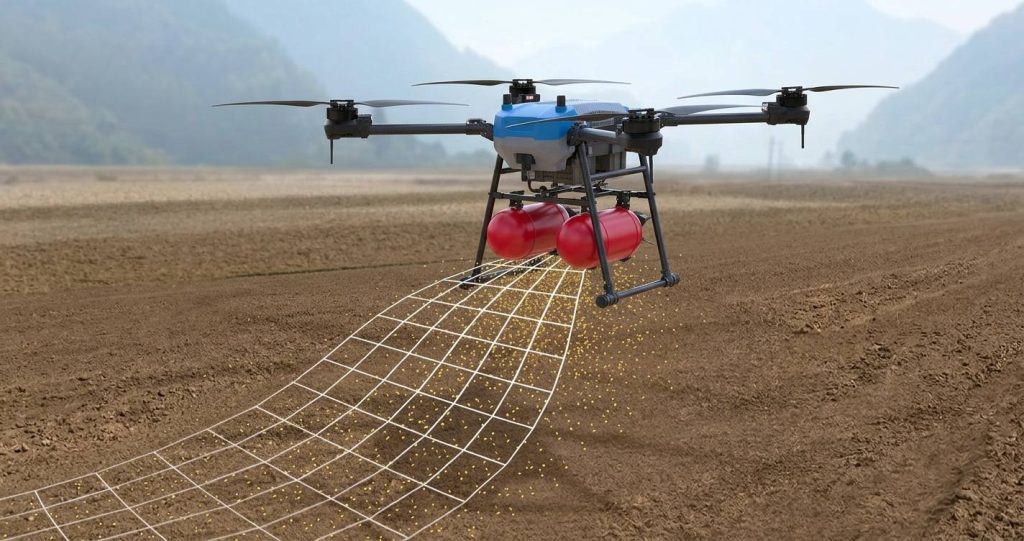
Particles that have low mass are more susceptible to drag effects. Motion of particles of small mass can be affected by:
- Downwash caused by the rotor below the drone.
- Crosswinds during spraying.
- Height and location of particle dispersal.
- Speed created by the particle dispersing disk.
Particles that weigh less can move freely because of wind currents and move away from the target spray area. However, it does not necessarily mean that small particles always weigh less. Particles of the same size but of different weight may exist.
Why Fertilizer Flowability Matters
Granule flowability will determine the efficiency of granular fertilizer transport from the hopper to the spreader. The granule flowability may be poor even when the particle size and weight of the granular fertilizer are ideal.
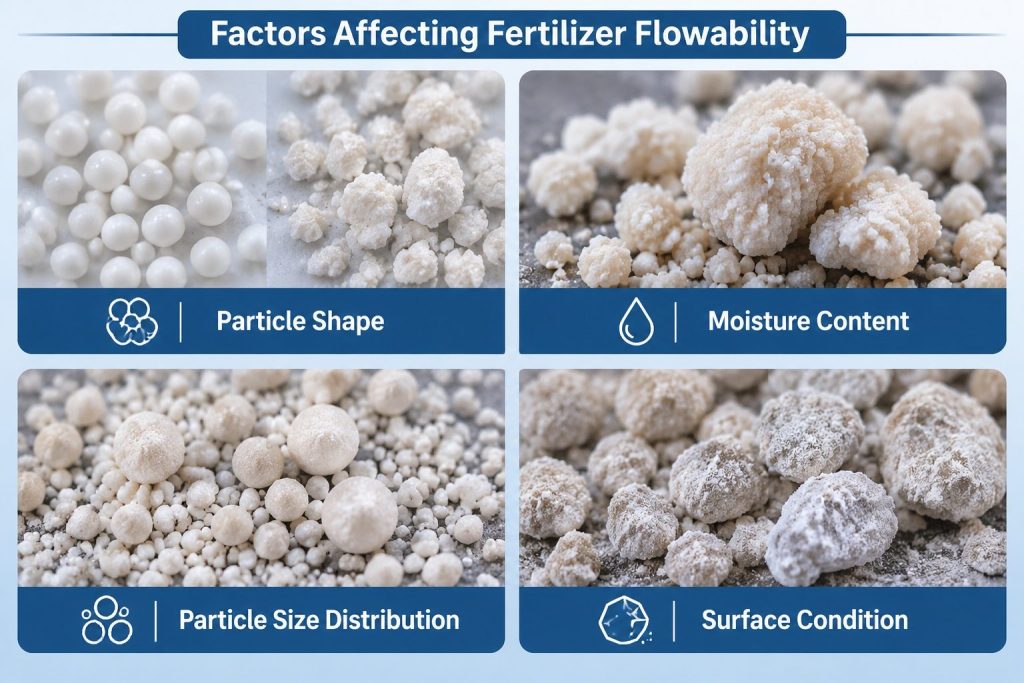
Several factors influence fertilizer flowability:
Particle Shape
Particles that are spherical and relatively smooth will flow easily than particles of angular shapes. The particles of angular shapes can stick and resist flow during discharge.
Moisture Content
The presence of moisture increases the probability of formation of clusters by fertilizer particles. These clusters will act as barriers to flow and discharge of material from the point of discharge.
Particle Size Distribution
When particles in the batch have varied sizes, there will be a possibility of particle segregation upon handling and discharge. The smaller particles will occupy the space between larger particles resulting in changes in the flow of materials out of the point of discharge.
Surface Condition
Surface conditions with rough surfaces and dust particles enhance friction between particles.
Such aspects also influence the flow of the particles upon their release from the dispersing system. Particle flight and dispersion pattern analysis of granular fertilizer particles give a description of the factors that influence the pattern of dispersal of the particles.
In agricultural drone applications, lack of flowability may lead to uneven application, clogging, and poor dispersal of the particles. In this case, drone operators need to inspect the fertilizer before loading them to ensure that no wet, sticky, or dusty fertilizers are applied.
How Granule Properties Affect Spreading Distribution
In the end, the spread pattern will depend on such factors as the characteristics of the particles that will be distributed, conditions in which the distribution system operates, flying conditions, and the surroundings. Regarding the centrifugal spread pattern, there is a risk that the distribution rate and angle may not be constant due to the different sizes and weights of the particles.
This can create an uneven transverse distribution across the field.
For instance:
- Excessive central deposition: Small or light particles will be deposited around the drone’s flight path.
- Uneven edge coverage: Heavy particles might cover the spreading area farther than light particles.
- Inconsistent overlapping: Different deposition along different flight paths could cause areas of excess or insufficient fertilizer spread.
- Variations in the application rate: The differences in particle feeding and spreading could lead to an inconsistent fertilizer amount.
It has been reported that the UAV fertilizer spreading is affected by the following three factors: particle size, spreading disc speed and altitude. Single pass could result in an uneven, double-peak deposition; thus, correct flight path overlapping is necessary for even coverage. The multi-purpose heavy drone, the VastArrive B100P, comes with a 360-degree uniform spreading system that has a nominal spreading range of 8-10 m. Nevertheless, the actual spreading range may differ from the nominal due to the type of fertilizer, disk speed, etc. Thus, the distribution test must be carried out to determine the overlap percentage.
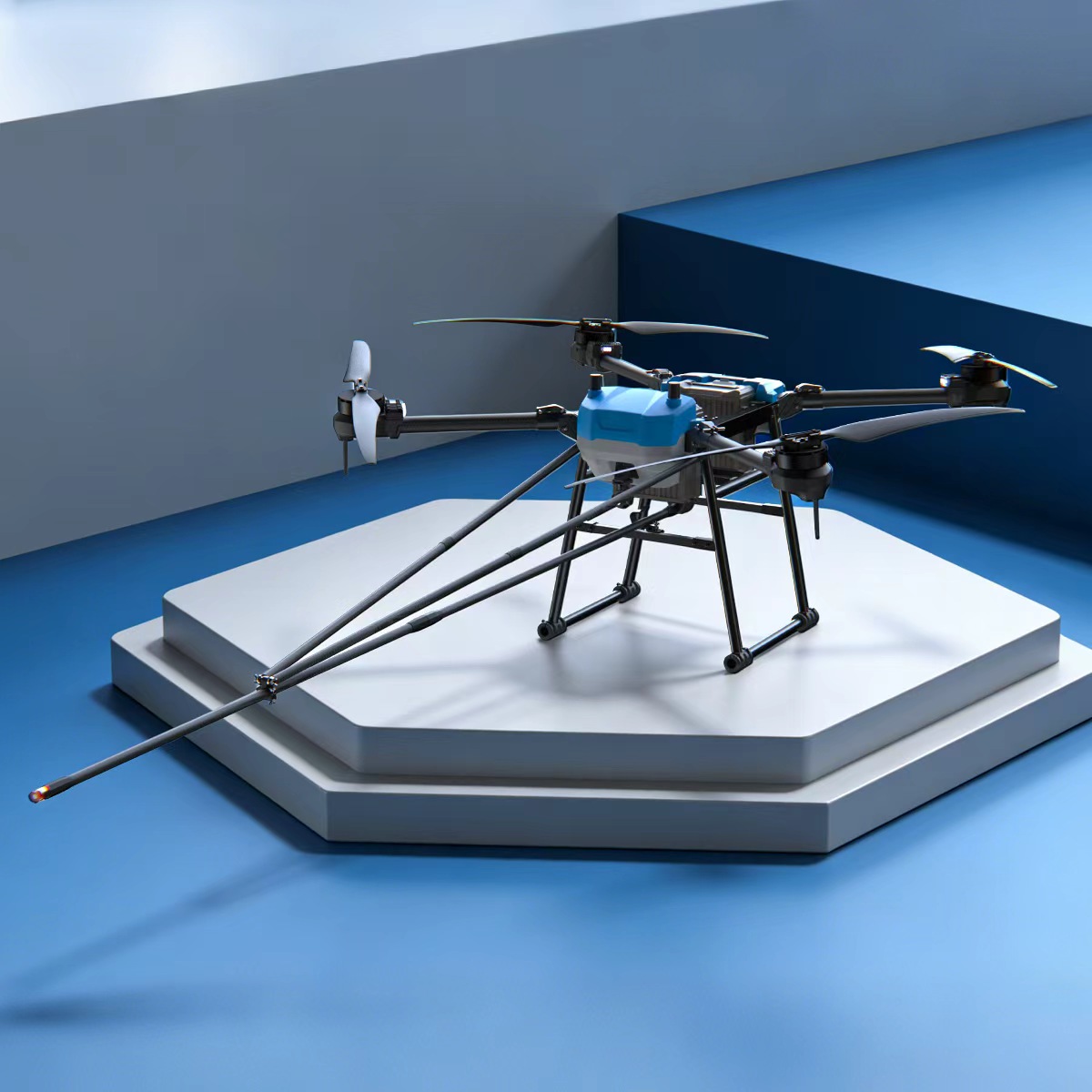
VastArrive B100P Agricultural Drone
Designed for high-altitude cleaning applications, with a ground-based water supply and modular spraying system.
Key Features
- 360-degree uniform fertilizer spreading system
- Integrated measurement system for tracking fertilizer consumption and load
- 70L fertilizer tank for granular material operations
70L
Fertilizer Tank
360°
Spreading System
8–10m
Nominal Spreading Range
How to Improve Spreading Accuracy When Using Different Granule Sizes
To get an even application of the fertilizer, calibration of the system should be done according to the physical properties of the material.
Consistency of Particle Size
Prior to filling the fertilizer into the applicator, ensure that its particle size is consistent, since it can reduce disparities in discharge and application pattern.
Check the Material Flow Prior to Using the Equipment
The fertilizer must flow freely from the hopper outlet, there being no indications of bridging, caking, excessive dust or poor flow.
Adjust the Application Rate
Find out how much of the fertilizer is actually being applied within a predetermined operating time period and calibrate it according to the rate at which it should be applied.
An exact measurement system, like the one built into the B100P agricultural drone, helps to calculate the amount of fertilizer consumed and its loads during the operation.
Apart from the measurement system, the B100P agricultural drone comes equipped with a 70L fertilizer tank, giving another additional load capacity. The load capacity depends on the bulk density of the fertilizer used and the capacity of the tank.
Perform Field Distribution Test
Install the collection trays evenly spaced within the span of the expected spread width and then measure the weight of fertilizer contained in each tray to identify the over and under deposit areas.
Coefficient of Variation (CV) is a measure of distribution uniformity. The smaller the CV value, the more uniform the distribution is.
Flight and Spreading Modifications
The parameters such as the height of aircraft, flight speed, speed of spreading disc, and the settings of material discharge vary according to the type of fertilizer being distributed. They need to be determined by field testing.
Conclusion
Granule sizes, particle weight, and flowability influence the process of the distribution of fertilizers by means of drone technology in agriculture. Knowing these factors and regulating the spreading process can possibly solve the problem of distribution inconsistency and ensure efficient fertilization.
An appropriate solution for effective fertilization in large scale will be the utilization of VastArrive B100P multifunctional heavy drone with 70L fertilizer tank and 360° uniform spreading system. Proper selection and calibration of the system can increase efficiency of fertilization.