
Drone Package Delivery: Can It Really Reduce Business Logistics Costs?

With the continuous growth of e-commerce, industrial supply chains, and on-demand delivery demands, traditional logistics systems are facing unprecedented pressure. Drone package delivery is emerging as a new solution to improve delivery efficiency, reduce costs, and expand service boundaries.
In this article, we will provide a comprehensive analysis of how drone delivery is transforming modern logistics, covering industry pain points, technical principles, application scenarios, and investment value.
Table of Contents
What is Drone Package Delivery? How Does It Work?
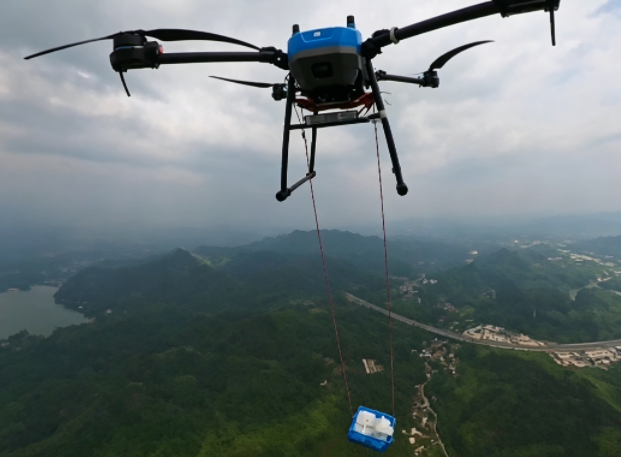
The concept of drone package delivery is the process of using drones for package deliveries from one point to another with ease, safety, and efficiency. The technology uses features such as GPS navigation, automatic obstacle detection using artificial intelligence (AI), automatic take-off and landing, and remote monitoring, thus appropriate for use in e-commerce, medicine logistics, and industry supplies.
The technology loads the package to be delivered to the UAV, then automatically selects the ideal delivery route using AI and delivers the package while at the same time being monitored. Upon reaching the destination, the drone executes the perfect landing or package delivery, logs the process, and comes back to its base station.
Core Advantages of Drone Package Delivery
Drone package delivery helps businesses reduce logistics costs, improve delivery speed, and overcome the limitations of traditional transportation systems. Below are its benefits:
Lower Operating Costs
The main benefits of drone parcel delivery include savings due to reduced expenses associated with logistics. Since drones minimize the use of manual labor, reduce vehicle usage, and decrease the amount of fuel, they become more profitable tools in the case of frequent delivery services.
Faster Delivery Speed
Compared to conventional land-based delivery options, drones are able to overcome traffic problems and fly straight to destination locations. This allows for improved service speed and faster deliveries on a same-day or as-needed basis.
Access to Distant Regions
The operation of drone delivery systems is quite easy for regions where other logistics are unable to access. Irrespective of whether it’s a mountainous region, island, or any other distant location, the use of drones offers an easier and efficient mode of transport with lesser requirements.
24/7 Operation with Automation
By using standardized software and automation technologies, drones can deliver services all throughout the day and night. The involvement of minimum human beings ensures that logistics becomes more efficient and the company is able to scale its supply chain.
Application Scenarios: Where Is Drone Package Delivery Being Used?
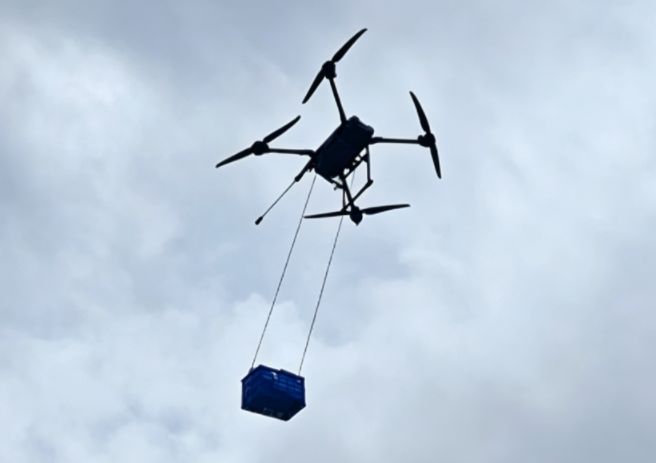
With the rapid development of drones, their use for package delivery purposes is not only an idea but is gradually being implemented in many different sectors. In conditions where efficiency, speed, and automation play a crucial role, drone delivery provides obvious benefits.
E-commerce and Retail Delivery
Within the e-commerce and retail sphere, drones are applied for efficient delivery of goods within the last mile. Drones deliver orders much faster than traditional means of ground transportation and help avoid any possible traffic congestion that might affect customers negatively.
Medical Sector
Drones are extensively applied in the medical sector for delivering emergency medicines, vaccines, blood samples, and other medical materials. In case of emergency or in the context of remote locations, drones help deliver orders fast.
Agriculture
Drones are not limited to crop dusting or planting; they have found applications in the transportation of agricultural produce. They assist in increasing the efficiency of farms as well as increasing agricultural automation.
Industrial and Construction Sites
In extensive industrial parks and construction sites, the drones can be applied in the swift movement of components, tools, and other consumables. As opposed to the conventional manual movement of these components, the use of drones in the movement process increases their efficiency while decreasing on-site waiting time.
Drone Delivery vs Traditional Delivery: Cost and Efficiency Comparison
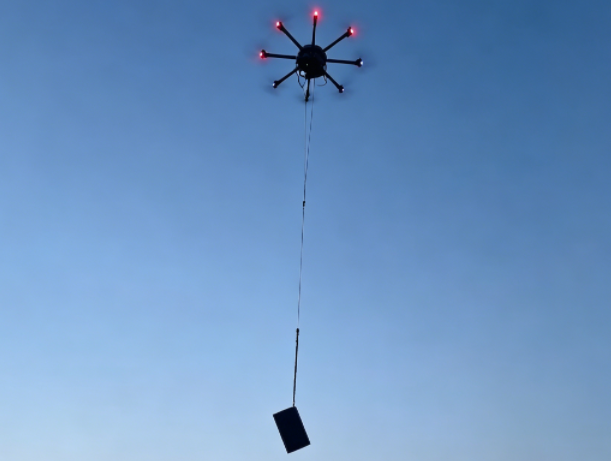
In the long run, drones are likely to change the cost framework of logistics services. Drones operate based on intelligence, which enables companies to enhance their productivity without increasing labor input or vehicle use.
The table below shows the main differences between drone-based logistics services and traditional logistic frameworks.
| Comparison Item | Traditional Delivery | Drone Package Delivery |
| Labor Dependency | High reliance on drivers and manual operations | Highly automated with minimal human intervention |
| Delivery Speed | Affected by traffic and road conditions | Direct flight paths with faster delivery times |
| Operating Cost | Continuous fuel, labor, and vehicle maintenance costs | Lower long-term operating costs after deployment |
| Last-Mile Efficiency | Often inefficient and expensive | Optimized for fast last-mile delivery |
| Accessibility | Limited in remote or complex terrains | Can easily reach mountains, islands, and industrial sites |
| Scalability | Requires more vehicles and manpower | Easier to scale through automation |
| Operational Stability | Impacted by traffic congestion and labor shortages | More predictable and stable operations |
Current Challenges and Technology Solutions of Drone Package Delivery
Despite rapid advances in drone package delivery, there are a number of challenges faced by the industry.
Regulatory Issues
Among these is regulation, especially when it comes to airspace management and authorization for commercial flights. Nevertheless, with more nations becoming increasingly supportive of low-altitude economies, drone deliveries are becoming increasingly common.
Weather Conditions and the Environment
Strong winds and rainy weather conditions pose certain difficulties in the operation of drones. Fortunately, today’s industrial drones have become increasingly better at resisting wind and rainfall through their improved systems.
Flight Safety and System Stability
Safety is another key concern in drone logistics. Today, AI-powered obstacle avoidance systems, real-time monitoring, and redundant control technologies help drones avoid collisions and maintain stable operations during flight.
Payload and Battery Limitations
Payload capacity and flight endurance are still technical limitations for many delivery drones. However, continuous improvements in battery technology and the development of different drone models for various delivery tasks are helping solve these challenges.
Why Is Now the Best Time to Invest in Drone Package Delivery?
The use of drones for package delivery services is quickly transitioning from the research phase to actual commercialization. In the age where the logistics industry is racing towards automation, the adoption of drones in the delivery process will help achieve greater efficiency and cost reductions while increasing supply chain resilience.
On top of this, technological improvements in drone design, battery efficiency, AI, and even regulation have made the landscape highly conducive to the development of the industry. The sooner companies adopt drones in their business processes, the greater their chances of having a competitive advantage in the logistics sector in the coming years.
How to Choose the Right Drone Package Delivery?
In choosing a drone package delivery system, one needs to specify the application scenario and requirements. Different industries have different needs concerning the amount of cargo to be carried, the distance to fly, the frequency of delivery services, and the degree of automation. Thus, the decision shouldn’t be made solely on the basis of cost-effectiveness but rather on suitability and reliability as well.
Payload Capacity and Flight Endurance
Payload capacity directly determines what types of goods a drone can carry and its efficiency per trip. Flight range and endurance affect the operational coverage and delivery stability. For high-frequency or long-distance delivery scenarios, industrial-grade drones with stronger endurance and higher stability are essential.
Automation and Safety Performance
An advanced delivery system will also need to feature high levels of automation in the form of automated path planning, intelligent obstacle avoidance, and automatic return mechanisms. Equally essential will be safety redundancy design and regulation compliance features that guarantee stable flight and ensure sustainable business activities in the long term.
After-Sales Service and System Upgrade Capacity
Besides product efficiency, after-sales service and technical support provided by the manufacturer, along with system upgrade ability, play an important role. This is because drone technology is rapidly advancing, and upgradeable systems will enable companies to cope with future market challenges.
Conclusion: Drone Delivery Is Becoming the Future Standard of Logistics
Drone package delivery is not just something that will happen in the future; rather, it is a cutting-edge and realistic application that is now being implemented. From the point of view of logistics firms, it is not merely an advancement in terms of technology; rather, it offers them the chance to reinvent their business model entirely because of the cost-saving potential, efficiency gains, and greater capabilities offered by drone delivery services.
If you are seeking a smarter logistics option for your company, drone delivery should definitely be considered. For companies seeking reliable delivery drone solutions, VastArrive provides advanced and scalable delivery drone designed to support real-world commercial applications.