
What Are The Main Agricultural Drone Licenses?

Agricultural drones are now widely used for crop spraying, fertilization, and precision agriculture. As their applications expand, regulations are becoming increasingly stringent, especially regarding chemical spraying operations.
Operators, farmers, and service providers frequently ask: Do I need an agricultural drone license to operate a spraying drone?
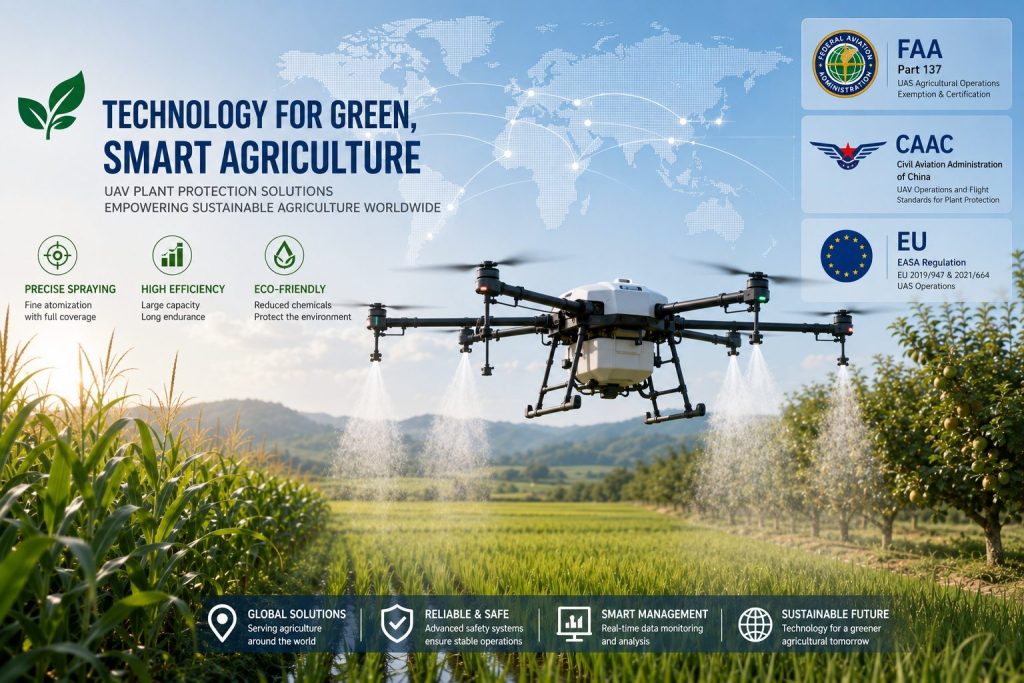
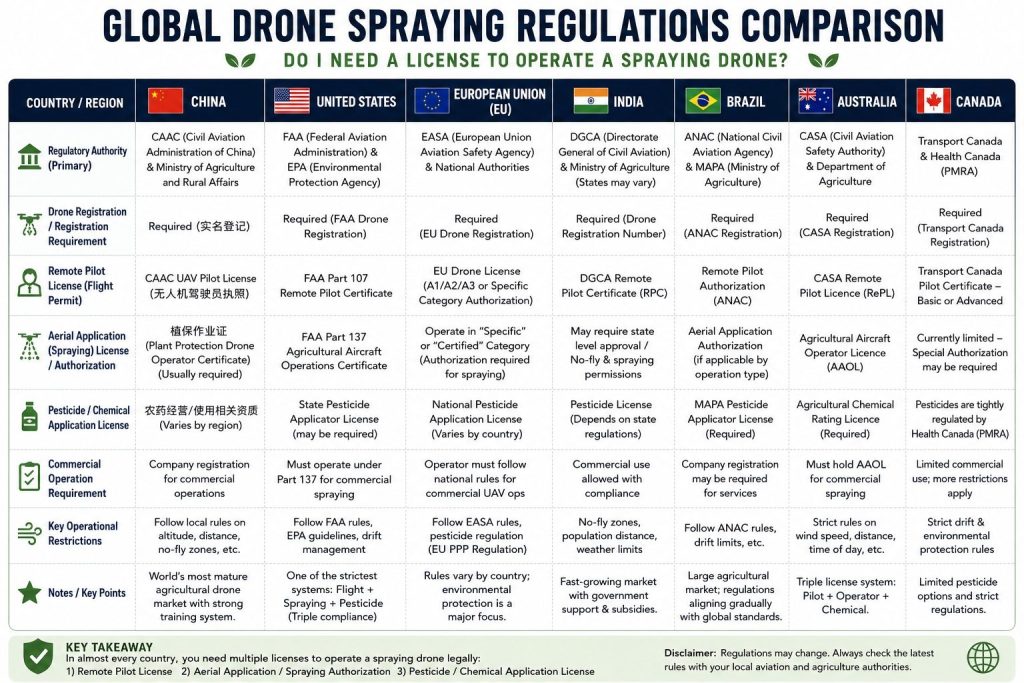
Almost all major agricultural countries require “at least one or more licenses,” and typically employ a dual regulatory system encompassing both flight operations and pesticide application.
Table of Contents
United States: Strict Dual-System Regulation
In the United States, agricultural drone operations are regulated by aviation law and environmental safety law.
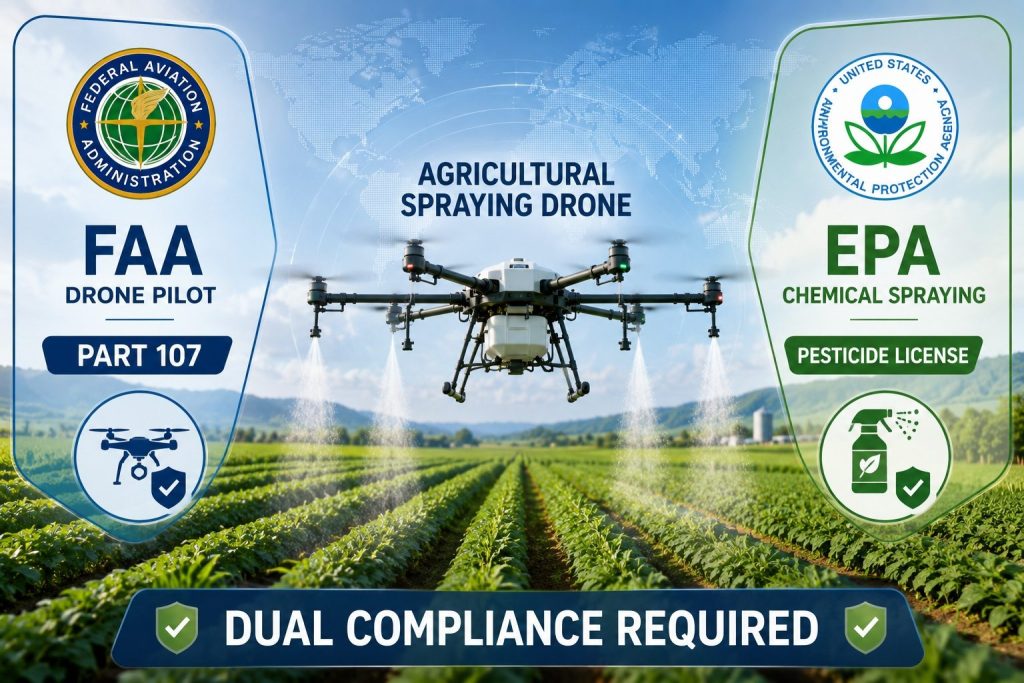
Drone Operation Requirement
All commercial drone pilots must obtain certification from the Federal Aviation Administration.
- Required certification: Remote Pilot Certificate (Part 107)
- Mandatory for any commercial agricultural drone activity
- Includes crop monitoring, mapping, and spraying support operations
Chemical Spraying Requirement
Spraying pesticides requires additional compliance under environmental regulations:
- Certification for pesticide applicators is required (federal + state level)
- Operators must follow Environmental Protection Agency (EPA) guidelines
- Some states require separate agricultural spraying permits
Practical Implication
Even if you are a certified drone pilot, you cannot legally spray crops without pesticide application authorization.
This makes the U.S. one of the most regulated environments for agricultural drone spraying.
China: Large-Scale Commercial Adoption with Structured Training
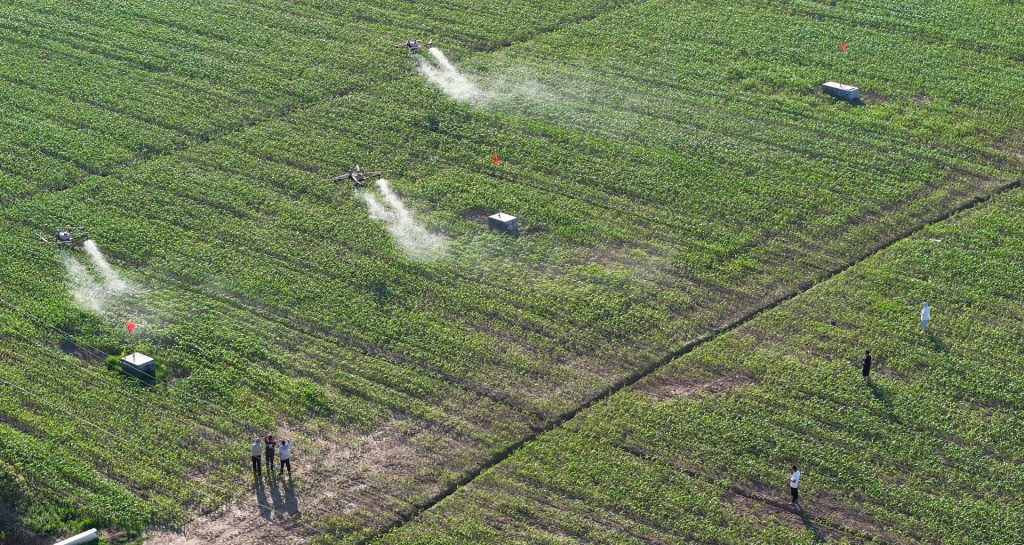
In China, agricultural drones are widely used in rice, corn, and orchard farming, often at industrial scale.
Regulatory Structure
Operators must complete UAV pilot training and certification
Commercial agricultural drone use requires registration and compliance with aviation authorities
Some regions require filing with local agricultural bureaus for pesticide operations
Industry Practice
Unlike some Western countries, China heavily integrates manufacturers into training systems. Many operators are trained through certified programs provided by drone manufacturers and agricultural cooperatives.
Practical Implication
China’s system is highly operational and industry-driven. Certification is often more training-based, but still legally required for commercial spraying.
European Union: Risk-Based Authorization System
In the European Union, agricultural drone regulation is standardized under the European Union Aviation Safety Agency framework.
Key Structure
Instead of a single license system, operations are classified into risk categories:
- Open category (low-risk operations)
- Specific category (most agricultural spraying operations)
- Certified category (high-risk operations)
Requirements for Agricultural Spraying Drones
- Pilot competency training or certification
- Operational risk assessment (often SORA-based)
- Authorization from national aviation authority
Countries such as France and Germany apply additional restrictions for pesticide spraying, often requiring permits beyond aviation approval.
Practical Implication
In the EU, compliance is less about a single license and more about proving operational safety and risk control.
India: Fast-Growing Market with Controlled Expansion
In India, agricultural drones are being promoted for efficiency in large-scale farming.
Requirements
- Remote Pilot Certificate under aviation authority guidelines
- Drone registration in national systems
- Special permissions for pesticide spraying in many regions
Industry Context
Government subsidy programs are accelerating adoption, but regulatory oversight remains strict for chemical spraying due to environmental and health concerns.
Practical Implication
Operators typically need formal aviation certification plus additional permissions depending on the crop protection chemicals used.
Brazil: Agriculture-Driven Regulatory Balance
In Brazil, agricultural drones are heavily used in soybean, sugarcane, and large-scale plantations.
Regulatory Bodies
Requirements
Drone registration and operational approval
Licensed pilot for commercial operations
Authorization for pesticide application
Practical Implication
Brazil enforces strong coordination between aviation safety and agricultural chemical regulation, making compliance essential for commercial operators.
Australia: Structured Licensing for Commercial UAV Use
In Australia, agricultural drone spraying is regulated with a clear licensing hierarchy.
Requirements
- Remote Pilot Licence (RePL)
- Operator Certificate (ReOC) for commercial operations
- Agricultural chemical handling certification
Practical Implication
Australia separates:
- Pilot capability (flying the drone)
- Business authorization (operating commercially)
- Chemical safety compliance (spraying operations)
This three-layer system is considered one of the most structured globally.
Canada: Strict Environmental Oversight and Controlled Expansion
In Canada, agricultural drone spraying is regulated through both aviation safety and pesticide control systems. Compared with some rapidly expanding markets, Canada maintains a more cautious and environmentally focused regulatory approach.
Key Features
- Transport Canada drone pilot certification is required for commercial UAV operations
- Drone registration is mandatory for applicable aircraft categories
- Pesticide application is heavily regulated by provincial authorities and Health Canada (PMRA)
- Additional approvals may be required depending on crop type, chemical usage, and operating region
- Strong emphasis on environmental protection, spray drift control, and operator accountability
Practical Implication
Canada allows agricultural drone spraying under controlled conditions, but operators must comply with both aviation and pesticide regulations. Compared with many other agricultural markets, the Canadian system places stronger emphasis on environmental risk management and safe chemical application practices.
What Actually Matters for Compliance
Across all major agricultural economies, three consistent regulatory pillars appear:
1. Aviation safety certification: Ensures the operator can safely fly the drone.
2. Commercial operation authorization: Distinguishes hobby use from professional agricultural services.
3. Chemical application compliance: Ensures pesticides or fertilizers are used legally and safely.
| Region | Aviation License | Commercial Approval | Spraying Permission |
| United States | Required | Required | Required (EPA + state) |
| China | Required | Required | Required (local filing) |
| EU | Required | Required | Required (national rules) |
| India | Required | Required | Restricted |
| Brazil | Required | Required | Required |
| Australia | Required | Required | Required |
| Japan | Required | Required (ReOC) | Required (Provincial pesticide compliance + Transport Canada regulations) |
Practical Advice (For Agricultural Businesses)
If you are planning to enter the drone spraying business, you should focus on:
- Whether enterprise-level certification (AAOL / Part 137) is required
- Compliance training (prioritizes equipment)
- Local agricultural regulatory policies
- Whether “commercial spraying” is permitted