
Top 10 Transmission Line Inspection Problems Drones Can Identify

Modern transmission networks span vast distances across forests, mountains, farmland, and urban areas, making maintenance a constant challenge for utilities. Many transmission line issues begin as small defects, such as damaged insulators, loose connectors, or vegetation encroachment.
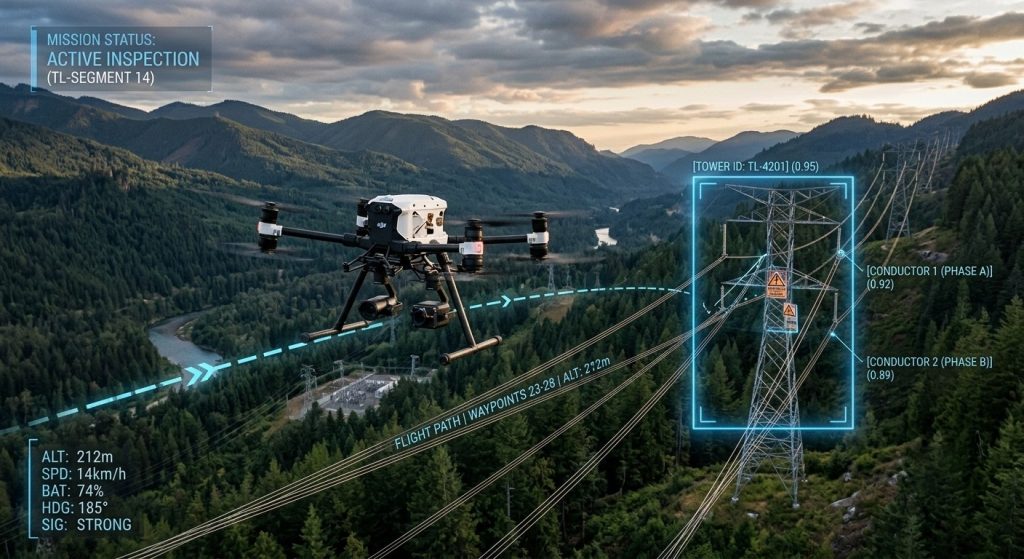
This is why transmission line inspection is essential. Equipped with high-resolution cameras, thermal sensors, and LiDAR, a power line inspection drone can identify these problems early, helping prevent costly outages and infrastructure damage.
Table of Contents
1. Cracked or Broken Insulators
Insulators are made to protect the conductors that are energized from towers for transmission. However, the years of exposure to pollution, sunlight salt spray, winds, and temperature variations can cause their structure to weaken.
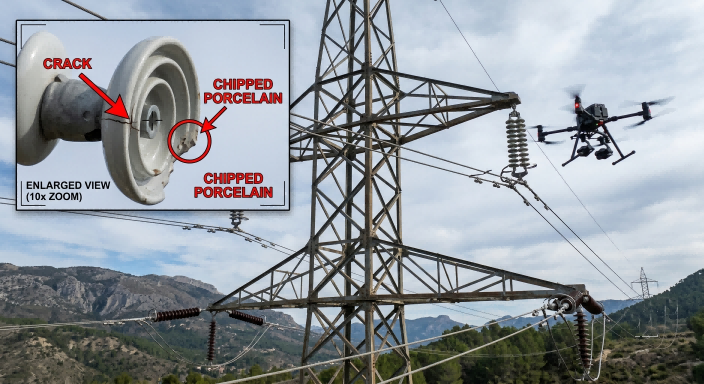
Common defects include:
- Surface cracks
- Chipped porcelain
- Broken sheds
- Flashover marks
- Contamination buildup
In an Transmission line examination drones with optical zoom cameras are able to record detailed images of the insulator strings at the safety of a distance, making minor flaws more easily identifiable.
Even a small amount of damage to the insulator can increase the likelihood of flashovers, electrical leaking or unexpected line failures.
2. Thermal Hotspots on Connectors
Every defect is not observed with the naked eye.
Connections that are loose, older hardware, and high resistance can cause abnormal heat long before visible damage is apparent.
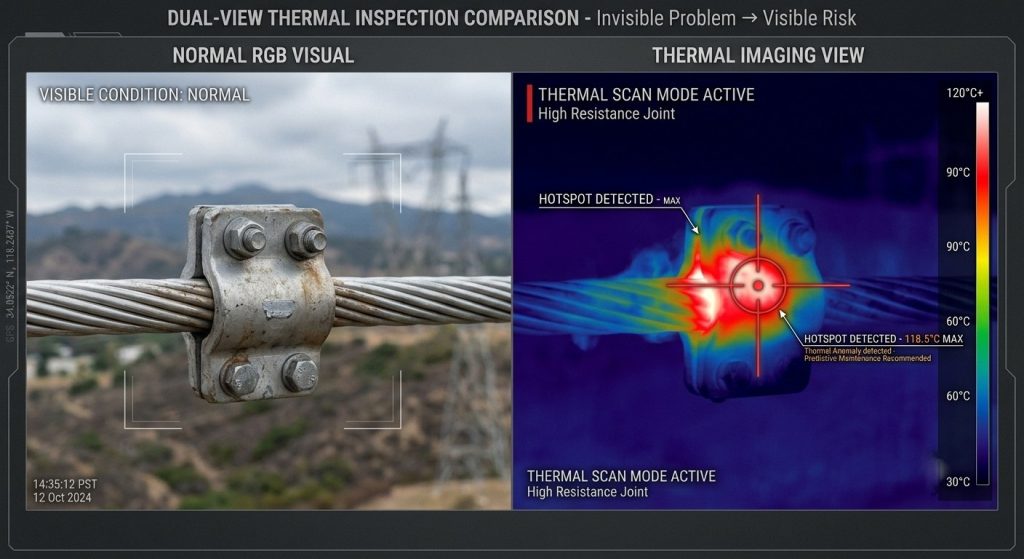
The powered line inspection drone equipped with a thermal camera will quickly recognize:
- Connectors that are overheated
- Hot clamps
- Failure splices
- Uneven load distribution
Thermal anomalies are usually early indications of equipment failure, and must be taken care of before they get out of hand.
3. Broken Conductor Strands
Conductors in transmission are continuously exposed to:
- Vibrations caused by wind
- Ice loading
- Mechanical tension
- Temperature contraction and expansion
In time the forces could result in individual strands of the conductor’s strands to fracture off or split.
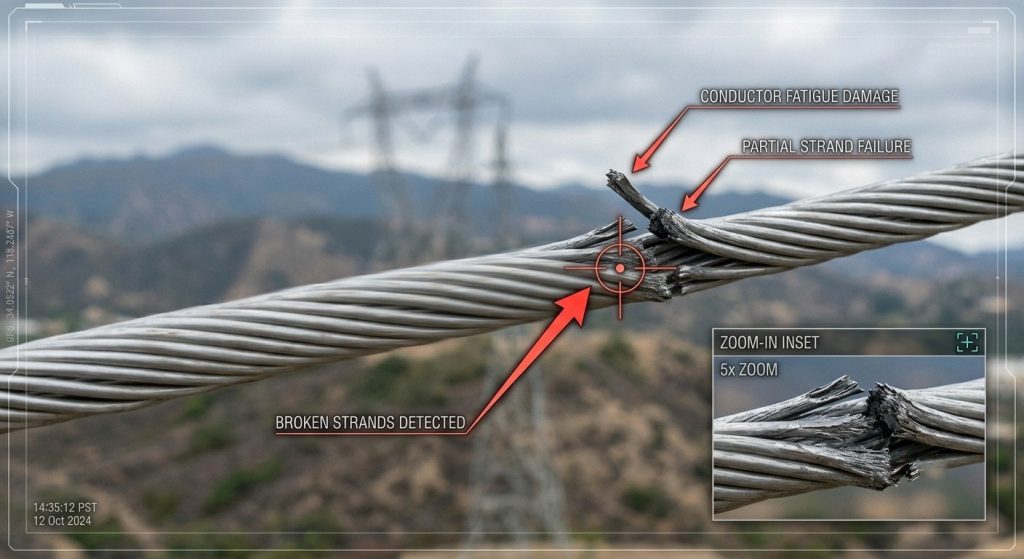
Drone inspections permit operators to zoom into conductors and determine:
- Strand separation
- Surface wear
- Abrasion damage
- Partial Strand failure
If not repaired the damage to strands could reduce conductor strength and increase chance of failure.
4. Excessive Conductor Sag
As transmission lines get older, the conductor’s sagging can be increased because of the wear and tear of mechanical components, temperatures fluctuations or structural problems.
Sagging excessively can decrease ground clearance and pose safety issues.
Utilizing LiDAR technology, drones are able to precisely determine:
- Conductor-to-ground clearance
- Sag profiles
- Unauthorized Clearance
Insufficient clearance could result in legal violations and increase the chance of coming into contact with objects.
5. Vegetation Encroachment
Vegetation is one of the most frequent reasons for transmission line accidents all over the world.
The trees that grow near conductors could result in:
- Flashover risks
- Ground faults
- Wildfire hazards
- Emergencies and outages
Contemporary drone-based transmission line monitoring systems employ LiDAR as well as AI analysis to detect vegetation that is not cleared.
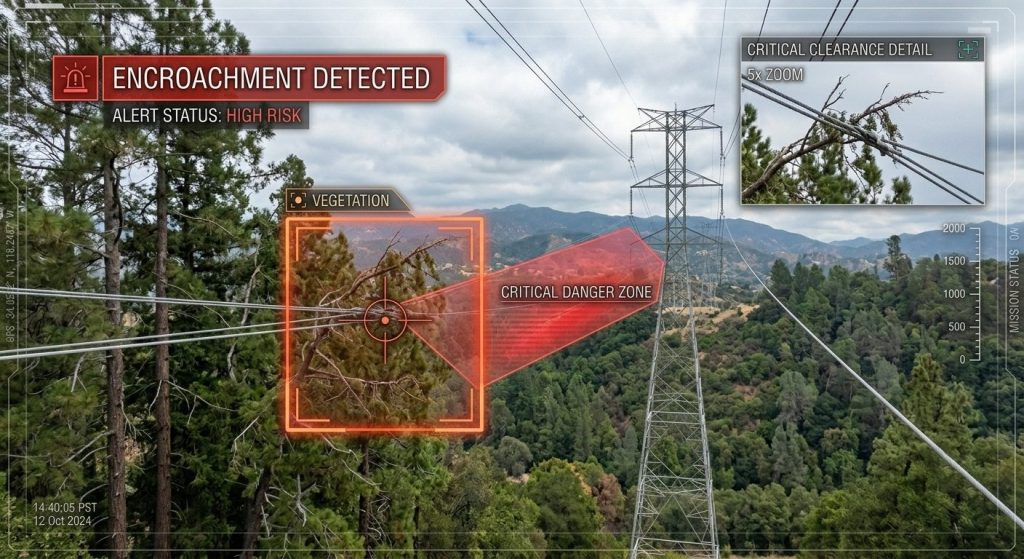
Early detection of growth in vegetation is less costly than reacting to wildfire or a line fault.
6. Corrosion on Towers and Hardware
Transmission towers are in operation in harsh environments for a long time.
Industrial zones, coastal areas and regions that have high humidity are often prone to accelerated corrosion.
Common places to go include:
- Tower legs
- Bolted connections
- Crossarms
- Grounding components
Drone images allow maintenance teams to track the progress of corrosion without having to climb structures.
Corrosion can compromise the integrity of structures and decrease asset life span.
7. Missing or Loose Bolts
A transmission tower could include thousands of bolts as well as fasteners.
Vibration, strong winds and long-term use can cause hardware to become loose over time.
Using high-resolution imaging, a power line inspection drone can identify:
- Missing bolts
- Nuts loose
- Fittings that are not aligned
- Hardware that is damaged
A single fastener that is missing may appear minor, but multiple hardware failures can affect the stability of a tower.
8. Bird Nests and Foreign Objects
Transmission structures often attract birds and debris that is blown into the air.
Inspectors often discover:
- Bird nests
- Plastic bags made of plastic
- Fishing lines
- Kites
- Materials that are blown by wind
These objects could cause unintentional electrical faults in high winds or storms.
The removal of foreign objects before they touch energized components can help keep outages from happening.
9. Damaged Vibration Dampers and Fittings
Vibration dampers are used to stop conductor movements caused by winds.
As time passes, these components could develop into:
- Loose
- Broken
- Detached
- Corroded
Drone inspections offer detailed views of fixtures that are difficult to see from a distance.
Damaged dampers can increase fatigue of the conductor and increase the cost of maintenance.
10. Tower Deformation and Structural Damage
Flooding, severe weather foundation settlement, severe weather and landslides could alter the geometry of towers.
During an inspection of the transmission line drones are able to identify:
- Leaning towers
- Bent crossarms
- Twisted members
- Structural deformation
- Foundation displacement
With the ability to capture images from multiple angles, drones offer greater depth of analysis of the ground than traditional inspections.
The structural issues could compromise the security and reliability that the whole transmission line.
Why Drone Transmission Line Inspection Is Becoming the Industry Standard
The issue facing utilities today isn’t just repairing problems, it is identifying the problem before it can occur.
Many of the problems mentioned previously start out as minor problems that are hard to spot in routine patrols of the ground. Modern Power line drone can use thermal analysis, visual imaging and 3D mapping in order to spot issues more quickly and with greater accuracy.
For utilities this is a better maintenance plan and improved asset visibility and less disruptions that are unexpected.