
Drone for Energy Industry: Applications, Benefits & Inspection Solutions

As the global energy industry continues to move toward digitalization and intelligence, traditional manual inspection is increasingly struggling to meet the maintenance demands of modern energy facilities. Whether it is oil and gas pipelines, offshore drilling platforms, wind turbines, solar power plants, or power transmission lines, these assets share the characteristics of wide coverage, high inspection difficulty, high labor costs, and significant safety risks.
In recent years, drones for the energy industry have become essential tools for energy companies to enhance operational efficiency. Equipped with high-precision cameras, thermal imaging equipment, LiDAR, and AI intelligent recognition technology, drones can rapidly complete equipment testing, fault identification, and data collection, significantly improving inspection efficiency while reducing safety risks and maintenance costs.
This article introduces the primary application scenarios and advantages of drone for energy industry, as well as how to choose a suitable industrial drone solution for the energy sector.
Table of Contents
Why is the Energy Industry Increasingly Adopting Drones?
For a long time, the inspection and maintenance of energy assets has been a high-risk, high-cost, and labor-intensive task. Whether dealing with offshore drilling platforms, thousands of kilometers of long-distance oil and gas pipelines, or transmission lines traversing rugged mountains, traditional full-manual or helicopter inspections were not only inefficient but constantly threatened the lives of frontline workers.
With the leap forward in sensor technology, artificial intelligence (AI), and battery endurance, drones in the energy industry have experienced explosive growth. With their unique all-weather, high-precision, and low-cost advantages, drones are profoundly reshaping the asset management logic of both traditional and new energy sectors, becoming a “game-changer” that drives cost reduction and efficiency for energy enterprises.
Key Application Scenarios of Energy Industry Drones
From oil and gas to renewable power generation, modern industrial drones are reshaping the operations and maintenance (O&M) methods across the entire energy industry. Below is a detailed analysis of specific drone applications across core energy sectors:
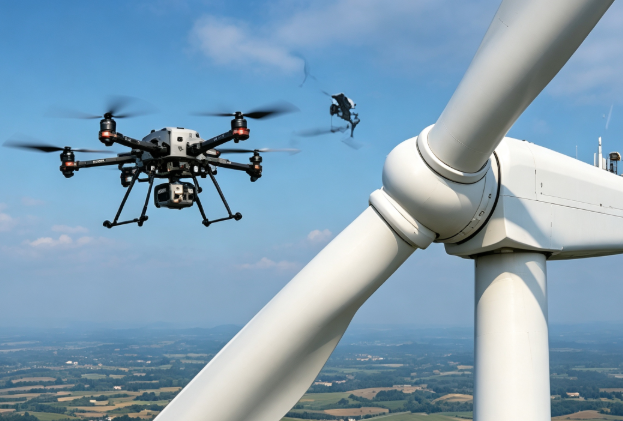
1. Wind Turbine Inspection
In modern days, the towers and rotor blades of wind turbines often exceed 100 meters in height, while the conventional rope climbing inspection method is both time and energy consuming and involves great danger. There are certain benefits of drones for wind power industry:
Blade Inspection: Automatic flight route planning that enables drone to perform a thorough imagery inspection of wind turbine blades and detect such issues as cracks on millimeter level, lightning strikes, corrosion, and delamination.
Thermal Imaging and 3D Modeling: Detection of structural flaws inside the structure and fast creation of 3D digital model of wind turbines.
High Speed and Little Down-time: The total inspection of just one wind turbine usually takes no more than ten minutes.
2. Oil & Gas Inspection
The oil and gas industry is one of the most mature and technologically integrated fields for industrial drone applications. Drones can safely and efficiently cover complex terrain and high-risk environments:
Pipeline Inspection for Oil and Gas: Employing HD Optical Cameras and LiDAR technology for fast screening of landslides, unauthorized constructions, and corrosion of the body of pipelines.
Inspection of Storage Tanks and Refinery: Doing non-destructive inspections up close of the tall walls of storage tanks, flare stacks, and pipe racks without the cost and production disruption involved in scaffolding.
Offshore Drilling Platform Inspection: Overcoming challenging ocean environments to do physical inspections of the platform structures and confined areas.
Leak Detection of Natural Gas: Carrying thermal imaging cameras and sensitive methane gas detectors to detect the natural gas leakage spots.
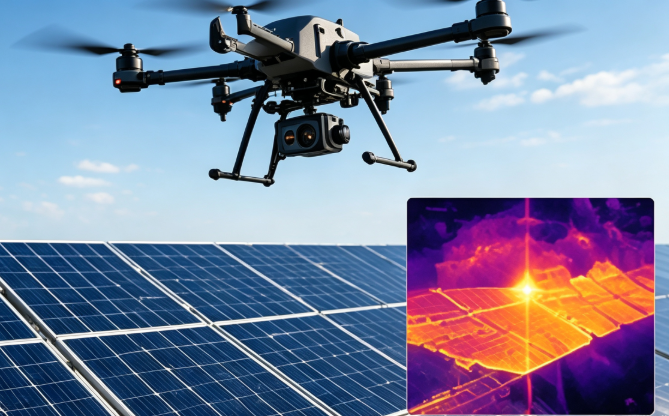
3. Solar Farm Inspection
Solar energy power plants installed on the surface usually have huge areas occupied by tens of thousands to millions of photovoltaic cells, which makes the laborious piece-by-piece inspection impractical.
Hot Spot and Fault Localization: The usage of specialized drones that are equipped with infrared thermographs flying above the power plant will enable quick detection of “hot spots” caused by different reasons: micro-cracks, shading, dirt, or even internal short circuits.
Full Lifecycle Management: Rapidly screening damaged panels, junction box faults, and areas with abnormal power generation efficiency, significantly shortening the data collection cycle and safeguarding overall power plant generation benefits.
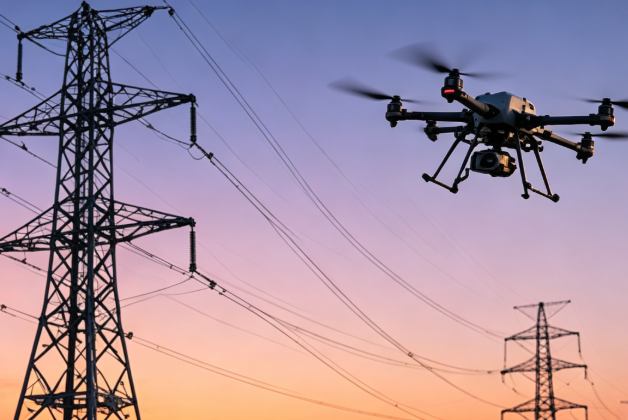
4. Power Line Inspection
Power transmission lines span vast distances, frequently crossing complex terrains such as steep mountains, dense forests, and rivers. Manual line patrolling is not only extremely difficult but also prone to blind spots.
Detailed Grid Asset Screening: Routinely checking transmission tower structural deformation, loose bolts, tower corrosion, and insulator flashover damage.
Right-of-Way (ROW) Safety Monitoring: Accurately measuring conductor sag, and monitoring tree encroachment into safety clearances and foreign object entanglement (such as bird nests or kites) in real time.
Intelligent Autonomous Operations: Utilizing preset automatic flight path functions to realize normalized power grid inspections, effectively improving grid operational reliability and power supply security.
5. Hydropower and Other Clean Energy Facilities
Beyond the fields mentioned above, the application of drones in new power systems and various clean energy facilities is becoming increasingly widespread:
Hydropower Dam Inspection: Conducting high-resolution aerial monitoring of dam cracks, seepage points, and spillways.
LNG (Liquefied Natural Gas) Storage Tank Detection: Performing safety and thermal status inspections in ultra-low-temperature storage tank areas.
Nuclear Power Plant and Energy Storage Station Inspection: Conducting regular infrared temperature measurements and safety patrols on peripheral facilities of nuclear power plants and large electrochemical energy storage battery cabins to prevent thermal runaway risks.
Core Advantages of Using Energy Industry Drones
Explore how industrial drones completely revolutionize the asset management models of modern energy enterprises by reducing operational risks, compressing O&M costs, multiplying inspection efficiency, and providing high-precision multi-dimensional data.
Below is a detailed analysis of the core advantages of drones in ensuring energy security and supporting predictive maintenance:
1. Enhancing Operational Safety
Energy facility inspections constantly face harsh environments involving high altitudes, high voltages, high temperatures, and hazardous chemicals.
Drones can completely replace humans in entering high-risk areas, thoroughly liberating inspection personnel from traditional rope-climbing and live-line operations, effectively preventing personal safety accidents and significantly reducing the HSE management pressure on enterprises.
2. Reducing Inspection Costs
Compared to helicopter rentals, high-altitude scaffolding installation, or massive manual teams, drones significantly cut down travel, hazard subsidies, and equipment rental expenses.
At the same time, their efficient operations compress equipment downtime to a minimum, greatly reducing production losses caused by shutdowns and lowering overall maintenance budgets across the entire lifecycle.
3. Increasing Inspection Efficiency
Manual inspections of several kilometers of power transmission lines or tens of wind turbines usually require many days or even weeks; yet drones, with the help of automatic flight planning, can do the job within a few hours and quickly produce structured reports about inspections that enable O&M crews to immediately know the condition of assets.
4. Acquiring More Accurate and Multi-Dimensional Industrial Data
Modern industrial drones are equipped with a variety of advanced payloads that enable them to carry high-definition cameras capable of detecting tiny cracks, infrared devices to identify heat issues, LiDAR that helps build a 3D point cloud, and other sensors that detect any leaks of gas. Equipped with RTK technology, they provide full information without any dead angles, which allows for making scientific-based maintenance decisions.
5. Supporting Predictive Maintenance
Combined with cutting-edge AI image recognition technology, drones can keenly capture hidden dangers such as minor cracks, early-stage corrosion, or localized temperature anomalies.
Through comparative analysis of multi-period inspection data, they help enterprises perform precise prevention before faults escalate into catastrophic shutdowns, achieving a shift from reactive repairs to proactive prediction.
What Technologies Do Energy Industry Drones Typically Carry?
According to the differentiated needs of different sectors such as oil, natural gas, wind power, solar power, and electricity, modern industrial-grade drones typically highly integrate the following advanced technology equipment and payload systems:
High-Definition Visible Light Cameras
Equipped with large-format sensors and high-magnification optical zoom lenses, they can clearly capture microscopic details from a distance, such as wind turbine blade cracks, power equipment bolt looseness, and oil pipeline surface corrosion, ensuring no hard-to-see flaws are missed.
Thermal Imaging Cameras
Utilizing the principle of infrared thermal radiation, they precisely detect “hot spots” on solar photovoltaic panels, contact resistance anomalies in high-voltage cables, and overheating faults in generator sets and transformers, achieving early warning of hidden safety hazards.
LiDAR (Light Detection and Ranging)
Actively emitting laser pulses toward the ground to construct high-precision 3D terrain maps and point cloud models in real time. Commonly used for geological landslide monitoring around long-distance oil and gas pipelines, and 3D spatial measurement of tree obstructions along forest transmission line corridors.
Methane and Gas Detection Sensors
Equipped with high sensitivity, quick response specialized gas detectors, they are able to fly above oil and gas fields, pipe corridors, and tank farm zones to quickly measure and detect the locations of traces of methane and other gas leaks.
Multi-Spectral Cameras
Using multiple spectral bands imaging technology to observe the growth condition of vegetation, soil erosion or any other particular environmental indices in new energy plants.
RTK High Accuracy Positioning System
Realizing centimeter level dynamic differential positioning, ensuring that drones could be precisely flown according to pre-designed flight paths at millimeter levels, thereby assuring the absolute accuracy of the inspection process.
AI Intelligent Recognition Software
Algorithms used for machine learning within the on-board unit or ground station that enable automatic detection and marking of usual defects like cracks, foreign object entanglements, and damaged insulators as soon as they occur during flight or data transmission, resulting in reduced effort for reviewing images manually.
Automatic Flight Planning System
Assists in autonomous route planning, one button takeoff and landing, automatic obstacle avoidance, and BVLOS flight, thereby ensuring optimized operation.
How to Choose the Right Drone for the Energy Industry?
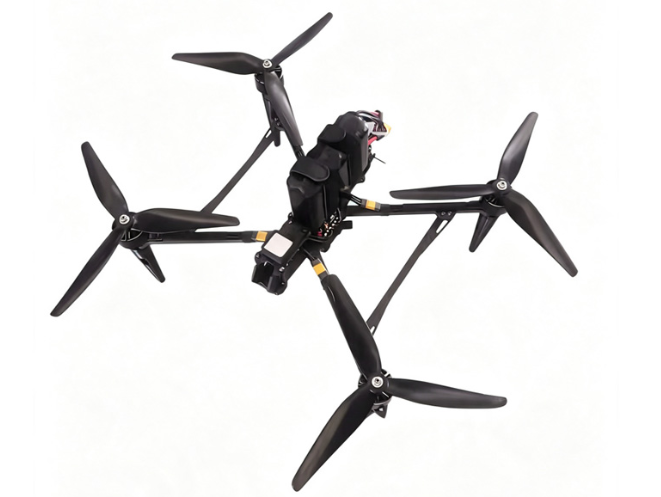
Faced with a dazzling array of industrial-grade drones on the market, energy enterprises should focus on evaluating five core dimensions during selection and procurement:
Flight Time and Endurance
Energy inspections can be subject to a variety of large-area and long-distance inspection difficulties (for instance, pipelines that stretch for kilometers, and large wind or solar farms). The better the endurance, the greater the inspection coverage from one landing and takeoff operation, which essentially cuts time spent on repeated battery changes or landings.
Wind Resistance and Stability in Difficult Climates
Drilling stations offshore, mountain wind stations, and desert photovoltaic stations usually have fluctuating climatic conditions accompanied by gusting winds. Drones should have an impressive rating of wind resistance and stability in flight posture.
Modular Payload Compatibility
Different energy assets require different technical support. Excellent industrial drones should have flexible payload expandability, allowing enterprises to flexibly switch between thermal imaging, LiDAR, or gas detectors based on specific inspection tasks, achieving multi-purpose functionality from a single platform and enhancing return on investment (Investment Return Rate).
Automation and Intelligence Level
The ease of use and automation level of a system directly determine the operating costs of an enterprise. Models that support fully automatic flight path planning, AI real-time defect recognition, and one-click generation of standard inspection reports are preferred, as they can significantly reduce technical dependence on professional pilots and allow human resources to focus more on core decision-making.
Industrial Protection Grade (IP Rating)
Outdoor energy operating environments are complex and harsh, often accompanied by wind, sand, heavy rain, high humidity, or salt spray erosion. The drone body must have high standards of dust and water resistance performance (such as IP55 or higher) to ensure long-term stable operation in extreme weather and rigorous environments, reducing equipment failure rates.
Conclusion
As the energy industry continues to move toward digitalization and intelligence, industrial drones have become essential tools for modern energy facility management. From oil and natural gas pipelines to wind power farms, and further to transmission lines and solar power stations, drones are redefining traditional inspection models.
For energy enterprises looking to improve operational efficiency, reduce maintenance costs, and ensure operational safety, deploying professional drones for the energy industry solutions has become a vital step in enhancing competitiveness.
Whether you need industrial drones for oil and gas inspection, wind turbine detection, power inspection, or new energy facility management, VastArrive can provide professional drone platforms, intelligent payloads, and customized industry solutions to help enterprises achieve safer, more efficient, and smarter infrastructure inspections. Contact VastArrive today to discover the energy industry drone solutions tailored to your project needs.