
Why Gutter Cleaning Drones Are a Safer and More Efficient Solution?

In the routine maintenance of commercial and industrial buildings, gutter cleaning has long been a headache, a non-negotiable yet high-cost line item. Traditional cleaning methods rely heavily on ladders, scaffolding, or aerial work platforms (cherry pickers). These methods are not only time-consuming and labor-intensive but also fraught with extreme safety risks.
With the generational leap in drone technology, gutter cleaning drones are completely reshaping this traditional industry. This article provides an in-depth analysis of how this automated cleaning powerhouse achieves a 3x to 5x leap in efficiency and delivers disruptive commercial returns for businesses.
Table of Contents
What is a Gutter Cleaning Drone?
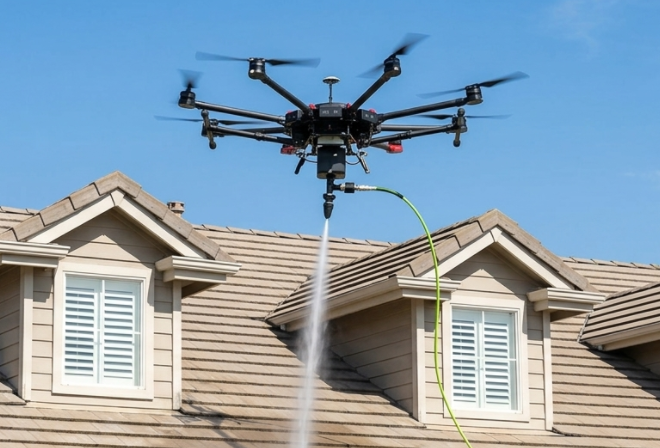
The gutter cleaning drone is an industrial drone that is made particularly for the task of cleaning building gutters. Usually, the drone comes with high-pressure washing system, HD cameras, and real time monitoring devices which make gutter cleaning a simple task without any need for manual efforts of climbing the ladder or standing on the roof.
In the case of conventional gutter cleaning, workers have to work on ladders or scaffolding which makes the whole process inefficient and risky, but by using drones, the targets become easy to access and with the use of high-pressure water jets or air blast systems, they clean the leaves, branches, silt, and other obstructions.
Why Gutter Cleaning is Critical?
Gutters and rainwater systems are generally ignored by many property managers and business owners until such a time that significant leaks and structural damage happen. With dirty rainwater systems, clogging starts the chain reaction of problems that is:
Excess Rainwater, Roof Overflow and Water Seepage: Rainwater can penetrate through waterproofing material which can result in water seepage on walls.
Foundation Movement: Clogged gutters cause rainwater to flow around the foundation and can eventually cause foundation movement.
Expensive Unplanned Repairs: Erosion and structural damage caused by gutters will not only be expensive but can also force businesses to shut down factories and commercial premises.
Industry Recommendation: Clean gutters ensure that the drainage system works perfectly even in heavy rains. It can increase the lifespan of your whole property and roof system with minimal cost.
How Gutter Cleaning Drones Work?
Modern cleaning drones are far more than just flying nozzles; they are digitized, all-in-one systems integrating inspection, cleaning, and verification:
1. Digital Site Inspection
Before the process starts, the drone performs a full check-up of the roof and the gutters through the HD FPV Camera or thermal imaging camera installed on board. Real-time data about:
Accurate locations of blockages and nature of the debris (dry leaves, compacted silt, moss, birds’ waste).
Health state of the gutters by spotting any deformations caused by aging, cracking, or loose bolts.
The Advantage: Unlike climbing ladders, a drone inspects hundreds of square meters of the roof within minutes, leaving no blind spots and enabling 100% risk assessment before performing the process.
2. Precision Cleaning Operations
Once the target area is verified, the pilot initiates the cleaning process. Depending on the site conditions and equipment configuration, drones typically utilize three modular operational modes:
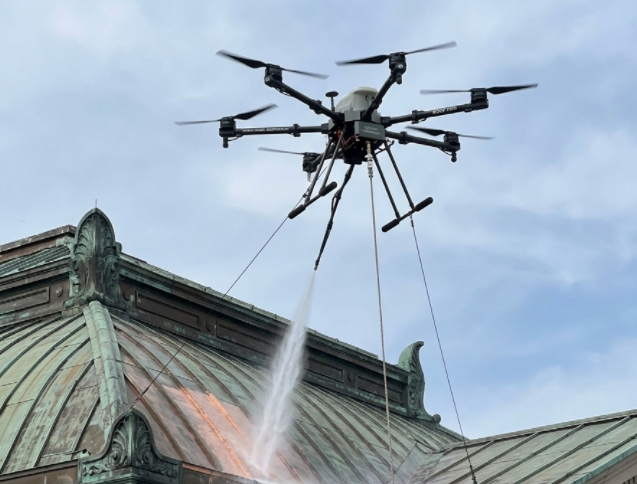
High-Pressure Water Jetting: Connected to a ground-based high-pressure pump via a lightweight hose, the drone performs an aerodynamically stable “Soft Wash.” Pressures reaching over a hundred Bar instantly strip away stubborn silt and moss without damaging the gutter’s protective coating.
Air Blast Cleaning: Utilizing high-pressure air blast systems, the drone swiftly blows away dry leaves and light debris, ideal for rapid maintenance during dry seasons.
Integrated Vacuum System: Some cutting-edge, heavy-lift drones support external vacuum attachments. They vacuum up debris simultaneously during the clearing process, channeling it into ground collection barrels to achieve “zero secondary pollution” green operations.
3. Post-Cleaning Verification and Digital Reporting
After the wash, the drone conducts a secondary inspection to:
Verify that water flows smoothly through the gutter without any residual blockages.
Record the entire process as digital proof of delivery, providing clients with visual, traceable service outcomes.
Core Advantages of Gutter Cleaning Drones
For commercial cleaning service providers and facility engineering teams, drone technology delivers a disruptive Return on Investment (ROI):
Improved Safety
Conventional means involve sending people up onto roofs, climbing large ladders, or using elevated lifting devices, which create great safety dangers for workers. Drones ensure that people keep “boots on the ground” to completely eliminate dangers related to falling and significantly reduce liability costs for employers.
Accelerated Operation Speed
Manually cleaning gutters on a commercial complex typically takes 2 to 4 hours (including scaffolding setup or moving heavy lifts). A drone takes just 30 to 60 minutes from deployment to wash completion, boosting turnaround speeds by 3 to 5 times.
Reduced Labor and Overhead Costs
Because businesses no longer rely on expensive spider lift rentals, and crew sizes shrink from the traditional 3–4 workers down to just 1 licensed pilot + 1 ground observer, labor expenses and safety training costs plummet.
Expanded Inspection Capabilities
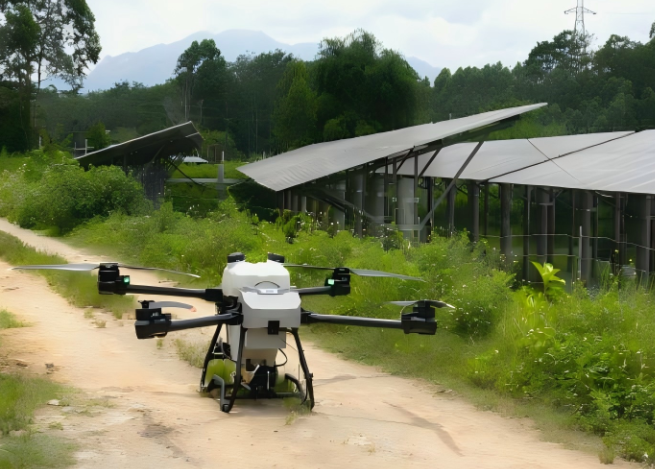
While cleaning gutters, drones can simultaneously conduct a full “health check” on rooftop solar panels, exterior facades, and parapet walls, enabling service providers to offer high-value, add-on roof asset inspection services to property owners.
Industrial Cleaning Drones vs. Traditional Manual Cleaning
To help you better evaluate the financial and operational benefits of adopting this technology, here is a quantitative comparison:
| Evaluation Metric | Traditional Manual Cleaning | Industrial Gutter Cleaning Drone |
| Safety Risk Index | Extreme (High risk of falls; driving up commercial insurance premiums) | Near Zero (Operations managed entirely from the ground) |
| Core Crew Requirement | 3 – 4 High-altitude technicians | 1 Licensed pilot + 1 Ground observer |
| Setup & Prep Time | Several hours (Assembling scaffolding, positioning high-access lifts) | Under 15 minutes (Rapid deployment, out-of-the-box readiness) |
| Cleaning Speed / Efficiency | Slow (Limited by worker stamina and mobility constraints) | Extremely Fast (3x to 5x efficiency leap over manual labor) |
| Terrain Adaptability | Poor (Struggles with steep slopes or fragile tile roofs) | Excellent (Hovers in mid-air, completely independent of roof structures) |
Core Applications and Target Industries
Gutter cleaning drones are ideally suited for environments with strict requirements regarding operational safety, cleaning efficiency, and minimal noise disruption:
1. Industrial Parks and Large Logistics Hubs
These facilities feature massive metal corrugated roofs and expansive drainage gutters where manual maintenance is cost-prohibitive. Drones can execute rapid drainage clearing across massive factory footprints.
2. Commercial Complexes and High-Rise Office Buildings
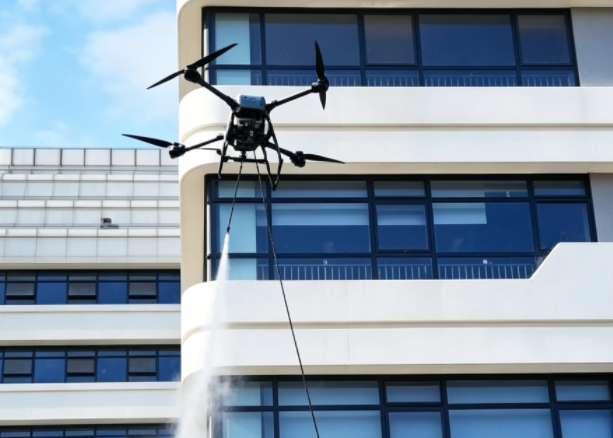
Urban landmarks and commercial properties often feature complex geometric architectures. Drones easily bypass structural obstacles and operate quietly without disrupting ground-level foot traffic or vehicle flow.
3. Schools, Hospitals, and Research Institutions
These settings have incredibly high benchmarks for personnel safety and environmental noise. The ultra-short construction window and high safety profile of drones ensure minimal disruption to teaching and healthcare operations.
4. High-End Residential Properties and Villa Communities
For luxury estates featuring costly historical tiles or steep, pitched roofs, drones utilize hovering washes. This perfectly avoids any tile breakage caused by manual foot traffic.
How to Choose the Right Cleaning Drone?
Some of the important factors to be considered when sourcing a commercial roof cleaning drone for purchase in the B2B space include:
Payload Capacity and Power Redundancy:
The drag of a hose filled with water, along with the power of water jetting, places huge stress on the propulsion of a drone. Hence, heavy-lifting drones that have carbon fiber airframes and powerful brushless motors should be purchased by users.
Balance Between Power Solution Choices (Battery Pack Versus Tethered System):
High capacity commercial cleaning will require higher endurance levels for the drones. You can have a number of battery packs of high-capacity and fast charging capacity for rotating, or you could get a tethered system straight away.
Modular Nozzles and Accessory Expansion:
A premier industrial cleaning drone must offer excellent versatility. For instance, beyond the angled nozzles used for gutter clearing, it should support quick swaps for brush attachments suited for solar panel cleaning, or fan-shaped nozzles for high-rise exterior glass washing. This versatility allows a single asset to tap into multiple commercial revenue streams.
Final Thoughts
As the construction maintenance industry becomes stricter on safety, efficiency, and tighter controls, the gutter cleaning drone stands out as an innovation that is revolutionizing the sector. While shifting from the conventional method of gutter cleaning to using drones is an effort to minimize risks of working at heights, it is also an effort to enhance operational efficiency and reduce costs.
In the case of property management companies and other enterprises in the real estate business, using gutter cleaning drones is an effort to increase operational efficiency and competitiveness in the market. As automation matures, drone-based gutter cleaning is well on its way to becoming the new gold standard for future building maintenance.