
How Drone Water Sampling Is Transforming Water Quality Monitoring

Environmental monitoring has been revolutionized in the last ten years. Rather than taking water samples from a few sampling sites at intervals of several months, many businesses today are required to cover more area with higher frequency and better data accuracy.
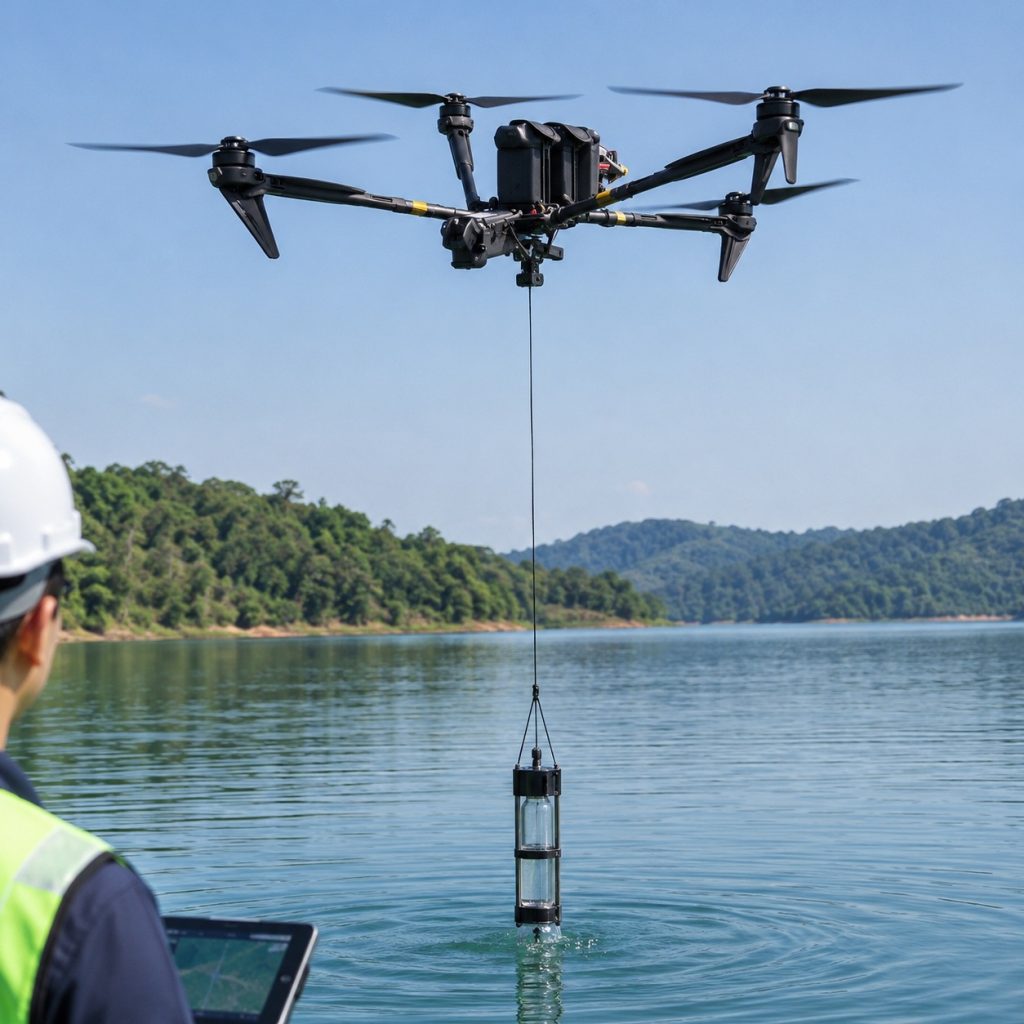
The above trend has sped up the development of drone water sampling solutions. But this is not just about replacing boat sampling with drones. This means utilizing an industrial-grade UAV system that can collect reproducible samples under harsh environmental conditions.
Whereas many articles are dedicated to the advantages of drone water sampling, less information is available on what makes a drone capable of carrying out such missions successfully. From the engineering standpoint, water sampling is one of the most challenging tasks for an industrial UAV.
Table of Contents
Why Water Sampling Is Different from Other Drone Missions
In contrast to aerial photography or infrastructural inspection, sampling with drones involves the interaction of the craft with the environment as opposed to just observing.
A sampler attached below the drone acts as a dynamic payload. Variables such as wind, cable movement, water resistance, and varying payload mass may affect the stability of the drone.
The problem then becomes not one of getting to the sample location but of controlling the craft throughout the process.
| Engineering Challenge | Why It Matters |
| Hover accuracy | Keeps the sampler stable during collection |
| Payload balance | Prevents excessive swinging |
| Positioning precision | Ensures repeatable sampling locations |
| Wind resistance | Improves mission consistency over open water |
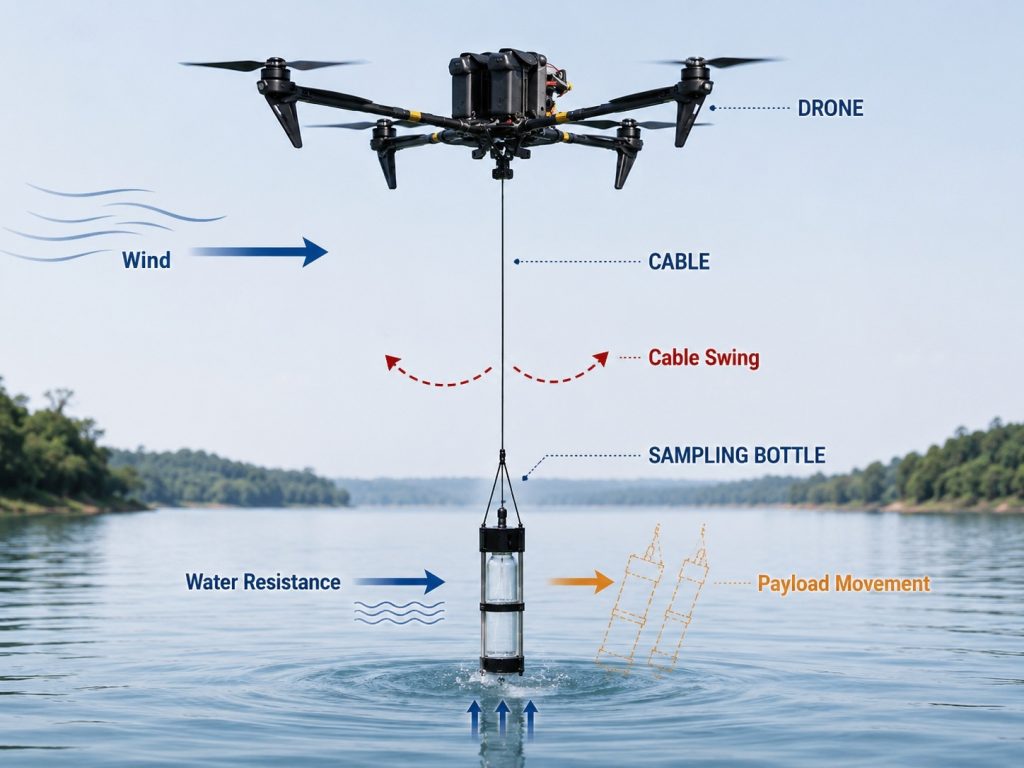
Even small positioning errors can affect long-term environmental monitoring programs that require samples from exactly the same location over months or years.
Not Every Industrial Drone Is Built for Water Sampling
Although many industrial drones can carry additional payloads, water sampling places unique demands on both the aircraft and its flight control system. Beyond basic specifications, several engineering factors determine whether a platform can perform sampling missions reliably.
Hover Stability
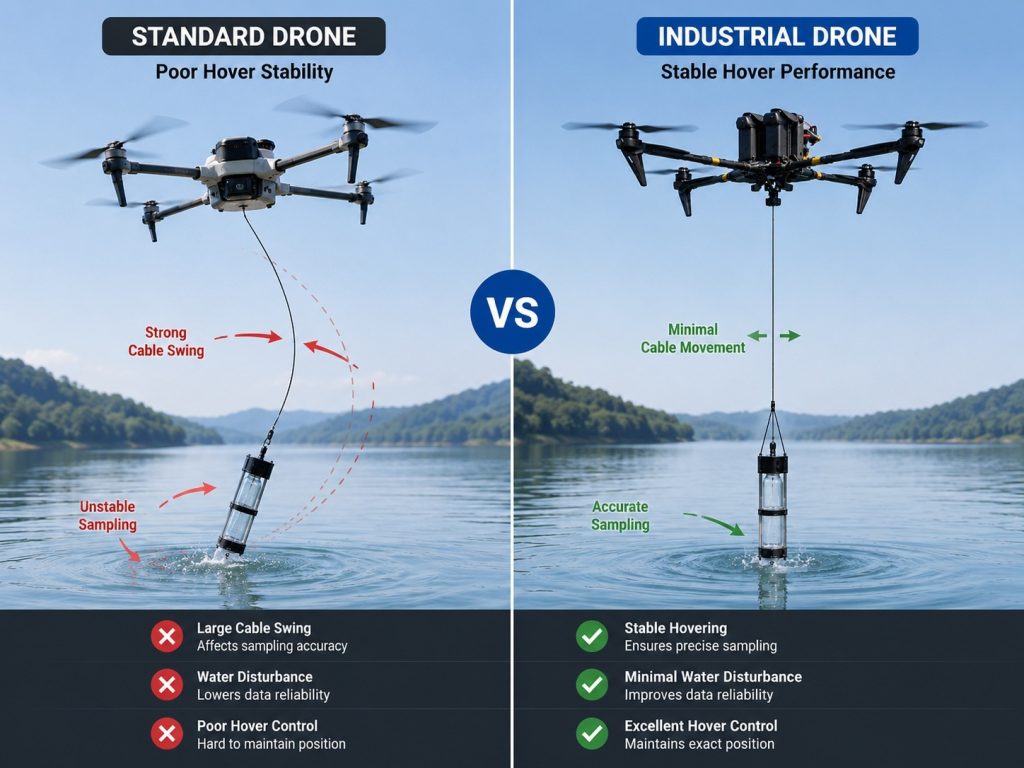
For sampling the water, the drone needs to hover steadily when the sampler goes down to the water and when it rises again. The slightest movement may influence sampling accuracy, and thus hover steadiness is one of the key elements of performance.
Precision Positioning
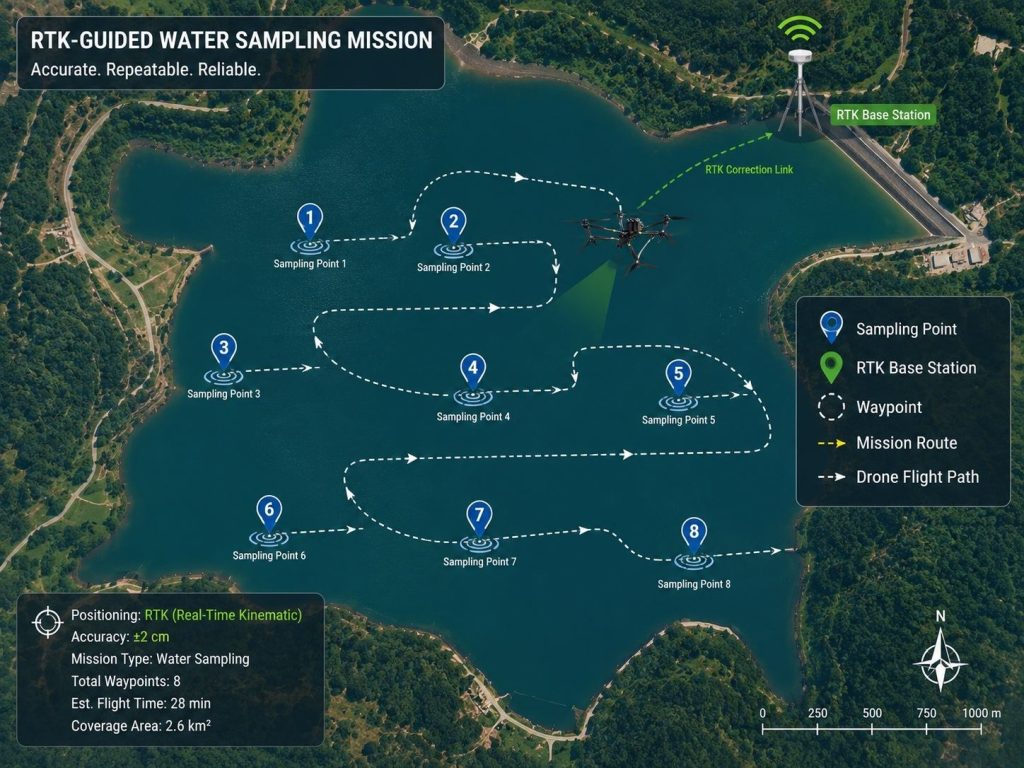
Long-term environmental monitoring often requires samples to be collected from the exact same location. RTK positioning and autonomous waypoint flight improve repeatability and help maintain consistent monitoring data.
Payload Integration
Water sampling systems vary from simple collection bottles to electric winches and sensor modules. A modular payload interface allows the platform to adapt to different operational requirements with greater flexibility.
Payload Management
Carrying a water sampler is not just about payload capacity. Maintaining aircraft balance and efficient power distribution is equally important for stable flight throughout the mission.
Weather Adaptability
Wind, humidity, mist, and changing weather conditions can all affect sampling performance. A platform designed for industrial environments is better equipped to maintain reliable operation outdoors.
Autonomous Flight
Repeatable flight paths help ensure consistent sampling procedures while reducing manual workload. Autonomous missions are especially valuable for routine monitoring programs.
Engineering Factors That Directly Affect Sampling Quality
Rather than focusing only on aircraft specifications, experienced operators pay closer attention to how the drone behaves during sampling.
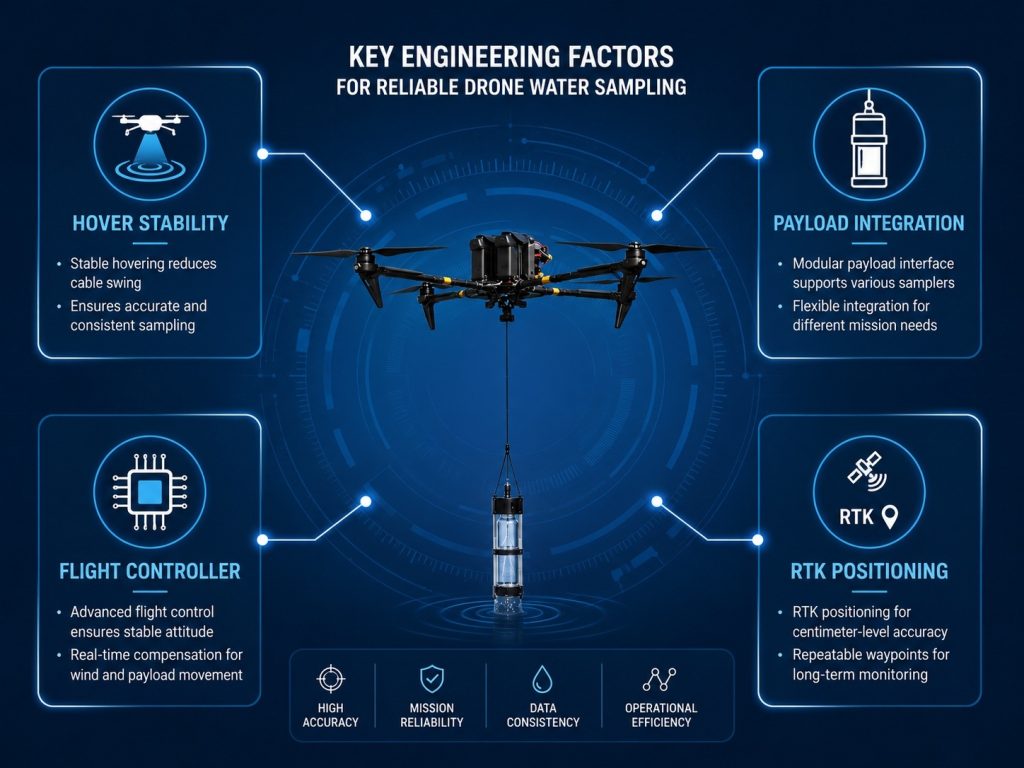
Hover Stability
Water sampling requires the aircraft to remain almost motionless while lowering and retrieving the sampling device. Stable hovering helps reduce cable swing and improves collection accuracy.
Payload Integration
Sampling systems vary considerably in size and design. A platform with flexible payload interfaces can support different bottles, winches, pumps, or environmental sensors without extensive modification.
Flight Control System
Modern flight controllers continuously compensate for wind disturbance and payload movement, helping maintain consistent aircraft attitude throughout the mission.
Positioning Accuracy
RTK navigation and repeatable waypoint missions make it easier to collect samples from identical locations, improving data consistency for long-term monitoring projects.
Misconceptions about Drone Water Sampling
As the use of drone water sampling increases, there are certain misconceptions which continue to affect how organizations assess UAV systems. By knowing the difference between these, buyers can be guided accordingly.
Longer Flight Time Always Means Better Performance
Extended flight time increases the efficiency of operation, but it is not necessarily related to more effective sampling. While taking the water samples, stability and accurate positioning of the drone are more important than additional minutes of flight.
Any Industrial Drone Can Carry a Water Sampling Device
Payload capacity alone is not enough. Water sampling systems change the aircraft’s balance and flight characteristics, so the platform must also support stable payload integration and reliable flight control.
Bigger Payload Capacity Is Always Better
More payload capacity means more tools can be accommodated, but it will also mean greater power requirements and reduced maneuverability. Sometimes, an effectively balanced platform is able to perform better sampling than a platform with a higher payload capacity.
Water Sampling Is Just Another Inspection Mission
In contrast to the simple act of aerial inspection, taking water samples involves engaging the drone with its surroundings. The act of hovering and operating a suspended sampler is far more difficult than just taking pictures.
Effective sampling by drones does not rely more on flying above water but instead involves accurate control of the drone itself with an attached dynamic load. In most cases, it is the precision of hovering, payload handling, and positioning that matters more than speed or endurance.