
How Stadiums Maintain Exterior Facades Using Cleaning Drones

The exterior of a stadium requires more than regular cleaning. The large areas of the facade, the complex design concepts, and strict maintenance schedules require an approach that is practical and efficient.
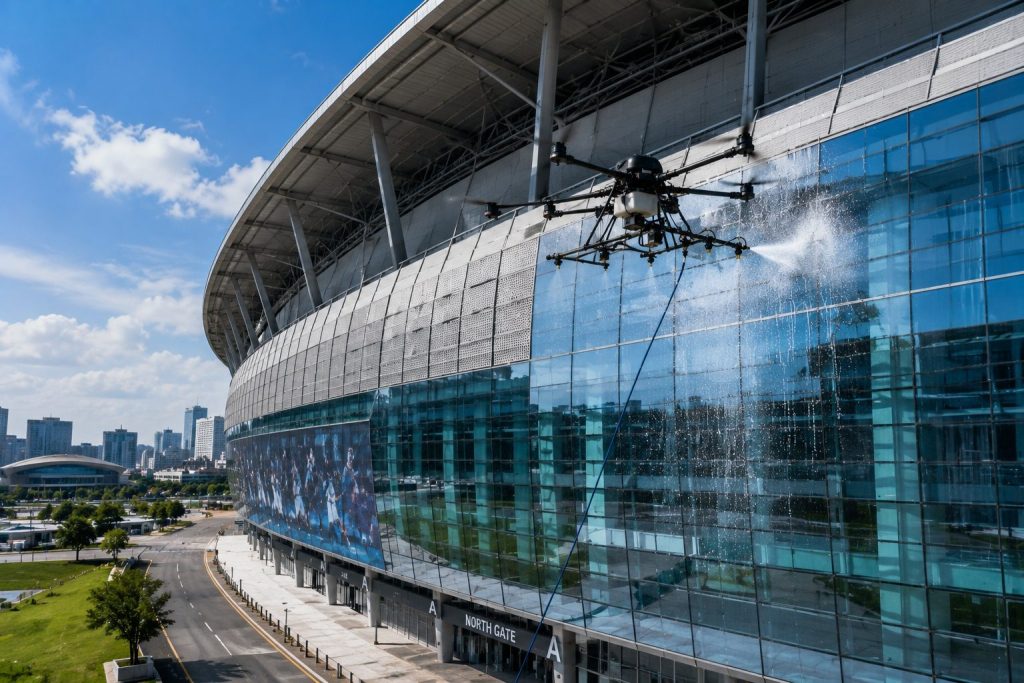
Cleaning drones are becoming increasingly utilized for maintenance of the stadium’s facade as they allow contractors to access large outdoor surfaces more securely while increasing the efficiency of cleaning. This article provides the typical drone cleaning solutions for modern sports facilities.
Table of Contents
Why Stadium Facades Require a Different Cleaning Strategy
Each stadium is unique and has its own issues with maintenance, which affect the choice of equipment and cleaning procedures.
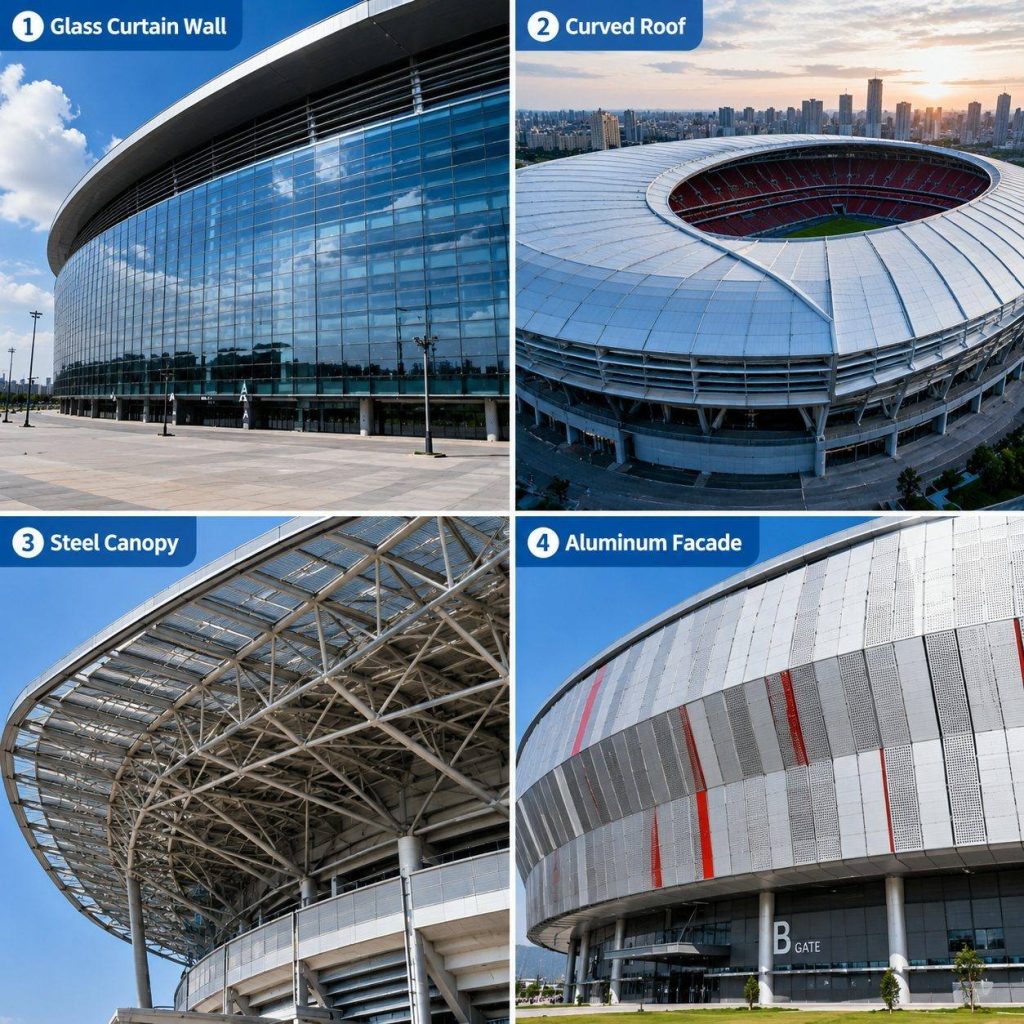
Large and Complex Exterior Surfaces
Modern stadiums don’t have simple vertical facades. Curved curtains, cantilevered roofs steel canopies, as well as unusual architectural features require equipment to keep a stable flight when following the changing architectural profiles of buildings.
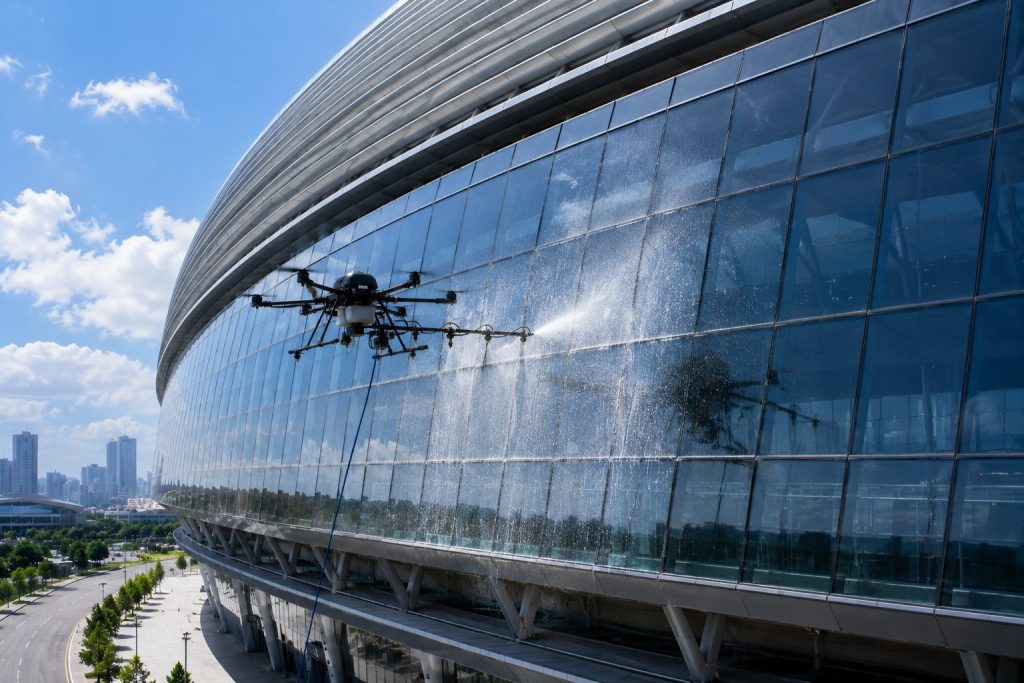
Limited Maintenance Windows
Cleaning is usually scheduled in between concert events, sporting events or other events for the public. Contractors have to finish large areas of clean-up in short time frames which makes efficiency crucial aspect.
Multiple Building Materials
A single stadium could comprise aluminum composite panels and concrete, coated steel and even photovoltaic roofing. Different types of materials require different cleaning techniques and therefore flexibility is more important than relying on a single standard cleaning process.
High Appearance Standards
As landmark structures they are required to maintain their exteriors in good condition all through the entire year. Routine maintenance of the facade enhances the visual appearance but also assists in preserving construction materials and lower the cost of maintenance in the long run.
A Typical Cleaning Drone Solution for Stadium Facade Maintenance
A successful drone project for cleaning is not just the start of the flight. Most contractors for facade maintenance adhere to a prescribed workflow in order to boost efficiency and minimize the risks of operations.
Step 1: Site Assessment
The process begins by assessing the height of the building, materials for facades along with the surrounding obstacles, water supply, as well as the weather conditions. This data helps decide on the most appropriate cleaning strategy and equipment setup.
Step 2: Cleaning Zone Planning
Large stadiums are separated into work zones according to facade design and accessibility. Water supply routes, flight paths areas, and staging areas are designed prior to work begins to prevent disruptions that are not needed.
Step 3: Drone Cleaning Operations
Cleaning drones clean exterior areas section by section, while operators keep track of the stability of their flight, cleaning consistency, and the surrounding conditions. In large projects, several drone platforms could be assigned to various construction areas based on their requirements in operation.
Step 4: Final Inspection
Following cleaning, the contractors check the facade to ensure cleanliness quality and determine any areas that require extra care. The inspection records can also aid the future maintenance plan.
Selecting the Right Equipment for Different Stadium Areas
Different stadium areas generally require different cleaning abilities.
Glass curtain walls with high rise benefit from platform systems that are capable of keeping their positions stable and constant water supply throughout lengthy cleaning cycles.
The large exterior walls or parking structures, logistic buildings, as well as training facilities generally place greater focus on coverage efficiency and allow contractors to cover large work areas in the shortest maintenance window.
A lot of newly constructed stadiums include rooftop photovoltaic systems as well as solar canopy. These systems require special cleaning techniques that differ from standard maintenance of the facade, which makes specific cleaning platforms a efficient option for long-term operations.
Instead of using a single solution for every situation contractors generally select their the equipment based on their building’s characteristics cleaning objectives, the building’s characteristics, as well as project size.
Factors That Have the Greatest Impact on Cleaning Efficiency
The achievement of a stadium’s facade cleaning plan is more than just the equipment. Contractors usually evaluate a number of important aspects prior to establishing plans for operation.
- Building height and facade geometry
- Surface materials and contamination level
- Wind conditions around the structure
- Available maintenance windows
- Water supply and site logistics
- Access points for equipment deployment
Careful planning allows contractors to improve cleaning consistency while reducing unnecessary downtime throughout the project.
Where Cleaning Drones Deliver the Greatest Value
Cleaning drones are especially effective in large areas of the outside that are expensive or difficult to reach using conventional methods. Common applications are:
- Glass curtain walls
- Steel exterior structures
- Stadium roofs and canopies
- Parking buildings
- Training facilities
- Rooftop photovoltaic systems
For these scenarios, drone-assisted cleaning can reduce reliance on suspended access equipment while improving operational flexibility during routine maintenance.
Integrating Cleaning Drones into Routine Stadium Maintenance
Instead of treating cleaning the facade as a single-time job facilities managers are now incorporating drone operations into long-term maintenance programs.
Regular inspections can detect contamination prior to it becoming serious and scheduled exterior cleaning ensures a uniform appearance all through the season. Cleaning can be planned prior to major occasions like sporting events or gatherings to ensure that the facility is presenting its most attractive appearance.
By combining periodic inspections and scheduled cleaning contractors can increase the efficiency of maintenance and help stadium operators extend the longevity of the exterior building materials.
Conclusion
As the stadium’s architecture continues to change, maintaining exterior facades clean is a challenge that requires solutions that are able to balance safety efficiency, efficiency as well as operational flexibility. Cleaning drones can provide maintenance professionals with an efficient means of accessing huge and intricate exterior surfaces without relying on conventional equipment with high-access capabilities.
Successful projects aren’t determined by a specific drone, but rather choosing equipment that is compatible with the structure of the building, its maintenance schedule, and cleaning goals. If you have the right planning and proper operational plan cleaning drones are now an increasingly important tool in modern stadium maintenance.