Cleaning Drone Operating Range vs. Flight Distance: What’s the Difference?

A cleaning drone can be 120 meters in flight altitude or in long flight distance, but the effective cleaning range will be controlled by other factors like control distance, hose length, water pressure, signal strength, and the building itself.
The difference becomes clear when factors such as control distance, building height, hose length, signal coverage, and operator position are considered.
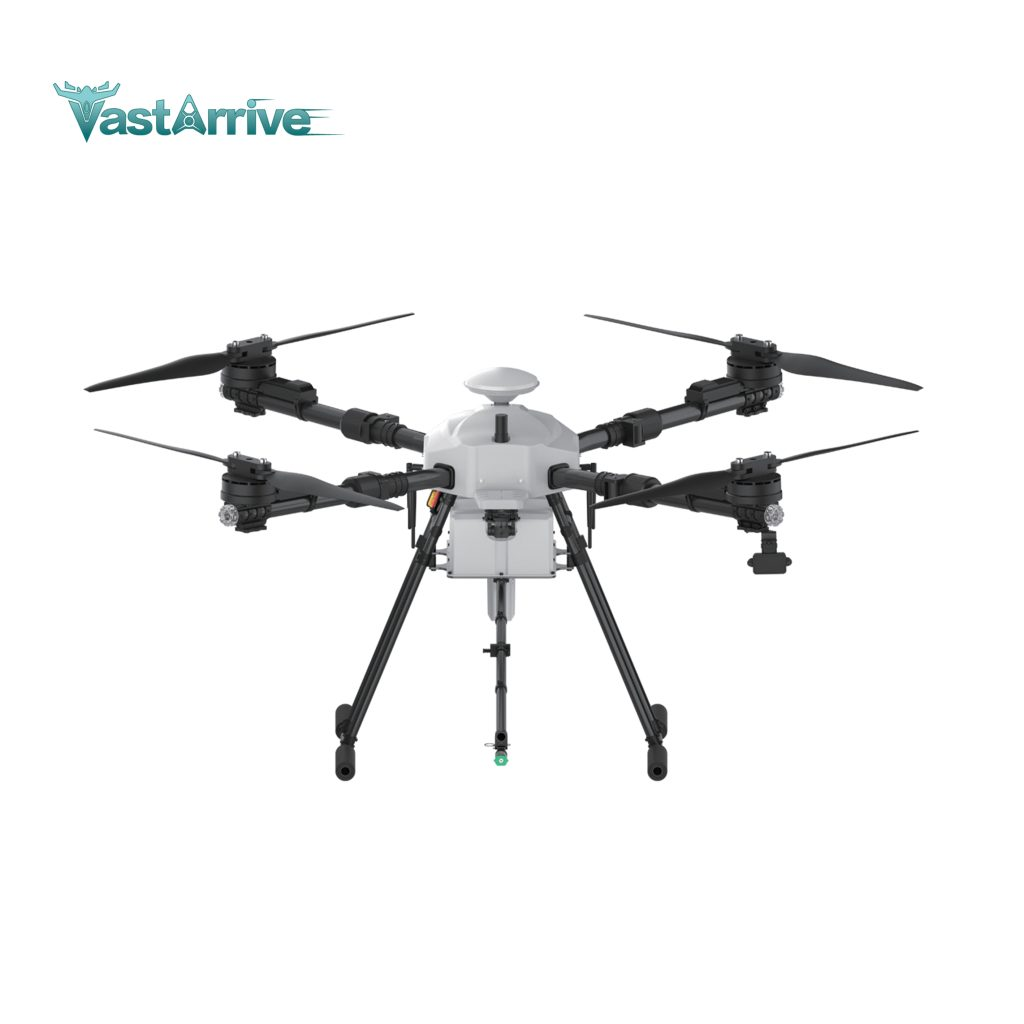
Table of Contents
Flight Distance vs. Operating Range
Flight distance is primarily a flight-performance specification. It indicates how far the drone can travel from its starting point under specified conditions.
Operating range is a practical cleaning measurement. It refers to the area in which the drone can maintain stable control and positioning while delivering the required water pressure, flow, and cleaning performance.
Therefore, a drone can have a long flight distance but a much smaller effective cleaning range.
For a water-fed cleaning drone, the practical relationship can be understood as:
Operating range = Flight capability + Control capability + Cleaning system capability + Site conditions
This is why maximum flight distance should not be used alone when selecting a high rise cleaning drone.
Why Is the Cleaning Drone Operating Range Smaller?
1. Control Distance Limits Where the Drone Can Work
The drone needs a reliable communication link with the operator throughout the cleaning operation.
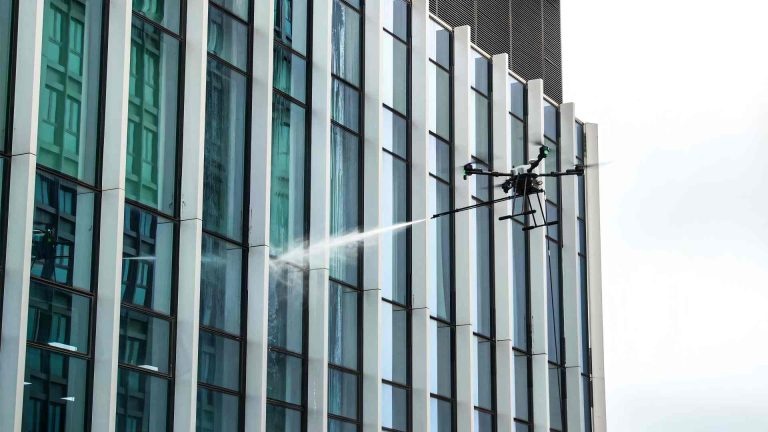
Take the VA-D15R as an example. Its specified control distance is 40 m, while its maximum flight altitude reaches 120 m.
These two figures measure completely different capabilities.
This should not be misconstrued as being able to control the drone up to 120 m distance horizontally from the operator. When the drone reaches the farthest point of control range, the operator would need to move instead of continuing the flight beyond that point.
This is one of the clearest examples of why drone cleaning range should not be confused with flight distance.
2. Hose Length Does Not Equal Operating Radius
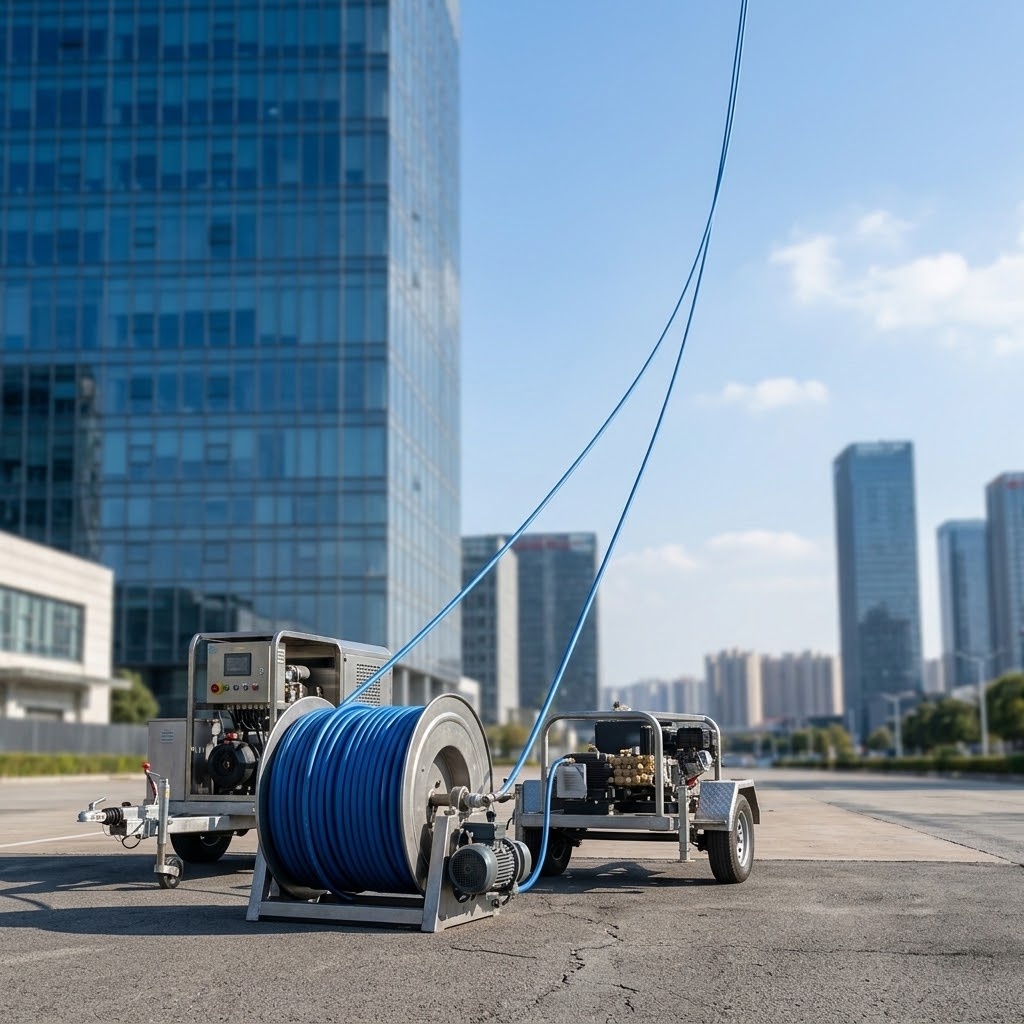
The VA-D15R is fitted with a 100 m water hose that enables the cleaning at height level when the water source is still at the bottom.
Nevertheless, 100 m water hose does not mean 100 m cleaning distance.
The actual working distance depends on:
- Building height
- Hose routing
- Hose weight and drag
- Water pressure
- Drone position
- Distance between the drone and the surface
The VA-D15R, for example, supports up to 2,900 PSI instantaneous water pressure and up to 15 L/min flow, showing that the water delivery system must be considered together with hose length when assessing the practical cleaning drone working radius.
3. Building Height Changes the Effective Range
For high-rise cleaning, the drone usually works close to the facade rather than simply flying horizontally away from the operator.
VA-D15R is capable of flying up to 120m above ground level, but there is an operational restriction related to hose management, signal conditions, wind speed, and building geometry.
This suggests that the height and shape of the building can be the limiting factors in spite of the fact that the drone is able to fly sufficiently high.
4. Signal Coverage and Operator Position Matter
Operating range is measured relative to the operator, not simply the drone’s launch point.
The operator may need to move along the building perimeter to maintain communication and a suitable working position.
Obstacles such as reinforced concrete, steel structures, adjacent buildings, trees, and roof equipment can also affect signal coverage.
Therefore, for a large building, the actual cleaning operation may consist of several working zones rather than one continuous operating radius.
Building Structure Can Further Reduce the Working Area
The difference between flight distance and operating range becomes more obvious on complex facades.
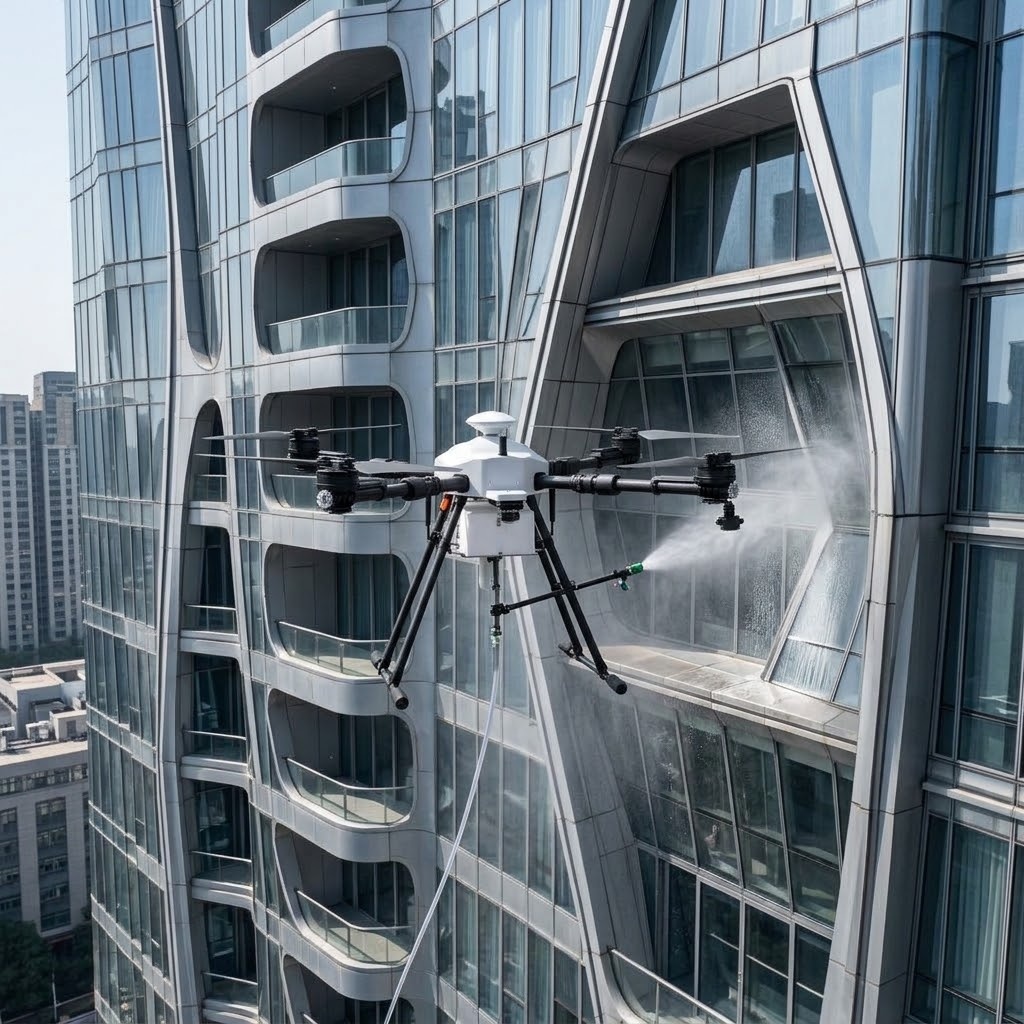
A flat glass curtain wall allows relatively predictable flight paths. Balconies, recessed windows, external pipes, signs, and irregular structures require the drone to change position and maintain a safe distance from obstacles.
The VA-D15R uses dual RTK positioning and obstacle-avoidance radar to support positioning and obstacle detection during cleaning. These systems help the drone operate around structures, but they do not eliminate the physical and communication limits of the site.
How Should You Evaluate a Cleaning Drone’s Range?
When comparing cleaning drones, separate these specifications into two groups:
Flight capability
- Maximum flight distance
- Maximum flight altitude
- Flight time
- Wind resistance
Actual cleaning capability
- Control distance
- Water hose length or onboard water capacity
- Water pressure and flow
- Building height
- Signal coverage
- Operator position
- Obstacles and building structure
The second group is what determines the practical cleaning drone operating range.
The Bottom Line
Flight distance tells you how far a cleaning drone can fly. Operating range tells you how far it can actually work.
For high-rise cleaning, the practical range is determined by the combination of control distance, building height, hose length, water delivery performance, signal coverage, operator position, and site conditions.
For professional cleaning projects, the right question is therefore not simply “How far can the drone fly?”, but “How far can it effectively and safely clean?”