
Drones for Fire and Rescue: Applications, Benefits, and How to Choose

In the modern field of fire and emergency rescue, every passing second is a matter of life and death. When facing high-rise building fires, vast forest search and rescue operations, and complex industrial accidents, traditional ground rescue methods are often limited by blind spots, high-risk environments, and lengthy response times.
Today, industrial fire and rescue drones are completely changing this landscape. So, what are the specific applications of fire and rescue drones, and what features should be prioritized during procurement? This article provides a detailed introduction covering practical application scenarios, core technologies, equipment selection, and industrial drone solutions.
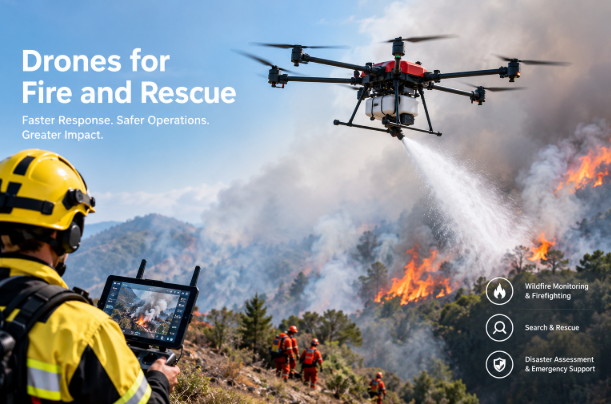
Table of Contents
What are Fire and Rescue Drones?
Fire and rescue drones can be defined as special purpose industrial drones that have been manufactured and configured to cater to emergencies, firefighting, disaster surveillance, and search and rescue purposes.
As opposed to regular consumer drones that are used for photography purposes, fire and rescue drones normally have very high levels of industrial grade reliability. These drones are often outfitted with multi-light capabilities (such as high definition zoom lens and thermal imaging cameras), which enable them to adapt to harsh conditions like fires, smokes, high winds, and rains.
Fire and rescue drones are among the important extensions of modern emergency equipment and are able to perform initial reconnaissance, live video relay, supply of materials and surveillance in environments that are too risky for humans to venture into.
What Key Features Must Fire and Rescue Drones Possess?
Fire-fighting and rescue operations generally require great reliance on the reliability and flexibility of equipment performance. The procurement officers need to consider the following basic features according to the practical requirements.
1. Thermal Imaging and Visible Light Imaging
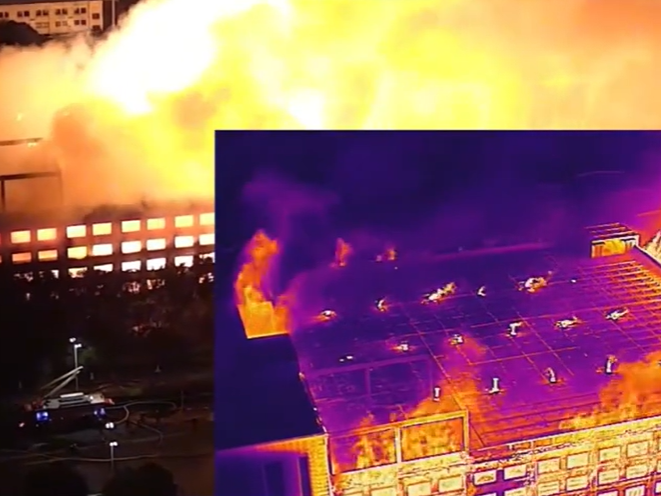
The thermal imaging camera is an important feature of many drones used in firefighting and rescue operations as it helps to detect hot spots, temperature variations, and targets. The visible light camera gives the clear environmental images which help to monitor the buildings, streets, etc.
These two imaging methods are complementary.
When selecting equipment, attention should be paid to thermal imaging resolution, temperature measurement capability, lens field of view, visible light zoom performance, and image fusion functions. If the mission requires quantitative temperature measurement, it should also be confirmed whether the device supports the corresponding temperature measurement function and its conditions of use.
2. Real-Time Image Transmission
The images obtained by using drones will not be of much help in making decisions on site unless they are transmitted to the concerned individuals promptly.
The real-time image transmission system allows the individuals on the ground to see the location in which the drone is operating and make arrangements accordingly.
While assessing this feature, the following factors have to be taken into account:
- Communication stability in actual operating environments.
- The effective range of the control link and image transmission link.
- The impact of buildings, terrain, and other obstacles on signals.
- Image latency, clarity, and data security requirements.
The maximum transmission distance marked by manufacturers is usually obtained under specific test conditions and should not be directly regarded as the actual communication distance in complex rescue scenes.
3. Flight Endurance and Operational Range
Fire rescue operations might need the drones to surveil a particular area continuously or cover several scattered areas. As such, flight endurance would be an important factor in deciding which equipment to choose.
While considering flight endurance, factors such as payload, wind speed, flying route, temperature, and battery performance should all be taken into consideration at once. Upon loading thermal imaging equipment or searchlight and other efficient payload, the flight time would be different from test flight without any load.
Besides endurance, there are other things such as return to home margin, efficiency of battery exchange, number of backup batteries, and charging facilities that would matter.
4. Flight Stability and Environmental Adaptability
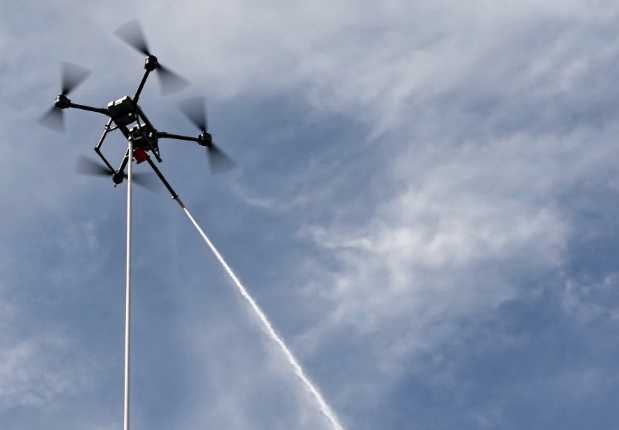
Wind variability, space constraints, building interference, and difficult terrain might be encountered during rescue operations. Drones must have flying stability and control abilities compatible with their missions.
Procurement officers should ascertain:
The capability of the drone to withstand winds, according to the manufacturer’s specifications and the conditions used during testing.
- The methods of positioning and navigation.
- The scope of obstacles detection and avoidance capability.
- Dustproof, waterproof, and operating temperature ratings.
- Operational limitations of the equipment in complex environments.
It should be emphasized that obstacle avoidance systems do not guarantee the detection of all obstacles. Fine wires, transparent surfaces, smoke, and specific lighting conditions can all affect sensor detection performance.
5. Mission Payload and Expansion Capability
Different rescue missions may require different equipment combinations. In addition to visible light and thermal imaging equipment, some missions may also involve lighting, loudspeakers, or other specialized payloads.
Therefore, during procurement, it is necessary not only to confirm whether the drone can carry the required equipment, but also to verify the payload weight, interface compatibility, power supply method, control system support, and the impact on endurance after installation.
If application scenarios may expand in the future, platforms with proven payload compatibility and configuration expansion capabilities will also facilitate subsequent equipment planning.
What Are the Main Applications of Fire and Rescue Drones?
Fire rescue mission types are complex, and different scenarios have distinct performance requirements for drones. Understanding specific applications helps procurement personnel determine the appropriate equipment configuration.
1. Forest Fire Monitoring and Hotspot Identification
Forest fires usually cover large geographical areas, with potential challenges such as complex terrain, dense smoke, vegetation obstruction, and limited ground transportation. Drones can observe the fire area from the air, providing supplementary information for firefighters.
Under applicable equipment and environmental conditions, firefighting drones for forest can be used to:
- Observe fire lines and smoke distribution.
- Monitor changes in areas surrounding the fire zone.
- Utilize thermal imaging to assist in identifying residual hotspots.
- Obtain imagery of the fire ground and surrounding terrain.
- Provide ground rescue teams with additional on-site observation perspectives.
While thermal imaging helps identify different temperature zones, it does not guarantee the ability to penetrate dense smoke, tree canopies, or other obstructions to find all ignition sources. Therefore, aerial imagery should be combined with ground observations, professional inspections, and other on-site information.
For forest fire monitoring missions, procurement should heavily emphasize flight endurance, image transmission distance, thermal imaging performance, wind resistance, and local operational restrictions.
2. Search and Rescue Operations
In mountainous areas, forests, flood disaster zones, or other hard-to-reach locations, searching for missing persons can require significant time and manpower. Drones can search parts of the ground area from the air and transmit observations back to the ground team.
With the appropriate configuration, search and rescue drones can be used to:
- Search for visible personnel or suspected targets.
- Utilize thermal imaging to assist in discovering targets with temperature differences from their surroundings.
- Observe ground roads, valleys, and other areas that are difficult to approach directly.
- Provide rescue commanders with on-site imagery.
- Assist in evaluating rescue routes and site environments.
However, thermal imaging search results are affected by factors such as ambient temperature, vegetation cover, temperature differences between the target and background, flight altitude, and sensor performance. Once a potential target is found, appropriate methods are still required for verification.
For such missions, equipment selection should prioritize thermal imaging quality, zoom capabilities, low-light imaging performance, endurance, and communication stability, rather than just comparing the drone’s maximum flight speed.
3. Flood, Earthquake, and Other Disaster Assessments
Disasters such as floods, earthquakes, landslides, and severe storms can cause road interruptions, building damage, and widespread infrastructure disruption. Drones can provide emergency teams with additional aerial observation tools.
Applications include:
- Observing the overall situation of disaster-affected areas.
- Inspecting visible damage to roads, bridges, and other infrastructure.
- Assisting in identifying passages blocked by floods.
- Recording on-site imagery after a disaster occurs.
- Providing reference information for rescue route planning and resource deployment.
Imagery captured by drones can help teams understand conditions in certain areas more quickly, but it cannot replace structural safety inspections, professional engineering evaluations, or on-site personnel judgment.
If a mission requires covering a large disaster zone, procurement should focus on practical endurance, effective communication range, image clarity, mission planning capabilities, and data management methods.
4. High-Rise Building and Industrial Fire Response
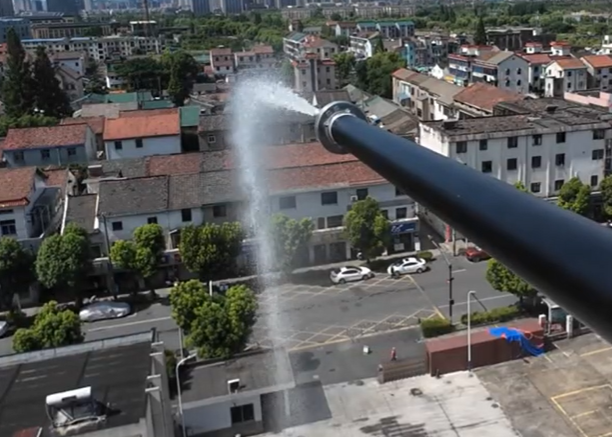
When fires occur in tall buildings, warehouses, industries, and power plants, there may be some sections which cannot be observed directly from the ground. Drones can help in observing the exteriors of buildings, rooftops, and surroundings, as long as safety regulations for drone flights are observed.
The drones can be used to:
- Observe the conditions of building exteriors and rooftops.
- Take pictures of sections which cannot be observed directly from high or low observation points on the ground.
- Help monitor smoke and environmental changes around the site of the fire.
- Conduct initial reconnaissance of the accident scene.
- Provide image records for subsequent site inspections.
This type of scenario will often include various kinds of risks including heat rays, turbulence, wind, smoke and dust, obstacles and complex communication environment. Normal industrial drones may not be appropriate for approaching burning building or high-temperature equipment.
In such cases, safe distance, environment adaptation and equipment protection criteria must be established based on real-world tasks and the capacity to function under high temperature conditions cannot be considered only in terms of flight abilities of normal drones.
What Are the Advantages of Using Drones for Fire and Rescue?
1. Enhancing On-Site Situational Awareness
Drones are able to record images from aerial views that ground-based staff members are not able to view themselves, thus giving information to the command centers.
With the help of devices like cameras in visible light or thermal image forms, the rescuers will be able to see what is happening at the spot and select their targets for further actions.
2. Reducing Initial Reconnaissance Demands in Certain Hazardous Areas
In addition, prior to entering some high-risk zones, drones could perform either long-distance or aerial reconnaissance work, which can help the team know the conditions of the zone partially.
Nevertheless, the above-mentioned method cannot mean that drones are able to fully replace on-the-ground reconnaissance works or professional safety checks.
3. Assisting in Improving Disaster Assessment Efficiency
Drones can rapidly acquire aerial imagery of specific areas and record site changes according to mission requirements.
For scenarios with large disaster-affected areas, blocked ground access, or the need for observation from different angles, these images can provide reference for disaster assessment and rescue planning.
Actual efficiency still depends on flight approvals, equipment deployment, weather, communication conditions, and on-site organizational capabilities.
4. Supporting Rescue Team Coordination
In conjunction with proper transmission and data management systems, UAVs may assist in providing on-site information to ground personnel.
This will assist concerned people in gaining more detailed information about the observed regions, and on the basis of which, rescues can be organized and planned.
Traditional Rescue vs. Drone-Empowered Rescue
To help emergency decision-makers more intuitively understand the value brought by this technological upgrade, we can make a comparison through the following table:
| Evaluation Dimension | Traditional Search, Rescue & Fire Reconnaissance Methods | Industrial Drone (UAV)-Assisted Rescue |
| Response Speed | Requires personnel to wear heavy equipment on foot or deploy ground equipment, taking a long time | Rapid takeoff within minutes, quickly establishing an aerial perspective |
| Personnel Risk | Firefighters must penetrate high-risk, toxic, or collapse-edge areas | Zero personnel hazard, safe remote operation from the ground |
| Field of View | Severely obstructed by ground perspectives and dense smoke, with numerous blind spots | 360-degree panoramic high-altitude view, with thermal infrared easily penetrating smoke |
| Nighttime / Adverse Weather | Constrained by night-vision conditions and ground lighting, nighttime search and rescue is extremely difficult | Equipped with infrared thermal imaging and night-vision payloads, enabling all-weather, 24/7 operations |
How to Choose the Right Fire and Rescue Drone?
In the selection of firefighting and rescue drones, it is not wise to merely consider their prices, flying time, or speed. One needs to define what the mission entails first before determining if the equipment has the capabilities for completing the missions.
1. Determine Equipment Types Based on Primary Missions
Core requirements vary across different tasks.
| Primary Application | Priority Evaluation Functions | Selection Focus |
| Forest Fire Monitoring | Thermal imaging, endurance, real-time image transmission | Large-scale observation and auxiliary hotspot identification |
| Search and Rescue | Thermal imaging, zoom, low-light imaging | Suspected target search and on-site observation |
| Flood & Disaster Assessment | Visible light imaging, endurance, communication | Regional reconnaissance and imagery recording |
| High-Rise & Industrial Accidents | Zoom, flight stability, environmental adaptability | On-site observation at safe distances |
| Nighttime Rescue | Low-light imaging, thermal imaging, lighting configuration | Target search in low-light environments |
If multiple missions need to be covered, it should be clarified which functions are mandatory configurations and which can be achieved through optional accessories, avoiding unnecessary procurement costs for features that will not actually be used.
2. Evaluate Endurance and Actual Operational Radius
Procurement staff must be able to tell apart maximum flight duration, mission duration, and operational radius of the drone.
Examples of the factors that may affect mission duration include hover time, low temperature, wind, and additional payload weight. Furthermore, operational radius will depend on communication, return to home capabilities, and other flight regulations.
In other words, the choice should never be made on the sole basis of endurance figures presented in the specification sheet of the product. The testing conditions have to be known, and evaluated against the mission.
3. Verify Sensor and Payload Configurations
Before procurement, it should be clarified whether thermal imaging, optical zoom, lighting, loudspeakers, or other equipment are required.
At the same time, verify whether the drone supports the corresponding payloads, its endurance performance after installation, control methods, and data transmission capabilities.
If a specific function is a key condition for procurement, suppliers should be asked to provide specific models, technical data, or test evidence rather than judging solely by product category.
4. Consider Deployment, Training, and Maintenance
Fire rescue equipment must not only meet technical requirements but also adapt to practical usage workflows.
Procurement evaluations should encompass equipment deployment time, operator training, spare parts supply, battery management, routine maintenance, software support, and after-sales service.
For emergency missions, teams should also establish proper procedures for flight inspection, mission planning, battery management, data recording, and equipment maintenance.
5. Confirm Safety and Regulatory Requirements
Firefighting and public safety missions may involve complex flight environments and special airspace management requirements. Before procurement, flight permits, operator qualifications, airspace restrictions, nighttime flight requirements, and other applicable conditions should be confirmed in accordance with the regulations of the country or region of use.
If missions involve fire scenes, areas surrounding airports, urban high-rise buildings, or densely populated zones, corresponding risk assessment and on-site coordination workflows should also be established.
Whether a drone can be used for a specific rescue mission depends not only on equipment parameters, but also on the mission environment, personnel capabilities, and operational permits.
VastArrive Industrial Drone Solutions: Supporting Firefighting, Rescue, and Emergency Response
VastArrive specializes in industrial drone solutions, with a product portfolio covering multirotor drones, fixed-wing drones, and heavy-lift industrial drone platforms, capable of providing matching flight platforms and functional configurations based on diverse mission needs. In the fields of fire rescue and emergency response, drones can be utilized for fireground reconnaissance, personnel search, disaster assessment, and specialized firefighting operational support, helping rescue teams acquire on-site intelligence and enhance execution efficiency for specific tasks.
Tailored to different rescue scenarios, VastArrive offers drone products with distinct positioning to satisfy diverse demands ranging from aerial reconnaissance to specialized payload operations, such as:
VA-FPVD13: High-Speed Reconnaissance and Search & Rescue Drone
VA-FPVD13 is a flexible and fast-flying drone that is suitable for use in search and rescue operations (SAR), surveillance operations, inspection, and mapping operations. In emergency SAR operations, it can be used to conduct aerial surveying operations in mountainous regions after disaster strikes, in regions with blocked roads, and other challenging regions, giving rescue workers on-site images.
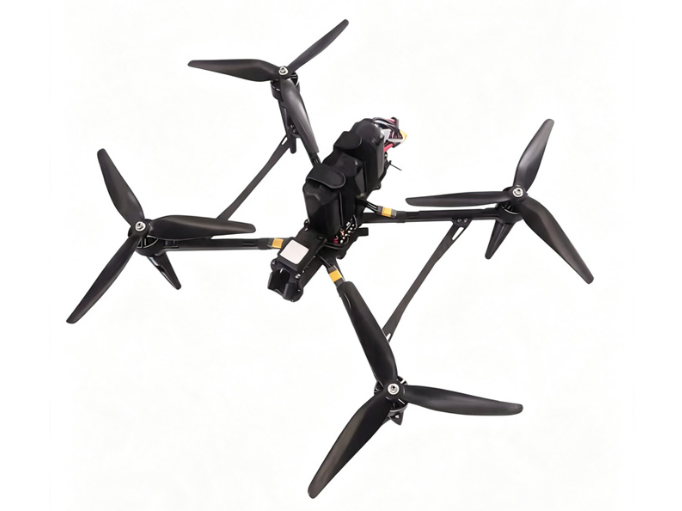
This particular drone has a 13-inch frame and a nominal endurance range of 15 to 35 minutes, although endurance may vary based on the configuration used. Based on the mission profile, the configuration that may be considered includes night vision FPV cameras, video transmitters, and others.
Applicable Missions:
- Post-disaster site and complex terrain reconnaissance
- Search and rescue support
- Forest and remote area patrols
- Disaster imagery collection and emergency assessment
B100P: Heavy-Lift Firefighting and Emergency Operations Drone
The B100P Drone is an industrial multirotor heavy-lift drone platform featuring a modular task configuration design, applicable across fields such as firefighting, cleaning, agricultural operations, and cargo transport.
For firefighting-related tasks, the B100P can be configured with high-pressure spraying devices and remote delivery equipment to assist with firefighting operations and deliver fire suppression equipment in specific zones. The drone’s firefighting payload can carry a maximum payload capacity of 52 kg, maximum takeoff weight of 105 kg, and an endurance of 8 to 18 minutes, depending on the payload and site conditions.
Unlike other drones designed mainly for aerial reconnaissance missions, the B100P drone focuses more on carrying special mission payload equipment. This makes the drone suitable for the assessment of firefighting and emergency projects which specifically need payload carrying capacity.
Applicable Missions:
- Firefighting auxiliary operations using specialized fire equipment
- Delivery of firefighting equipment and emergency supplies
- Firefighting assistance in specific industrial scenarios
- Professional operations requiring a heavy-lift multirotor platform
Multirotor and Fixed-Wing Platforms
In addition to multirotor drones, VastArrive also offers fixed-wing drones to cater to varied operational needs. While the multirotor drones are best suited for tasks such as hovering observation, localized reconnaissance, and payload-specific tasks, fixed-wing drones are ideal for long-distance travel and large-area surveillance, depending on the particular model.
Should you be considering drones for fire reconnaissance, search-and-rescue operations, or even firefighting tasks, VastArrive is here to help you assess suitable industrial drone platforms.
Conclusion
Drone technology has evolved from “future technology” into an indispensable standard configuration for modern firefighting and emergency rescue. It not only extends the eyes and arms of rescue personnel but also saves countless lives at critical moments.
If you are looking for industrial-grade drone solutions capable of adapting to complex and extreme environments while enhancing your team’s emergency response capabilities, please feel free to contact VastArrive at any time. We will provide you with detailed product specification sheets and customized configuration solutions based on your specific application scenarios.