How to Configure a Gutter Cleaning Drone
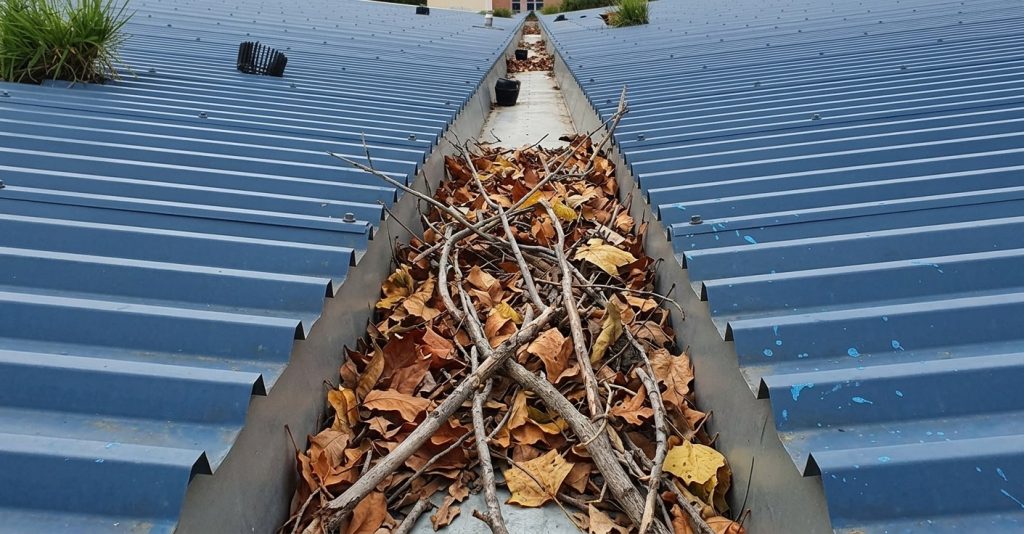
Deep industrial gutters tend to collect leaves, dirt, and accumulated debris which might clog the drain opening. The gutter cleaning drone would minimize the efforts needed by people in accessing the edge of the roof for such large-scale structures as warehouses, factories, and commercial buildings. Nevertheless, effective cleaning is not solely dependent on the water pressure used.
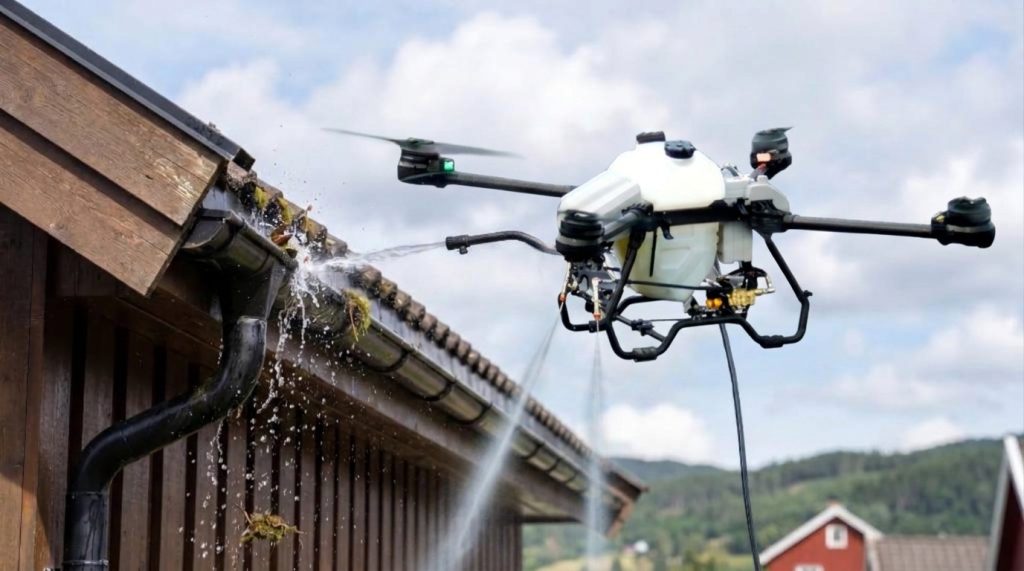
This guide explains how to configure the VastArrive VA-D15R cleaning drone for this type of work, which settings need attention, and what to check before starting a cleaning job.
Table of Contents
Check Gutter Dimensions Before Configuring the Drone
Before choosing any spray pattern, the following measurements have to be taken: the width, depth, height of operation, and distance from the flight path of the drone to the bottom of the gutter.
The type of debris also affects the cleaning method:
- Loose leaves and dust: Use a spray shape that stays on the gutter. Keep debris from flying onto the roof.
- Mud and compacted sediment: Try a few careful passes first. If that fails, use a tighter spray aimed at the buildup.
- Blocked outlets: See if you can clear the debris. Collect it safely. If you spray again, you may push the clog deeper into the drainage line.
Inspect gutter materials, joints, brackets, sealants, and nearby electrical equipment. Excessive pressure or poorly directed water can damage aging coatings and seals.
Set the Water Pressure and Flow Rate
Water pressure and flow rate affect the effectiveness of drones in removing deep trench dirt. Refer to the specifications of our VA-D15R:
| Parameter | VA-D15R Specification |
| Working water pressure | 12–15 MPa |
| Rated spray flow | 14 L/min |
| Maximum spray flow | 15 L/min |
| High-pressure hose length | 100 m |
| Pump pressure | 2,900 PSI instantaneous |
These figures describe different operating conditions. The instantaneous pump pressure should not be treated as the pressure available at the nozzle throughout the cleaning process.
How to Choose the Right Pressure
In the case of light trash, first try using an appropriate spray pattern together with a suitable working pressure. In the case of compacted sediments, first check the effectiveness of the cleaning, and only then can you increase the pressure.
Do not always opt for the maximum pressure, because that may damage the gutter coating, sealant, or other parts.
Check Pressure Loss Along the Hose
Water for operation is supplied by a land-based water source via a pressurized hose to the drone called the VA-D15R. Though the regular hose used is 100 meters in length, the water transfer will actually depend on the following factors.
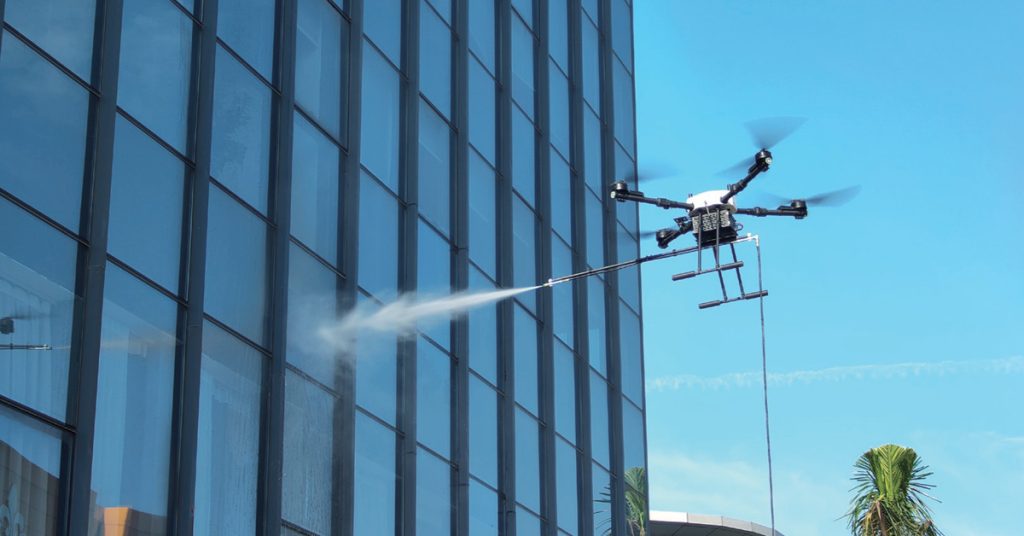
Before operation, check that:
- The length of the hose is adequate for the entire distance of the work.
- The hose and the fittings have been properly rated to withstand the working pressure.
- There is proper water pressure and flow at the work location.
- The hose does not get entangled with the roof edges or other similar constructions.
Pressure should be measured whenever possible, at the supply and in operation.
Choose the Right Nozzle and Spray Direction
VA-D15R Standard Pack comes with four spray nozzles along with automatic vertical/horizontal spray mechanism. All these components can be used as a base for spray test.
Adjust the Spray Angle and Distance
As for deep gutters, it is necessary that water will fall at the bottom and on sidewalls without throwing out too much water or dirt beyond the gutter. The spray stream could be narrow when working on localized dirt accumulation, but the wide one will wash a bigger area. It all depends on pressure, flow rate, height of nozzles and spray angles.
Typically, the VA-D15R is used at the height of 2-3 meters above the roof surface. It is just the average value; an individual height could be required when cleaning deep gutters.
It is necessary to check the spray direction on a small piece before cleaning, especially around the joints, sealant lines and roof outlets. It should be done so that water will be directed to the right area without approaching the roof edge by the drone.
Configure Positioning and Obstacle Detection
Gutter spray can be blocked by the presence of brackets, cables, roof edge, and others. Stable placement is important to ensure that the spray hits the target, however, the flight route should also take into consideration the surrounding building structure.
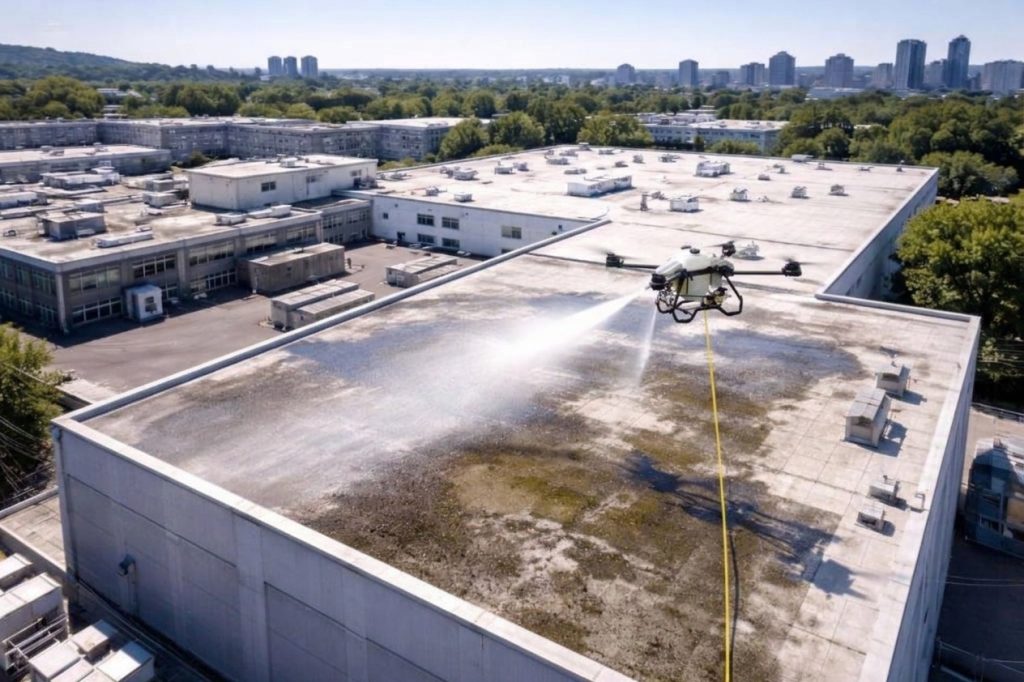
VA-D15R drone system comes with dual RTK positioning, closed-loop flight control, front millimeter wave obstacle avoidance radar, and the A2MINI gimbal camera.
Check the flight path and safe entry-exit route before spraying. Clearance of brackets, cables, and roof edge should be checked rather than the positioning and obstacle-detection systems.
Check the spraying path using the camera whenever visibility is possible. It is important to make sure that gutter is clear and spraying unit does not block the view of the operator. Detection of hidden objects and narrow areas might be difficult to detect.
Manage the Hose, Batteries, and Water Supply
Movement of the hose will affect handling of the drone when it gets entangled with the edge of the roof or when it is under strain. Remember to consider how the movement of the hose will be prior to lift off and during the procedure.
The VA-D15R is expected to have a take-off weight of 24.9 kg, powered by 14S 41,000 mAh battery and with three batteries included in its pack. Confirm that all the components comply with the restrictions stipulated by the manufacturer. It is crucial to ensure that the hose does not come in contact with any sharp or mechanical elements, considering pulling power due to hose length and movement.
Cleaning time using the VA-D15R varies depending on the application: about 45 minutes for curtain walls, 30 minutes for wind turbines and 50 minutes for solar panels. Those times are not meant to be regarded as a guarantee of the operating times for gutter cleaning. Performance will depend on the length of the gutter, amount and condition of debris, spray settings, wind and the number of passes needed.
Test the Configuration Before Full Cleaning
Before the entire industrial roof is cleaned, test the system on a short part of the gutter. The following are some advantages that come with testing this system.
What to Check During the Test
1. Cleaning result: Inspect whether dirt is cleaned from the bottom, sidewalls, and corners.
2. Water supply: Ensure that there is enough pressure and flow during spraying.
3. Drone stability: Inspect whether the drone can maintain its position during spraying.
4. Hose behavior: Inspect whether the hose is snagged, excessively strained, or contacting the roof structure.
5. Condition of the surface: Inspect the coatings, seals, and joints for any damage.
6. Drainage: Inspect whether cleaning dirt causes a new blockage downstream.
Measure Actual Cleaning Efficiency
It is important to measure the length of the gutter cleaned in one hour, the volume of water needed for each meter, number of times it was done, and time spent on adjusting the drone.
This information helps in making estimates about the time and cost of work that can be done in the future. It is more helpful than assuming the cleaning rate applicable to other purposes for deep industrial gutters.
The safe workplace, emergency stop button, weather conditions, and ways to handle wastewater and waste products must be arranged before starting the job.
Configure for Industrial Gutter Cleaning Drones
It is essential to identify the right configuration of the gutter cleaning drone in relation to the dimensions of the gutters, the type of the debris, the roof architecture, hose routing, and drainage situation.
As part of the evaluation of an appropriate configuration, it is advisable that you submit to VastArrive details such as the width and depth of the gutters, the working height, the type of debris, and the desired distance of cleaning.