
Can You Fly a Drone in the Rain? Complete Guide in 2026

With the rapid advancement of drone technology, whether you are an aerial photography enthusiast or an industry professional engaged in agricultural spraying, power line inspection, or high-altitude cleaning, you will inevitably encounter a common weather dilemma: rain.
When you are in the middle of a critical mission or capturing essential footage, and the sky suddenly starts to drizzle, should you push through the rain or return to base immediately? Can you fly a drone in the rain?
This article provides a comprehensive breakdown of the potential hazards rain poses to drones, how to decode drone IP (Ingress Protection) ratings, and the golden rules for rescuing a drone that has accidentally been exposed to rain.
Table of Contents
Can Drones Fly in the Rain?
In short: the vast majority of consumer and standard drones cannot fly in the rain. However, under specific conditions and when using enterprise-grade drones equipped with certified protection ratings, the answer is yes.
If you are flying a common consumer aerial drone, it is designed strictly for clear, dry weather. Its chassis usually features numerous ventilation holes for cooling. Once rain penetrates these openings, it can easily brick the device.
The rain resistance of different types of drones varies drastically, as outlined in the table below:
| Drone Type | Suitable for Rain Flight? | Protection Design Features |
| Consumer Drones | Not Recommended | No IP rating; features numerous open cooling vents. |
| Pro Photography / FPV Drones | Not Recommended | Prioritizes lightweight design and cooling; leaves many circuits exposed. |
| Agricultural Spraying Drones | Partially supports light rain | Features basic resistance against chemical splashes and dust. |
| Industrial Inspection Drones | Depends on IP rating | High-end models feature IP54/IP55 ratings, allowing flight in light rain. |
| Industrial Cleaning Drones | Mostly supports wet conditions | Specifically engineered for water operations; features high-level waterproof and anti-corrosion structures. |
Why Do Most Drones Die Upon Contact with Water?
To understand why you shouldn’t rashly take off in the rain, we need to examine the internal structure and physical characteristics of drones and how water causes fatal damage:
Internal Short Circuits
Drones house flight controllers, Electronic Speed Controllers (ESCs), GPS modules, and power batteries. To prevent overheating, the shell is designed with many gaps. Once rainwater seeps in, it instantly bridges isolated electronic components, triggering short circuits. This can range from minor system crashes to fried motherboards or even battery fires.
Motor Damage and Debris Jamming
While brushless motors themselves have a certain tolerance to pure water, rainwater is far from pure, it often contains acidic substances and microscopic impurities. Residual rainwater causes motor bearings to rust and increases resistance. Once the impurities dry up, they can jam the motor, causing the drone to suddenly lose power mid-air.
Sensor and Camera Failures
Camera Gimbal: The images captured by the drone become blurry and distorted due to the raindrops that land on the camera’s lens.
Obstacle Avoidance & LiDAR: Drone obstacle avoidance depends largely on the vision sensors and LiDAR. The falling raindrops make it hard for the sensors to see clearly since they can create a film over the lens.
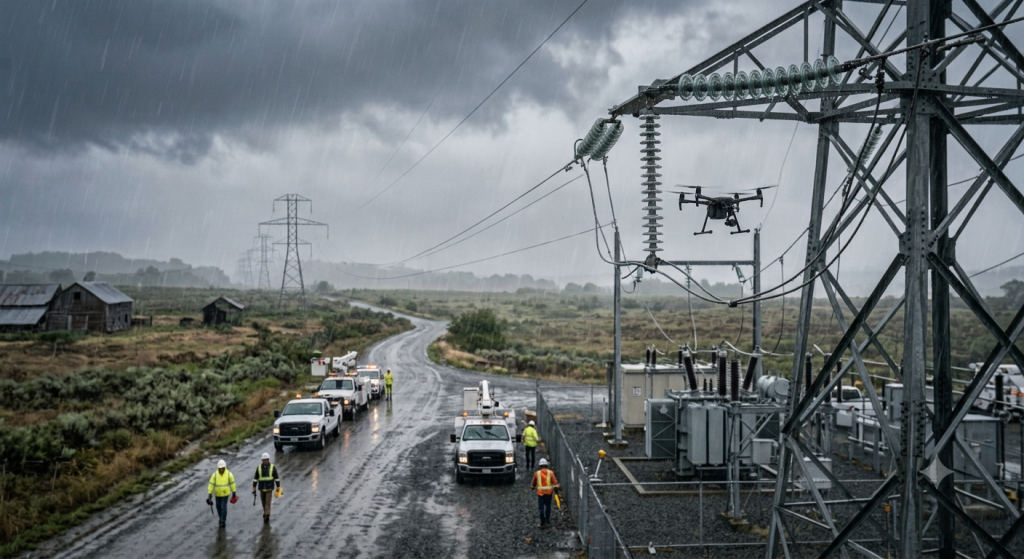
Aerodynamic Alterations and Wind Drain
Rain is usually accompanied by gusts and turbulent airflow. Heavy raindrops hitting the propellers alter their aerodynamic properties and increase the weight of the aircraft. To maintain stability in wind and rain, the drone consumes significantly more power than usual, drastically shortening battery life.
Deciphering Drone IP Waterproof Ratings
If your business requires you to operate in humid or rainy conditions (e.g., all-weather agricultural work or 24/7 industrial inspections), you must check the drone’s IP (Ingress Protection) Rating before buying or flying.
An IP rating consists of two digits (e.g., IP55). The first digit represents dust protection, and the second represents water protection. Below is a guide to common waterproof ratings in the drone industry:
| Waterproof Rating | Protection Level Description | Applicable Weather Scenarios |
| No IP Rating | Completely non-waterproof (Most consumer drones) | Must remain entirely dry; zero water exposure permitted. |
| IPX4 | Splash-proof: Water splashing against the enclosure from any direction shall have no harmful effect. | Patchy dense fog, extremely fine drizzle. |
| IPX5 | Jet-proof: Can withstand water projected by a nozzle from any direction. | Continuous light to moderate rain. |
| IPX6 | Powerful jet-proof: Can withstand heavy seas or water projected in powerful jets. | Torrential rain or severe weather operations (Rarely found on drones). |
Note: If a drone’s technical specifications sheet does not explicitly state an IP rating, assume it is completely non-waterproof. Do not fall for vague marketing buzzwords like “water-resistant body.”
How Much Rain is Too Much?
Different levels of rainfall pose vastly different threats. Enterprises and pilots must rigorously assess weather conditions and avoid blind operations:
Light Drizzle
If your drone lacks an IP rating, do not risk it, even tiny water mists can accumulate into droplets and seep into cooling vents. However, for industrial drones with certified waterproof ratings, operations can usually proceed safely and efficiently.
Moderate Rain
The vast majority of consumer and non-certified drones must immediately stop flying and return to base. Continuous, dense rain will quickly find gaps in the chassis and ruin core circuitry within a very short window.
Heavy Rain
Regardless of the drone type, exercise extreme caution; standard protocol dictates a total halt to all flight missions. Even if the aircraft boasts a high waterproof rating, heavy rain severely obscures camera visibility, and the accompanying high winds exponentially increase the risk of losing control and crashing.
Thunderstorms
This is an absolute no-fly zone. Aside from heavy downpours, lightning introduces massive electromagnetic interference to electronics. Combined with extreme winds and violent low-altitude wind shear, it presents a fatal hazard that can easily result in catastrophic equipment destruction and injuries.
What to Do If Your Drone Accidentally Gets Wet?
If your standard drone is caught in a sudden downpour during a flight, or accidentally plunges into shallow water during a low-altitude operation, do not panic. Immediately execute this Golden 4-Step Rescue Method to maximize the chances of saving your gear:
Step 1: Land Immediately
Abort your current filming or operational mission right away. Bring the drone down to dry ground at the fastest safe speed. Do not try to stretch your flight time; doing so risks a mid-air short circuit that can cut power instantly and cause a crash.
Step 2: Never Turn It On, Pull the Battery Instantly!
The very first thing to do after landing is to turn off the power and remove the battery! As long as there is no electrical current running through the circuits, short-term exposure to In cases where there is no electric current passing through the circuits, brief contact with pure water should not damage the motherboard. Never attempt to power up the device in an attempt to see if it still functions; it will be when you do so that the circuits get fried.
Step 3: Dry the Outside Completely
Drying the exterior, including the battery compartment and around the motors, needs to be done using a very absorbent cotton cloth or paper towels. Avoid the use of a heat gun or high-temperature hair dryer since this will melt internal plastics or rubber gaskets, as well as push the moisture further into places it should not be.
Step 4: Let It Sit with Desiccant for 48 Hours
Put the drone and its battery in separate airtight bags containing lots of industrial desiccant (for example, silica gel packs – no rice because it creates a lot of dust). The sealed bags should be left for 24-48 hours in a well-ventilated and dry area so that all internal moisture is sucked out of the drone.
How to Choose a Drone for Rainy/Humid Operations
If your business regularly involves humid environments, rainy weather, or hydro-spraying operations, you should focus on the following core hardware indicators when procuring equipment:
IP Protection Rating:
This is the most critical benchmark. Consider drones with IP rating of 54, 55, or even 65 or higher. The higher the number, the more capable the gadget will be to withstand prolonged exposure to spraying of rain.
Waterproof/Fully Sealed Motors
Motors are like the heart of a drone. Always consider getting industrial-strength, fully sealed and waterproof brushless motors. Such motors are capable of keeping away water, pesticides, or acidic rain from getting into the inner bearings.
Sealed Battery Compartments & Moisture-Proof Interfaces
The battery port is a high-voltage conductor segment. Drones suitable for operating under rainy conditions need an isolated and waterproofed battery port fitted with unique waterproof silicone seals and moisture-resistant connectors for power transmission in the rain safely and effectively.
Anti-Corrosion Structural Materials
Rainfall and cleaning solutions used outdoors may corrode the frame. Drones should be made of corrosion-resistant carbon fiber, aircraft grade aluminum alloy, and light composite material.
Resistance to Strong Winds
Strong wind is usually coupled with heavy rainfall. It’s crucial to take note of the maximum wind resistance ability (such as being able to operate at Levels 6 and 7 wind conditions) of the drone. The more powerful the propulsion system and flight control algorithm, the better the stability of the drone under such rainy conditions.
Stronger Load-bearing Capability
Using industrial cleaning drones as an example, these drones have to load and drag high-pressure water pipes, special nozzles, liquid containers for cleaning solutions, and pressurization devices in their operations. Effective loading capability and balance are fundamental for efficient and long-lasting operations under rainy conditions.
Conclusion
In the absence of a drone that is certified for operation in wet weather with an IP55 or IPX6 rating, operating your ordinary drone in the rain would be a risk to your gear.
Make sure that you consult weather forecasts before you take your drones out for any operations; also, don’t forget that having a rain cover handy is key to ensuring safety in your operations.