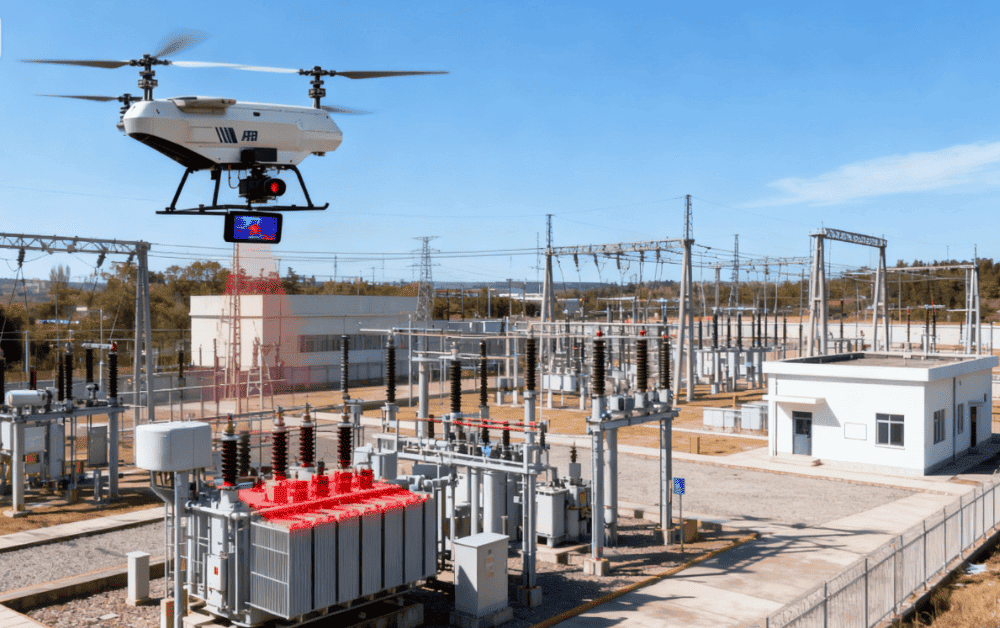
Drone Infrared Temperature Inspection: Fault Warning Case of 220kV Substation Equipment
Project Overview
Located in the core area of a major city, the 220kV substation is responsible for approximately 30% of the area’s power supply.
As a critical part of the urban power infrastructure, the substation contains a large number of densely arranged electrical components, including transformers, circuit breakers, and isolating switches.
Traditional inspection methods rely heavily on personnel carrying handheld infrared thermometers to measure equipment temperatures. However, the complex equipment layout creates multiple temperature measurement blind spots, while manually recording and organizing large amounts of temperature data can be time-consuming and inefficient.
To improve inspection coverage and temperature monitoring efficiency, the substation introduced drone-based infrared thermal inspection.
The drones follow preset flight routes and conduct systematic thermal scans of key equipment. Equipped with infrared thermal cameras, the drones can collect temperature data from different parts of electrical equipment and generate temperature distribution heat maps for further analysis.
During the summer peak electricity period in 2024, the system helped identify an abnormal condition involving the main transformer and enabled timely intervention, preventing a major transformer burnout accident.
The resulting preventive action helped ensure reliable urban power supply and reduced potential power outage losses by approximately RMB 5 million.
The Challenge
Critical Urban Power Infrastructure
The substation is located in the core area of a major city and is responsible for approximately 30% of the area’s power supply. Any major equipment failure could therefore have a significant impact on the reliability of urban electricity supply.
Densely Arranged Equipment
The substation contains a large number of critical electrical components in a relatively concentrated area. This makes it difficult for inspectors to access and measure every important equipment location efficiently.
Temperature Measurement Blind Spots
Traditional handheld infrared thermometers require personnel to manually approach and measure equipment.
The complex layout and limited accessibility can result in temperature measurement blind spots, potentially making abnormal heating conditions more difficult to detect.
Cumbersome Data Collection
Manual infrared inspections also require personnel to record and organize temperature measurements.
When large numbers of equipment points need to be inspected regularly, this can increase the workload and make it more difficult to compare temperature data across different inspection periods.
Higher Risk During Summer Peak Demand
During periods of high electricity consumption, electrical equipment operates under increased loads.
Early detection of abnormal temperature conditions becomes particularly important for preventing equipment failures and maintaining reliable power supply.
The Drone Infrared Inspection Solution
To address these challenges, the substation implemented a drone-based infrared thermal inspection system.
The drone follows a preset inspection route and performs systematic thermal scans of key equipment throughout the substation.
The inspection targets include:
- Power transformers
- Circuit breakers
- Isolating switches
- Other critical electrical equipment
The drone’s infrared thermal camera captures temperature information from equipment surfaces and generates temperature distribution heat maps.
This allows inspection personnel to identify abnormal temperature patterns more efficiently and provides visual data for further analysis and maintenance decisions.
How the Thermal Inspection Works
1. Plan the Inspection Route
A preset flight route is established according to the substation layout and the location of critical equipment. This helps ensure systematic coverage of designated inspection areas.
2. Conduct Automated Aerial Scanning
The drone follows the planned route and performs thermal scans of key equipment. Compared with manually carrying handheld infrared equipment around the substation, aerial inspection provides greater flexibility for monitoring densely arranged equipment.
3. Capture Infrared Temperature Data
The infrared thermal camera collects temperature information from different parts of transformers, circuit breakers, isolating switches, and other equipment.
4. Generate Thermal Distribution Maps
The collected temperature information is presented as thermal distribution heat maps, allowing inspection personnel to visually identify areas with abnormal temperature patterns.
5. Identify Potential Equipment Abnormalities
Temperature anomalies can indicate potential equipment problems requiring further inspection or maintenance.
By identifying abnormal thermal patterns at an early stage, maintenance teams can investigate potential faults before they develop into more serious failures.
6. Support Preventive Maintenance
The thermal inspection data provides maintenance teams with a visual basis for assessing equipment conditions and taking timely corrective action.
Key Technologies
Infrared Thermal Imaging
Infrared thermal cameras detect temperature variations across equipment surfaces, making abnormal heating conditions easier to identify.
Automated Flight Routes
Preset flight routes help standardize inspection procedures and provide systematic coverage of critical equipment.
Temperature Distribution Heat Maps
Thermal data is converted into visual heat maps, allowing inspection personnel to quickly identify areas with unusual temperature distributions.
Aerial Access to Dense Equipment Areas
Drone-based inspection provides an aerial perspective that can help reduce inspection blind spots in densely arranged substation environments.
Project Results
The implementation of drone-based infrared inspection produced significant benefits during the summer peak electricity period in 2024.
Major Transformer Failure Prevented
During the summer peak, the thermal inspection system helped identify an abnormal condition associated with the main transformer. Timely intervention prevented a potential major transformer burnout accident, reducing the risk of a serious power supply disruption.
Improved Inspection Coverage
Drone-based thermal scanning provided a more systematic way to inspect key substation equipment and helped address some of the blind spots associated with conventional handheld temperature measurement.
Faster Identification of Thermal Abnormalities
Temperature distribution heat maps provided inspection personnel with a visual overview of equipment thermal conditions, making potential abnormalities easier to identify and investigate.
Approximately RMB 5 Million in Power Outage Losses Avoided
By preventing a major transformer failure and the associated power interruption, the project helped reduce potential power outage losses by approximately RMB 5 million.
Supported Reliable Urban Power Supply
Because the substation is responsible for approximately 30% of the area’s power supply, preventing a major transformer incident contributed to maintaining reliable electricity service during the summer peak.
From Temperature Measurement to Intelligent Fault Warning
Traditional infrared inspection often depends on inspectors manually measuring individual equipment points and recording temperature data.
Drone-based thermal inspection changes this approach by combining automated aerial flight, infrared thermal imaging, and visual temperature analysis.
Instead of simply collecting individual temperature readings, the system provides a broader view of equipment thermal conditions and helps maintenance teams identify abnormal patterns.
In this project, the technology played an important role in identifying a potential main transformer problem during the 2024 summer peak, helping prevent a major equipment failure and reducing potential power outage losses.
A Smarter Approach to Substation Inspection
For high-voltage substations, early detection of equipment abnormalities is critical to maintaining grid reliability.
Drone-based infrared inspection provides utilities with a safer, more efficient, and more systematic way to monitor critical electrical equipment.
By combining preset flight routes, infrared thermal cameras, temperature data, and thermal distribution heat maps, drone inspection can support earlier fault detection, preventive maintenance, and more reliable power grid operation.