
How to Start an Agriculture Drone Business?

With the explosive global growth of smart farming and precision agriculture, traditional farming methods are undergoing a disruptive transformation. Rural labor shortages, skyrocketing labor costs, and increasingly strict environmental and chemical-saving regulations have shifted agricultural drones (crop protection UAVs) from a “trendy tech novelty” into an indispensable production tool for the modern farm.
If you are looking for a high-return, technology-driven, and highly promising entrepreneurial venture, starting an agriculture drone business might just be your golden opportunity. But how to start a agriculture drone business? Here we will provide a comprehensive, step-by-step startup blueprint to help you navigate the journey from zero to launch.
Table of Contents
Why is the Agriculture Drone Industry a Lucrative Market?
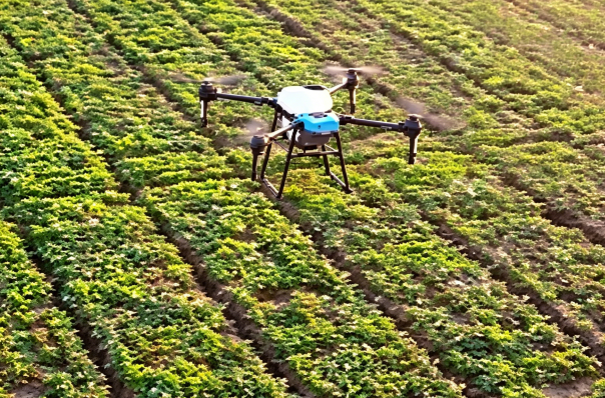
An agricultural drone is far more than just a flying gadget; it is a highly efficient agricultural production tool. It directly solves three core long-standing pain points in traditional farming:
1. Explosive Demand for Precision Agriculture
Modern farming relies heavily on data-driven insights. Equipped with multispectral sensors, drones can complete field scouting in minutes, a task that used to take workers days, and generate intuitive, actionable data reports:
- Crop growth and chlorophyll level monitoring via NDVI index analysis.
- Early warning systems for pest infestations, diseases, and weed distribution.
- Soil moisture saturation and irrigation requirement analysis.
- Precision fertilization and nitrogen use efficiency optimization.
2. Severe Global Agricultural Labor Shortages
Farmers all around the world suffer from an aging workforce and increasing labor costs. Conventional backpack spray application methods are not only extremely inefficient but pose serious chemical risks to workers. In stark comparison, an agricultural drone carrying a heavy payload can process dozens, or even hundreds of acres, in one hour alone.
3. Government Policies and Smart Agriculture Subsidies
To secure food security and eco-friendly, sustainable growth, various countries and regions have adopted a strong push towards “Smart Agriculture”. Many offer lucrative financial subsidies to enterprises or agricultural cooperatives purchasing industrial-grade agricultural drones, significantly lowering the barrier to entry for startups.
What Core Services Can Your Drone Company Offer?
Before purchasing any hardware, you must clearly define your commercial positioning. A mature agricultural drone company has highly diversified revenue streams:
1. Crop Protection Spraying & Solid Granule Broadcasting Services
This is the current toughest, highest pressure, and quickest money-making business area.
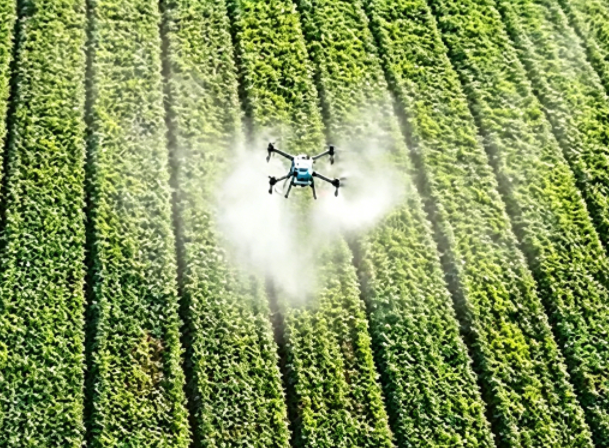
Spraying: With the help of high-capacity drones to use for precise spraying of pesticides, fungicides, herbicides, and other foliar fertilizers.
Broadcasting: The majority of today’s high capacity drones feature a solid spreading mechanism to plant rice seeds and spread cover crops and granular fertilizers.
Core Advantage: Drone operations eliminate tire-track crop damage completely (traditional tractors cause a 3% to 5% yield loss from crushing crops). Furthermore, the powerful downwash action from the drone rotors agitates the canopy, allowing the liquid to perfectly penetrate and coat the undersides of leaves and the root zones, drastically improving pest and disease control.
2. Crop Monitoring & Precision Diagnosis Services
You can offer “field health checkups” for large farms, agricultural insurers, or even governmental agricultural agencies by deploying high-resolution cameras and multispectral sensors to conduct high-altitude remote sensing. You can use the reflected infrared wavelengths to assist farmers in identifying any issues in their field such as nutrient deficiency or pests in their crops. The business is highly profitable and easy to turn into a contract-based business.
3. High-Precision Farmland Mapping & Terrain Planning
By employing RTK high-accuracy positioning technology, one can create high-resolution 2D and 3D orthomosaics of farmland or wilderness areas. The data acquired from such imaging is essential when undertaking land levelling, drainage system design, terrace slope creation, and even autonomous self-driven heavy agricultural machinery.
Start Agriculture Drone Business in 7 Steps
Step 1: Research the Local Agricultural Market and Crop Profiles
Many startups fail not because of poor equipment, but due to a lack of localized market research:
Analyze Key Crops: Broad-acre row crops like corn and wheat require high-speed, high-flow spraying over massive areas. In contrast, for economic crops such as apples and citrus, there is a need for drones that have advanced Terrain Following abilities coupled with atomizers having high penetration capability.
Competing Benchmarks: Research local spraying firms and agricultural cooperatives for their pricing models (such as what is their rate per acre/ hectare?).
Key Account Targets: Focus on meeting local agricultural cooperatives, large scale farmers, and agricultural inputs retailers to ascertain whether their major challenges arise from labor or difficult terrains.
Step 2: Establish a Clear Business Plan & Pricing Model
Determine your revenue model and cash-flow turnaround strategy. Common pricing structures include:
Per-Area Pricing (The Mainstream Model): Charging a fixed service fee per acre or hectare based on crop types and terrain complexity. Volume discounts are typically offered for large-scale operations.
Per-Project/Data Pricing: Best suited for farmland mapping and multispectral monitoring, where you charge per data report delivered. This is a high-gross-margin business segment.
Annual Subscription Contracts: Targeting large corporate clients by offering a turnkey package that combines “periodic field scouting + priority seasonal spraying,” ensuring your company maintains stable, year-round cash flow.
Step 3: Secure Essential Industry Qualifications and Licenses
In most jurisdictions, commercial agricultural drone operations fall under regulated professional aviation frameworks. Compliance is a strict baseline. Taking the North American market as an example, you must pass three major milestones:
FAA Part 107 Certification: The foundational commercial drone pilot license.
FAA Part 137 Certification: The specialized Agricultural Aircraft Operations waiver. This is the mandatory core qualification required to legally dispense chemicals via a drone.
State Pesticide Applicator License: Proof that the pilot is not only capable of flying but also possesses expert knowledge of safe chemical handling, mixing, and application protocols.
Risk Mitigation Tip: You must ensure you have enough commercial general liability insurance, third party aviation liability insurance, and comprehensive hull insurance besides having corporate registration. When operating in the field, coming into contact with power lines and experiencing accidents is an almost sure event; hence, having good insurance shields you from major liabilities.
Step 4: Select the Right Productivity Tools (Hardware Sourcing)
Equipment is your core asset and the direct driver of your daily operational efficiency and ROI. When evaluating agricultural drones, focus on these heavy-duty technical specifications:
| Key Evaluation Metrics | Why It Is Crucial | Industrial-Grade Excellence Standards |
| Payload Capacity | Directly dictates the acreage covered per flight, reducing downtime spent on frequent refilling. | 30L to 50L capacity (The current golden sweet spot for optimal commercial operational efficiency). |
| Obstacle Avoidance & Radar | Farmland environments are cluttered with power lines and trees; radar is the final defense system for asset protection. | Must feature Omnidirectional Digital Radar paired with 24-hour, all-weather microwave terrain-following technology. |
| Spraying Atomization System | Determines droplet adhesion and canopy penetration rates. | Prioritize Dual Atomizing Centrifugal Nozzles, allowing real-time droplet size adjustments via the mobile app. |
| Battery Life & Fast Charging | Busy farming seasons mean racing against the clock; charging speeds dictate continuous operation capabilities. | Support for high-power smart fuel-powered fast charging stations that can fully juice a battery pack in 10–12 minutes. |
Beyond the drone itself, your startup budget must account for: spare smart batteries (a minimum configuration of 3–4 battery sets per drone for continuous cycling), an RTK high-precision base station, a transport vehicle (such as a pickup truck or enclosed cargo van), and data-processing software.
Step 5: Calculate Your Agriculture Drone Startup Costs
The following table outlines the typical startup budget range (in USD) required to launch a standard, commercially viable agricultural drone enterprise:
| Expense Category | Estimated Cost Range (USD) | Remarks / Descriptions |
| Complete Ag Drone Hardware Set | $10,000 – $35,000 | Includes the drone platform, heavy-payload spraying system, or spreading system. |
| Smart Battery System (3-4 sets) | $1,500 – $5,000 | Ensures continuous, seamless battery rotation and charging during field operations. |
| High-Power Smart Charger / Generator | $800 – $3,000 | Essential for off-grid field operations where local power is unavailable. |
| High-Precision Mapping Sensor / Software | $500 – $4,000 / year | For processing NDVI crop analysis and 3D farmland modeling data. |
| Legal Compliance, Training & Licenses | $500 – $2,500 | Covers Part 107/137 application fees and pesticide applicator licensing. |
| Commercial Liability & Equipment Insurance | $1,000 – $4,000 / year | Critically important! Mitigates financial risks from crashes and third-party property damage. |
| Initial Local Marketing & Promotion | $1,000 – $5,000 | Includes printing flyers, live demo event materials, community outreach, and website building. |
| Total Capital Investment Budget | $15,300 – $58,500+ | Startups are generally advised to prepare a working capital pool of $30,000 to $50,000. |
Step 6: Formulate Smart Pricing and Calculate Profitability
Pricing too high turns clients away; pricing too low fails to cover equipment depreciation.
Row Crops (Soybeans, Wheat, Rice): Flat terrain, fast flight speeds, and high operational efficiency. These usually follow a “low per-acre price, high-volume throughput” pricing strategy.
Mountainous Terrains & Fruit Orchards: Rolling hills demand complex terrain-following maneuvers and advanced 3D radar obstacle avoidance, coupled with higher liquid application volumes. These environments typically command fees 1.5 to 3 times higher than standard row crops.
Daily Net Profit = (Service Fee per Acre – Chemical & Battery Depreciation Costs) ×Daily Covered Acreage – Labor & Fuel Costs
During an intensive 3-to-4-month peak farming season, provided your team maintains steady, consistent daily operations, you can typically fully recover all initial hardware procurement costs within one to two operational seasons.
Step 7: Growth Strategy: How to Land Your First Cohort of Farm Owners
Farmers are traditionally conservative; they will not easily hand over crops worth hundreds of thousands of dollars to an unproven company. To break down trust barriers, play these four strategic cards:
Host “Live Field Demonstration Events”:
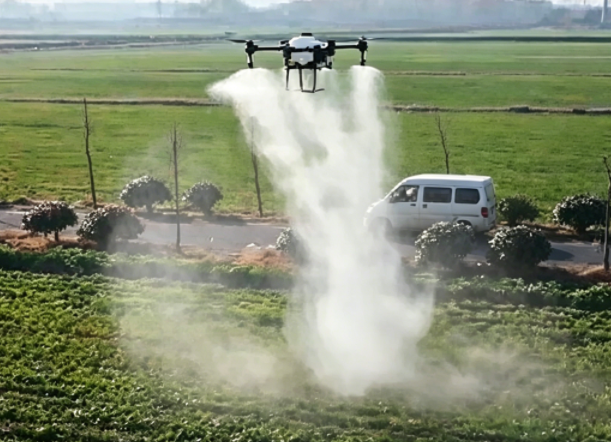
Right before the spring planting or critical pest prevention windows, invite local opinion leaders (prominent farm owners, cooperative directors) to a live field demonstration. Show off the drone’s autonomous route planning, rapid spraying speeds, and the flawless mist coverage delivered by the centrifugal nozzles. Letting them see the tangible results in person is your highest-converting sales tactic.
Partner Up with Agrochemical Retailers:
Actively visit local retailers selling seeds, pesticides, and fertilizers. Propose a collaborative model: when farmers purchase chemicals from the retailer, the retailer can bundle or cross-sell your “outsourced drone crop-protection flight service.” This strategic alliance helps you acquire bulk orders quickly, even when your brand is new.
Deploy “Visual Bombardment” on Social Media:
Upload high-definition videos of your drones operating in the field, executing precision obstacle avoidance, and performing automatic returns to platforms like YouTube, TikTok, and local Facebook farming groups. These highly tech-forward, visually striking clips carry significantly more conversion power than text-based advertising.
Challenges to Consider When Starting an Agriculture Business
Despite the enormous potential of the sector, an intelligent entrepreneur needs to consider the following operational difficulties:
High Dependency on Weather Conditions:
Any instance where high wind speeds above Force 4, excessive rainfall, or intense heat is experienced, then operations become risky because flights are suspended, while chemicals will be intensely evaporated and blown away. Time periods for your operations will be highly compressed.
Maintenance Issues of Equipment and Wear and Tear:
Batteries are consumable goods; constant rapid charging in the field reduces their longevity. Also, farm chemicals are highly corrosive, and therefore need fresh water washing after every mission.
Market Education Overhead:
In slower-adopting agricultural regions, some farmers remain skeptical of new technology. Expect to invest time and initial free trial runs to establish foundational trust.
Looking for High-ROI Agricultural Drone Equipment?
Are you preparing your agricultural drone business launch plan, or looking to upgrade your existing crop-protection fleet? VastArrive focuses on providing comprehensive, one-stop industrial and agricultural drone solutions alongside global supply chain support. Contact VastArrive today to receive a free copy of our latest agricultural UAV specification comparison charts, international export pricing, and full commercial operational support resources!