
Tethered vs Battery-Powered Cleaning Drones: Which Is Better for Commercial Facade Cleaning

Commercially-owned drones for facade cleaning are now a frequent alternative to traditional rope-access and suspended-platform methods of cleaning. One of the most important questions that buyers have to ask when looking at drone cleaning system is whether a drone that is tethered or batteries-powered cleaning drone is a better option.
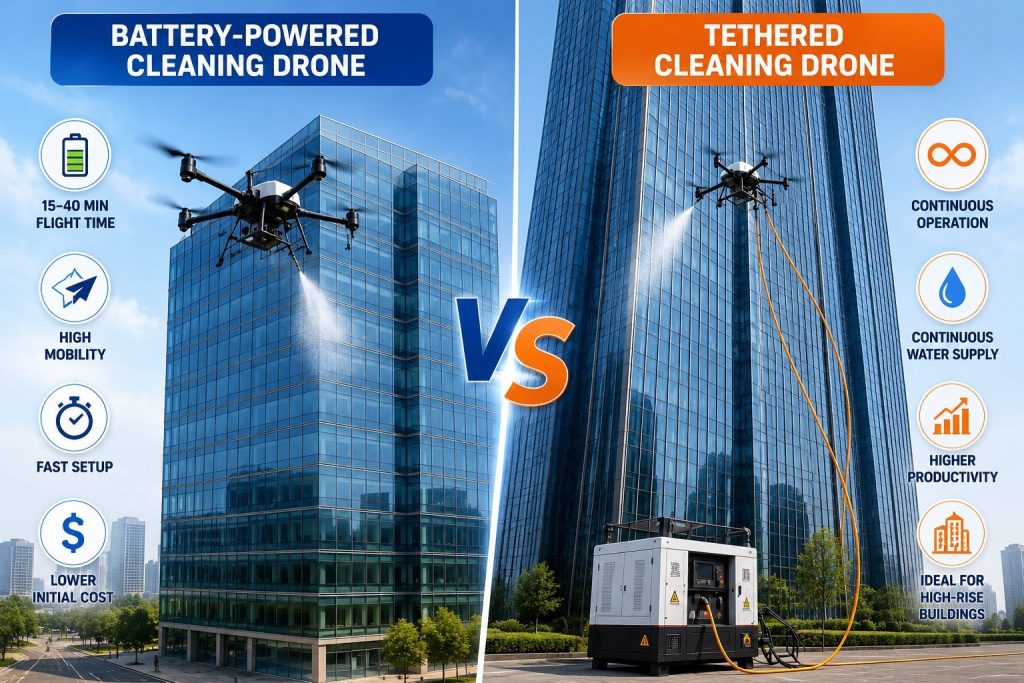
Find out more about battery power, battery life, operational efficiency, and project compatibility. This will aid facility managers, property owners, and cleaning contractors decide on the best solution for their needs.
Table of Contents
What Is a Battery-Powered Cleaning Drone?
Cleaning drones powered by batteries are constructed around batteries onboard usually lithium-based batteries which provide power to flight control, propulsion, as well as cleaning tools. Based on the Federal Aviation Administration commercial drones need pilots to monitor the performance of their aircraft as well as power systems and security of the flight throughout the entire life-cycle of the mission.
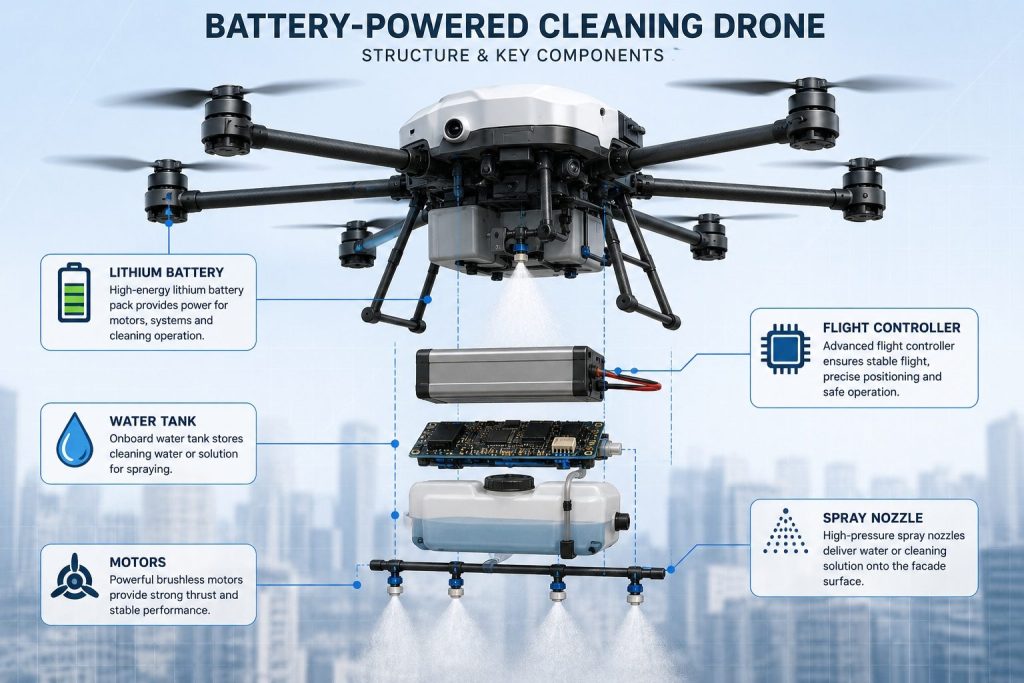
How Does It Work?
The drone is equipped with an internal battery as well as a flight control system as well as cleaning tools. In operation, all the energy needed for propulsion and cleaning comes from the onboard batteries.
Main Advantages
- Flexibility and high mobility
- Speedier deployment and setup
- No need for tether cable management
- It is suitable for areas with little or no surface area
Main Limitations
- Flight duration is restricted.
- Frequent battery replacement during large projects
- Lower productivity in tall buildings
- The limitations on the load of a the effectiveness of cleaning
What Is a Tethered Cleaning Drone?
Tethered drone systems address one of the most common operational constraints in commercial UAV applications–limited onboard energy capacity. Through the transfer of power to a source that is grounded the tethered platform can increase the duration of operation while also reducing interruptions caused by batteries that need replacement.
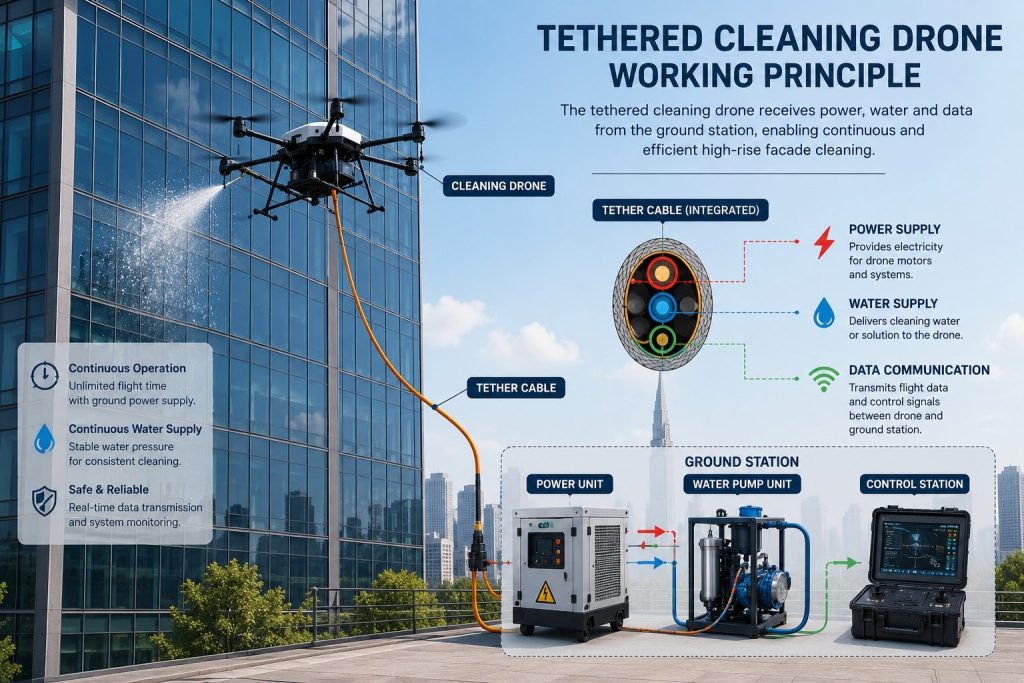
How Does It Work?
Instead of relying solely on batteries onboard The drone draws the power it needs from a ground-based source. This allows the operators to keep flights for longer periods, without landing often.
Main Advantages
- Continuous power supply
- Longer operating duration
- Reduced time to shut down
- More suitable to large-scale facade cleaning
Main Limitations
- Additional ground equipment needed
- More complicated configuration procedures
- Cable management considerations
- Limited operational flexibility in restricted zones
Key Differences Between Tethered and Battery-Powered Cleaning Drones
| Factor | Battery-Powered | Tethered |
| Flight Time | 15-40 min | Continuous |
| Power Source | Onboard Battery | Ground Power Supply |
| Water Delivery | Limited Payload | Continuous Supply |
| Weight Management | Payload Sensitive | Less Restricted |
| High-Rise Suitability | Moderate | Excellent |
| Operational Complexity | Lower | Higher |
| Initial Investment | Lower | Higher |
Which System Is More Efficient for High-Rise Buildings?
With the increase in the height of buildings and the area of their curtain walls, the efficiency of cleaning work will be more affected by endurance, continuous work, and methods of water and electricity supply. In the cleaning of exterior walls of tall buildings, the true test is not only to fly the drones, but also to sustain the efficiency of cleaning.
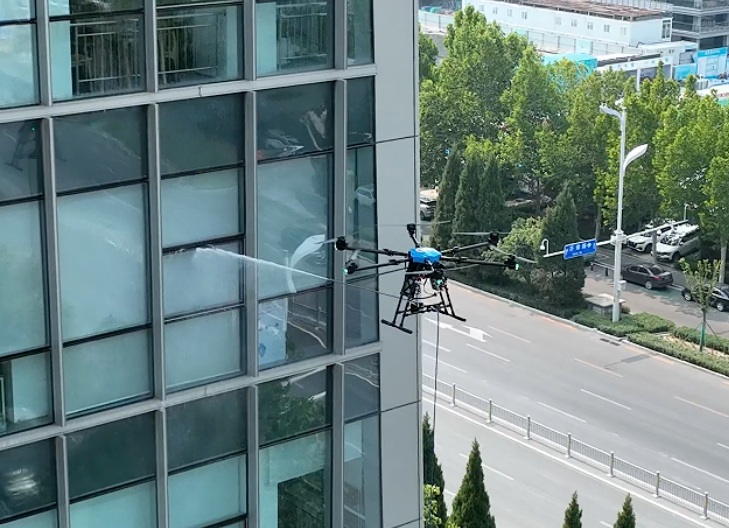
Flight Endurance Is Key
Cleaning of high-rise buildings takes more time as compared to other buildings or low-rise structures. Drones operating on battery have to keep coming back to charge their batteries, which interrupts the process.
However, tethered drones operate on constant supply of electricity provided to them by a base station, which helps them avoid frequent disruptions.
Continuous Water Supply Improves Productivity
Water or cleaner is necessary in cleaning the facade in most cases. In the case of a battery-operated drone, the weight of the liquid being transported will increase the load on the drone, and hence its flying capability may be reduced.
In many cleaning drones that use the tether method, both power and water supply is done via the tether cable.
Downtime Has a Direct Impact on Project Duration
Productivity in cleaning activities is not just determined by the rate of cleaning; non-productive time spent replacing batteries, equipment maintenance, and multiple take-offs and landing maneuvers also play an important role.
A reduction in these interruptions will greatly increase productivity in cleaning activities, especially for office towers, hotels, airports, and curtain wall buildings, which have large facade surfaces covering many square meters.
Efficiency Depends on the Project Type
Even today, battery-operated cleaning drones remain a viable choice when dealing with medium-height structures, specific localities, or projects where flexibility in the use of the technology is a priority.
However, in the case of skyscrapers, high-rise office buildings, or large glass curtain walls, tethered systems are typically chosen because of their longer working time and greater efficiency during the whole process of cleaning.
The efficiency of cleaning high-rises using drones is typically not about the speed at which the drones operate, but about the uninterrupted work they are capable of providing. The taller the building and larger the cleaning area is, the more significant this issue becomes.
Which Cleaning Drone Is Better for Different Applications?
Instead of asking which one is superior in general instead, it is better to determine the technology that is best suited to a particular project.
| Application | Recommended Solution |
| Residential Buildings | Battery-Powered |
| Hotels | Battery-Powered |
| Shopping Centers | Battery-Powered |
| Mid-Rise Buildings | Either System |
| Office Towers | Tethered |
| Skyscrapers | Tethered |
| Large Glass Facades | Tethered |
| Industrial Facilities | Tethered |
Conclusion
Both battery-powered and tethered clean drones are essential to modern day facade maintenance.
Battery-powered systems are flexible and offer simple deployment, which makes the ideal choice for smaller-scale projects as well as shorter cleaning cycles.
Tethered systems offer uninterrupted power, a longer operating times, and increased efficiency for high-rise and large-scale cleaning tasks.
The most efficient choice is based on the height of the building, its facade size, frequency of construction, and operational needs, not one technology that is universally superior.
FAQ
Q1: Can tethered cleaning drones operate continuously?
In the majority of commercial applications drones tied to a tether can stay in the air for longer periods than battery-powered drones because the power is sourced straight from the ground.
Q2: How long can a battery-powered cleaning drone fly?
The duration of flight varies based on the drone type, payload weight and weather conditions however, endurance is usually restricted by the battery capacity.
Q3: Are tethered cleaning drones more expensive?
The initial investment can be higher due to the additional power supply and tether management equipment even though operating efficiency could reduce costs for large projects.
Q4: Can battery-powered drones clean tall buildings?
Yes, but efficiency can reduce as the height of buildings and cleaning space increase.
Q5: Do tethered drones require special operator training?
The majority of operators require instruction on the management of tethers, ground equipment use, and safety measures.
Q6: What weather conditions affect cleaning drone performance?
The force of strong winds, heavy rain lightning, strong winds, and low visibility can cause problems for both battery-powered and tethered cleaning drones.
Q7: Can cleaning drones replace rope-access cleaning completely?
But not always. Drones can be extremely efficient in many tasks related to facade maintenance However, some inspections and repairs might still require human involvement.
Q8: What factors should be considered before purchasing a cleaning drone?
The height of the building, the material used for facades cleaning frequency project size regional regulations, operation expenses, and requirements for workers should be considered before deciding on the right system.