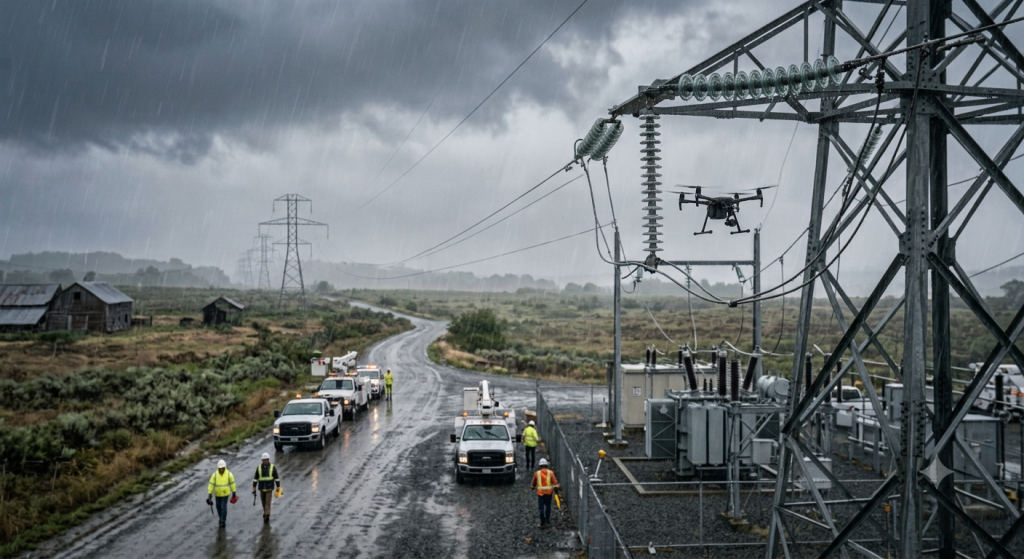
Why Use A Drone to Clean Windows for High Buildings?

With the rapid growth in the number of high-rise buildings in cities, glass curtain walls and large-scale façade structures have become defining features of modern architecture. However, high-rise window cleaning has long relied on suspended platforms, scaffolding, or rope access operations, methods that are not only limited in efficiency but also carry significant safety risks.
Against this backdrop, the drone to clean windows is emerging as an innovative solution in the field of high-rise building maintenance. In the following sections, we will explore window-cleaning drones from multiple perspectives, offering a comprehensive understanding of this emerging technology that is reshaping the high-altitude maintenance industry.
What is a Drone to Clean Windows?
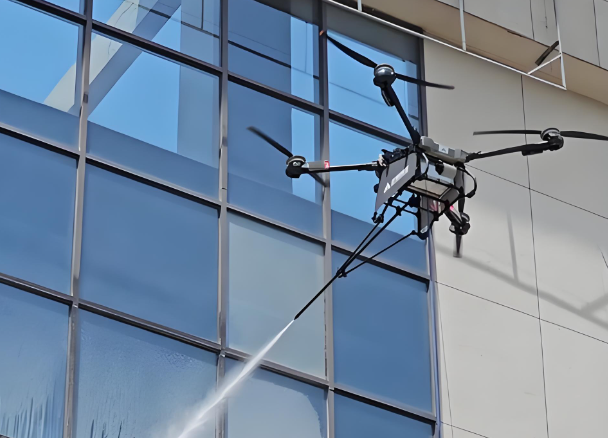
Window cleaning drone refers to any unmanned aerial system that is of an industrial type and is explicitly designed for and modified to clean building façades and glass curtain walls. Often these are industrial multi-rotor drones enhanced with high-pressure spray kits and water systems or detergent containers for carrying out a precise aerial cleanse.
The window-cleaning drones, different from the photography drones that are generally used by the common masses, have special abilities, which include:
- Strong wind resistance and stable hovering performance
- Precision positioning systems (such as RTK)
- High-pressure water pumps and spraying mechanisms
- Remote control or semi-automated flight path operation
- Onboard cameras for real-time monitoring of cleaning results
In essence, it is an integrated solution that combines industrial drone technology with high-altitude cleaning systems to deliver safer and more efficient façade maintenance.
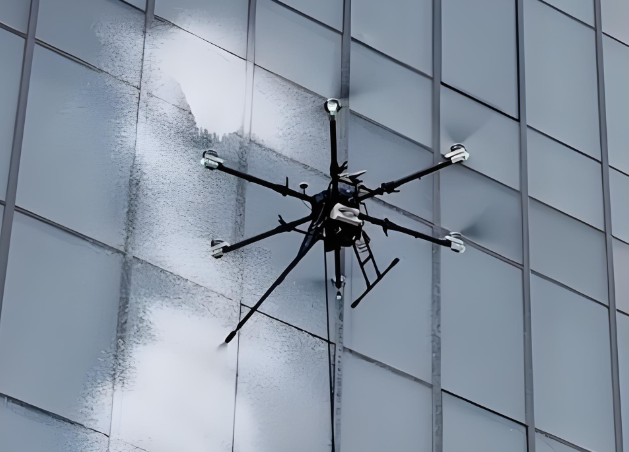
How a Drone to Clean Windows Work?
The operation of a window-cleaning drone generally involves several key steps:
Precise Takeoff and Positioning
The drone uses GNSS and RTK technology to achieve centimeter-level positioning accuracy, ensuring a stable and controllable flight path.
Wall Distance Maintenance
Equipped with LiDAR or visual sensors, the drone continuously monitors its distance from the building surface, maintaining a safe operational gap.
Spraying and High-Pressure Washing
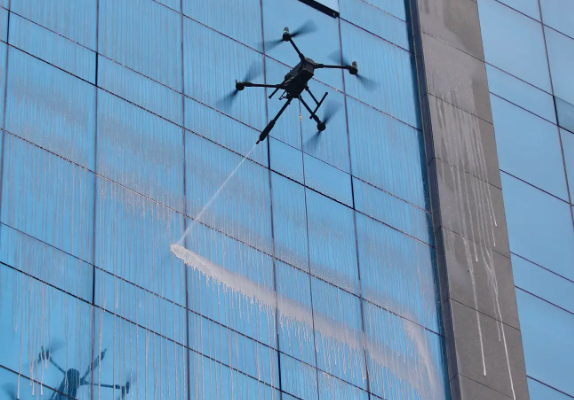
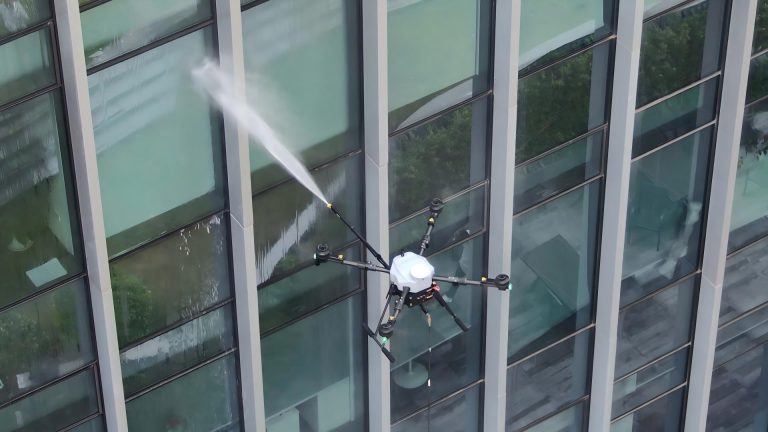
A high-pressure pump delivers water or cleaning solution onto the glass surface. Some systems feature adjustable nozzles to control spray pressure and coverage area for optimal cleaning.
Path Planning and Automated Control
Advanced drones can follow pre-set flight paths, performing vertical back-and-forth cleaning motions to ensure uniform coverage and avoid missed spots.
Real-Time Monitoring and Feedback
Operators can observe and calibrate cleaning results in real time from behind the glass through HD cameras and ground control stations.
This kind of a workflow converts high-rise window cleaning into a smart, ordered task rather than a nondirected, dangerous one, where the exaltation of performance, safety, and precision come in together.
Why Use a Drone to Clean Windows?
The rapid adoption of window-cleaning drones is driven by their combined advantages in safety, efficiency, and cost-effectiveness.
1. Enhanced Level of Safety
Traditional high-rise cleaning procedures include quite high probabilities of fall with a necessity for highly skilled workers. Through drones, the operators are no longer required to continue working at great heights, significantly reducing the risk of job-related injuries and safety liability to the company. Enhanced safety is among the major driving forces behind the shift of industry.
2. Increased Operational Efficiency
While compared against the traditional methods, drones ensure that there is huge saving in scaffolding and suspend systems and provide a very quick and flexible setup. They operate in protractedly extended time duration in one setting, which brings about faster completion of cleaning high-rise offices, hotels, and large scale façade projects.
3. Reduced Long-Term Costs
Although the initial investment in drone systems is higher, the long-term benefits are clear. Labor costs are reduced, insurance expenses decrease, and operational turnaround is faster. For property management companies and professional cleaning service providers, this translates into a more favorable overall ROI.
4. Adaptability to Complex Building Structures
Drones are capable of reaching areas that have always been difficult or even impossible for traditional equipment like curved glass curtain walls, non-standard façade configuration, narrow and confined spaces, and ultra-high-rise buildings. Thepects have thus deliberately been highlighted in this Situation, the quality of resourcefulness, and the many operational advantages that drones bring to operations in high altitudes.
Drone Cleaning vs. Traditional Methods
With the growing number of high-rise buildings, window cleaning faces increasing safety and efficiency challenges. Comparing drone cleaning with traditional high-altitude methods highlights the advantages of this emerging technology.
| Comparison Dimension | Traditional High-Altitude Cleaning | Drone to Clean Windows |
| Safety | High-risk operations; operators are prone to injury | No personnel required at height; risks are significantly reduced |
| Preparation | Requires scaffolding or suspended platforms; long setup time | Quick deployment, saving preparation time |
| Operational Efficiency | Relatively slow; continuous work is limited | High efficiency; large areas can be cleaned quickly |
| Labor Costs | High labor input; long-term costs are significant | Lower labor requirements; reduces operational costs |
| Adaptability to Complex Structures | Limited capability for curved, irregular, or narrow areas | Easily handles complex façades; can cover high-altitude blind spots |
From an industry perspective, drone cleaning is gradually becoming an important technological supplement for high-rise building maintenance. With clear advantages in safety, efficiency, and cost control, drones even have the potential to replace traditional methods in certain high-risk or difficult-to-access scenarios, driving the high-altitude cleaning industry toward greater automation and intelligence.
Key Application Scenarios of Drones to Clean Windows
As skyscrapers and window walls become more common, traditional methods of cleaning windows with cranes are becoming less safe and efficient. The drone technology would prove to pose a set of renditions: it could be a new trend in high-rise building maintenance as it enables for safer, more efficient cleaning in built-to-live environments with so many operations required in very complex environments.
High-Rise Office Buildings
The drones are able to quickly clean all building facades, and advanced systems of cranes and suspension platforms are abandoned. This is of advantage especially in such crowded metropolitan skyscapes as the CBD, where ample public space puts a limit on location-based access. Drones are capable of navigating in such space between buildings quite well, to ensure safety as well as attaining cleaning efficiency.
Commercial Complexes
Some very vast shopping centers or commercial complexes are known to have a lot of glass facades. Conventional ways of cleaning are very time-taking and expansible. Drones can cover much huge areas and can thus save much on labor and material costs.
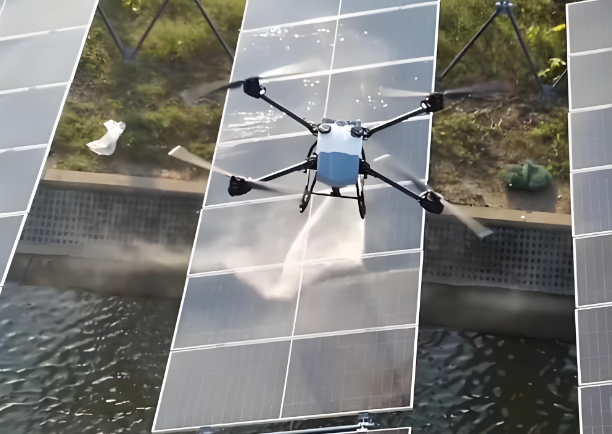
Solar Glass Curtain Walls
Solar glass façades require meticulous cleaning, as dust or stains can reduce photovoltaic efficiency. Drones can precisely control spraying and cleaning paths, keeping surfaces clean and maximizing energy utilization.
The above scenarios illustrate how drone cleaning technology does not only directly improve the safety and efficiency of high-altitude maintenance but also carries a wide utility and potential for modern urban building management.
Hotel Façades
Hotel façades often bear great designs-all curved and narrow-in a way hard for any other available equipment to get there and to clean. Drones will very well clean these unique but thus far not obtainable, unique design tiles, which, if carefully cleaned by drones, could very easily increase the desirability of the milieu to hotel guests.
Airport Terminals
Airport terminals are known for their great glass façades and high passenger density making pre-existing cleaning quite risky. Drones can efficiently and safely clean exterior terminal surfaces with minimal interruption of daily operation.
Glass Buildings in Industrial Parks
High-tech glass façades are a common feature of commercial or research buildings in industrial parks. Drones equipped with robotic arms can adapt their configurations to either taller or shorter buildings and structures providing for maintenance and cleaning, consequently helping in creating a good image of the property.
Industry Challenges and Practical Limitations of Drones to Clean Windows
Although drone cleaning technology is rapidly developing and showing great potential in high-rise building maintenance, there are still several challenges and practical limitations that need to be addressed.
Weather Constraints
Drones are highly sensitive to weather conditions during high-altitude operations. Strong winds, heavy rain, or low visibility can affect flight stability and cleaning effectiveness, and in severe cases, operations may need to be halted. Therefore, task planning must carefully consider weather factors to ensure safety and efficiency.
Flight Endurance
Drones are limited by battery life from performing continuous operations. Most industrial drones can only fly for a limited duration, which necessitates the careful planning in routing and scheduling of battery swap or battery recharge so that the cleaning tasks can be performed smoothly and without any interruptions.
Supply of Water
Certain cleaning systems for drones would require supply from ground water or piping thereby leading to limited versatility. This is particularly assured towards, in open areas or in construction sites and thus could limit deployment potential.
Regulations and Compliance
Diversediate countries and areas have strict rules of flying altitudes of drone, operational zones, and the qualifications of the operator. Thus,, companies wishing to operate at great altitudes should think of the particular federal regulations that govern them, only respect them as much as possible to minimize legal risks.
Although operations must be planned on project scale, building types, and environmental conditions. Proper programming of flight time, route, operator management, and safety measures will be key to maximizing the benefits of the draught cleaning technology while cancelling out factors that may put a limit on the project’s deployment.
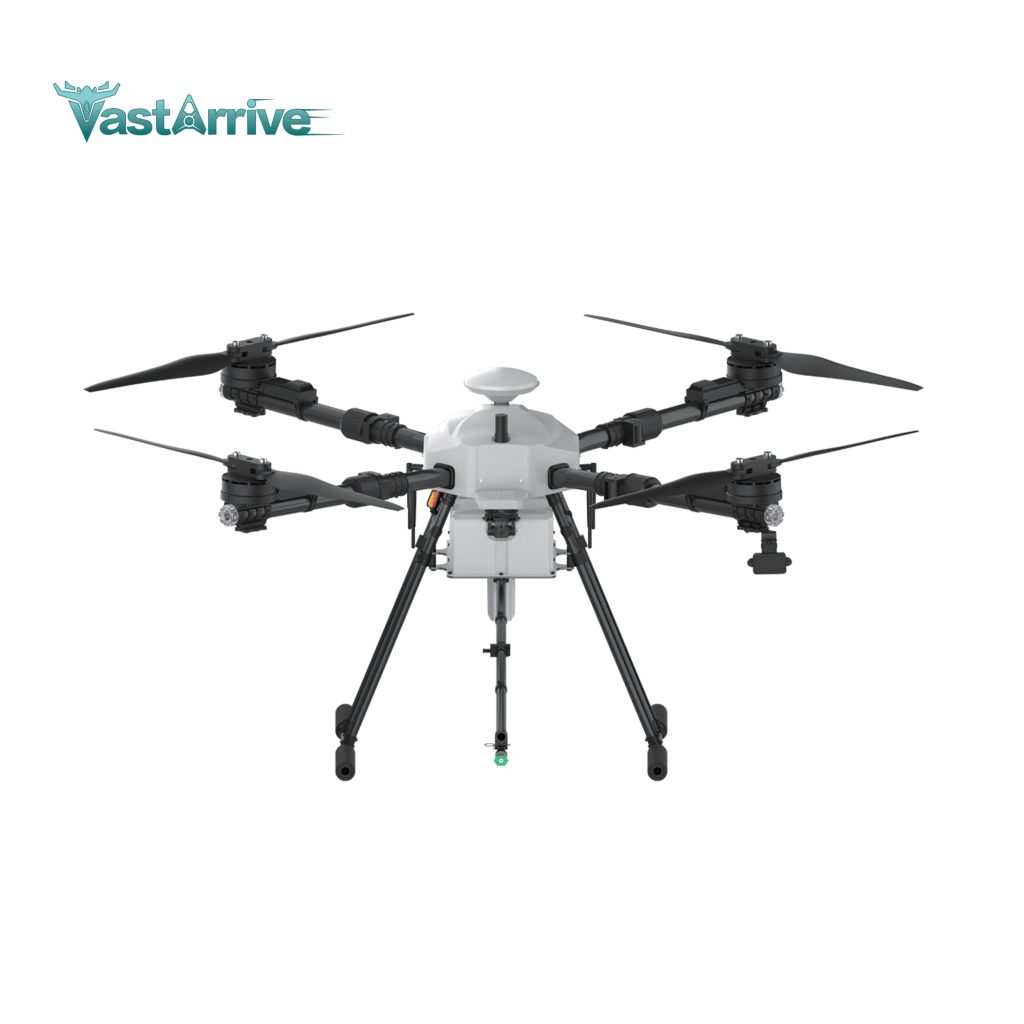
Recommended Drone Solution: VastArrive VA-D15R Cleaning Drone
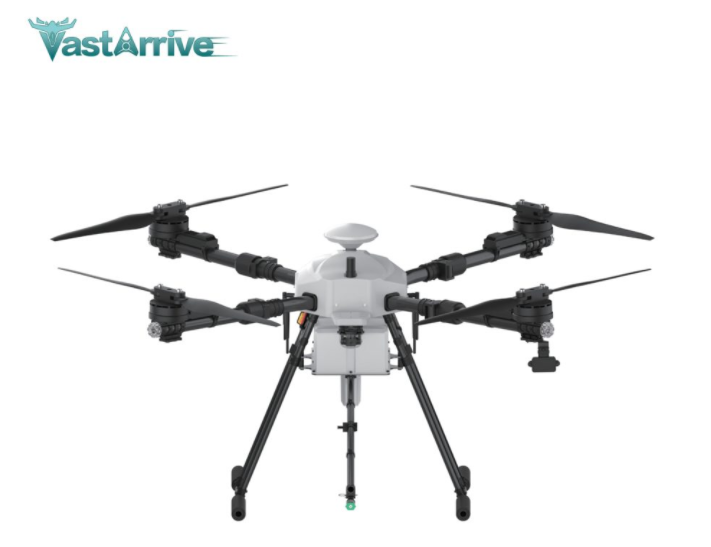
The complete design of the VastArrive VA-D15R cleaning drone, a UAV for high altitude washing, is grand towards high-rise building and big glass façade cleaning. It effectively caters to the task of washing building originations, photovoltaic panels, wind turbine towers, and other vertical structures, reducing to minimal the danger associated with manual work, high altitude.
Key Benefits
Long Endurance & High Efficiency: With a flight time of 40–50 minutes, it can cover 400–500㎡per hour of deep cleaning, greatly improving high-altitude operational efficiency.
High-Altitude Capability: Maximum working height up to 120 meters, equipped with a precision spraying system and high-pressure water pump (12–15 MPa), ensuring even cleaning of glass façades and vertical surfaces.
Safe and Stable Operation: Front-mounted millimeter-wave radar for intelligent obstacle avoidance, dual RTK modules for high-precision positioning, and a closed-loop flight control system for stable hovering.
Flexible Multi-Scenario Deployment: Modular airframe and interchangeable spray nozzles allow rapid configuration for different building types and cleaning requirements.
Cost Optimization: No scaffolding or suspended platforms required, reducing labor costs, while tethered power supply enables continuous operation.
Main Application Scenarios:
High-Rise Building Façades: Precise spraying and stable hovering enable efficient cleaning in dense urban areas.
Solar Panel Cleaning: Supports large-scale rooftop and ground-mounted solar panels, with uniform spray distribution to restore panel surface clarity.
Wind Turbine Tower Maintenance: Continuous tethered operation supports vertical cleaning for routine maintenance.
Traffic Sign & Road Facility Cleaning: Accurate cleaning of elevated signs, monitoring towers, and gantries with minimal disruption to ground operations.
Technical Highlights
- Flight Speed: 0–10 m/s, Wind Resistance: Level 7
- Battery Capacity: 14S 41,000 mAh, Charging Time: ~40 minutes
- Cleaning Efficiency: Deep cleaning 500㎡/h, light cleaning up to 1000㎡/h
- Maximum Take-off Weight: 24.9 kg (22 kg with battery)
- Spray Flow Rate: 14–15 L/min, nozzle-to-surface distance adjustable (2–3 m)
VA-D15R cleaning drone can make the most of the potential and benefits that come with drone based window cleaners, meaning skies are the limit, where stability, precision, and intellect are concerned; a wisely executed approach to obstacle avoidance is specifically and fundamentally a real challenge, considering high-altitude window cleaning operations with large-scale branches of maintenance combined in some building structures.
Conclusion: A New Direction for High-Rise Building Maintenance
The drone to clean windows is not only a technological innovation but also an upgrade in the approach to high-rise building maintenance. By enhancing safety, improving efficiency, and reducing long-term costs, it provides property management companies and cleaning service providers with a more competitive solution.
In today’s increasingly urbanized world, intelligent drone cleaning systems are becoming an essential part of high-rise building maintenance. For companies looking to reduce high-altitude work risks and improve operational efficiency, adopting drone cleaning technology early has become an industry trend. If you are seeking a reliable window-cleaning drone, VastArrive is your trusted choice!
Related Products