Are Irrigation Drones Effective in Uneven Terrain or Hills?

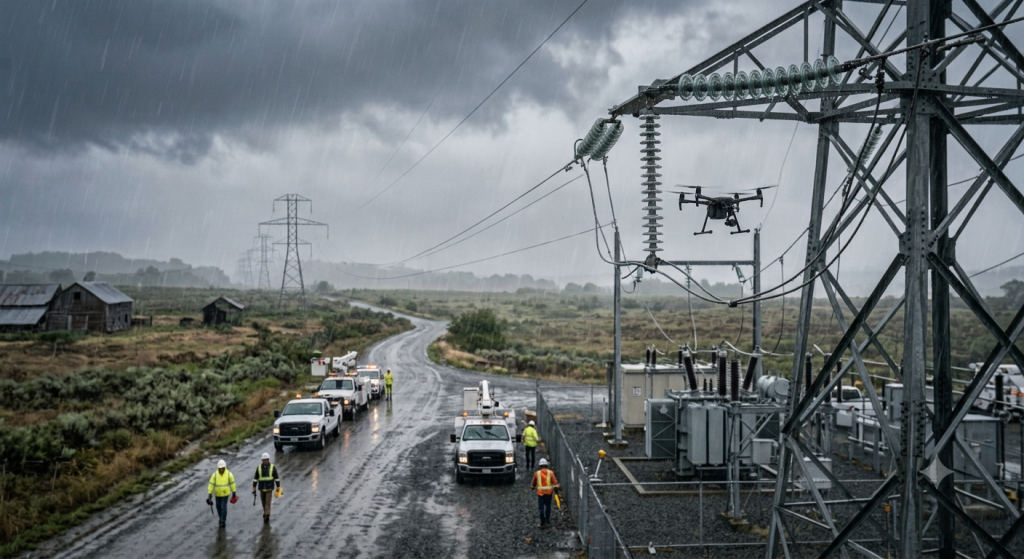
With respect to hilly and mountainous regions and areas where terrace farming is prevalent, conventional irrigation practices may demand significant manpower and other resources. The advent of drones has revolutionized irrigation practices, but whether irrigation drones will succeed traditional practices in such terrains is yet to be determined.
Why is Irrigation So Difficult in Hilly Terrain?
The implementation of irrigation systems on uneven lands poses some difficulties. The uneven nature of the ground leads to easy accumulation of water in the low lands, thus requiring manual labor or use of pumps to move water up for irrigation purposes. The difficulties that arise from this are that, firstly, the cost of setting up irrigation and pumping systems is much higher in hills compared to plains.
How Do Irrigation Drones Work?
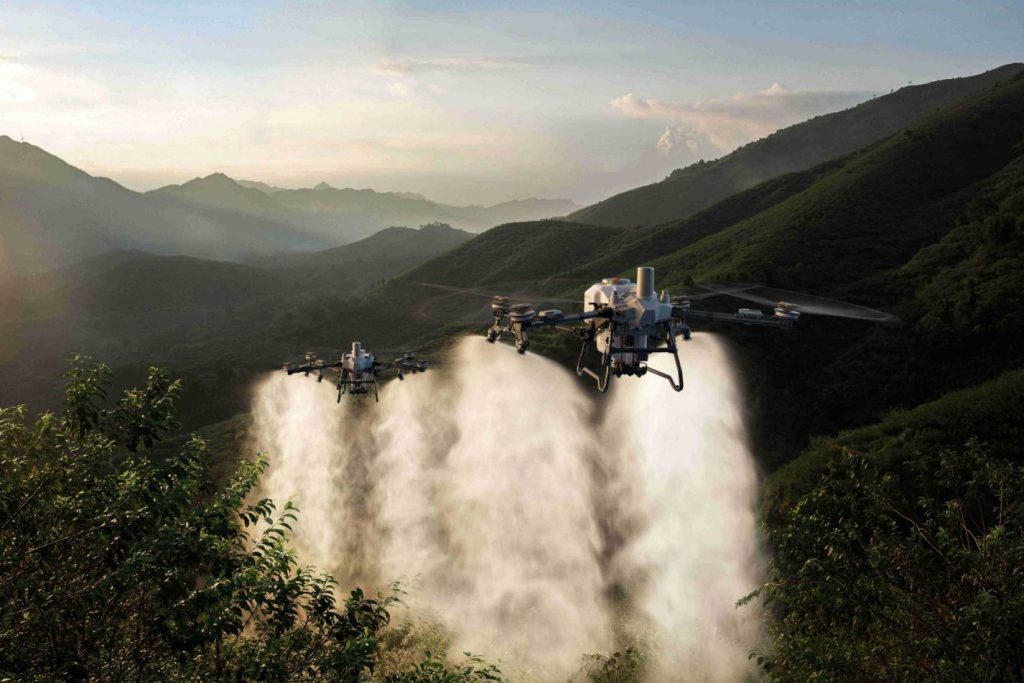
For hilly regions, the irrigation drones incorporate terrain recognition, intelligent decisions, and precision spraying to achieve greater accuracy in irrigating crops.
Terrain Recognition and Path Planning
Prior to the commencement of any operation, the drone uses RTK navigation technology and terrain-following radar or laser sensors to develop a 3D map of the terrain.
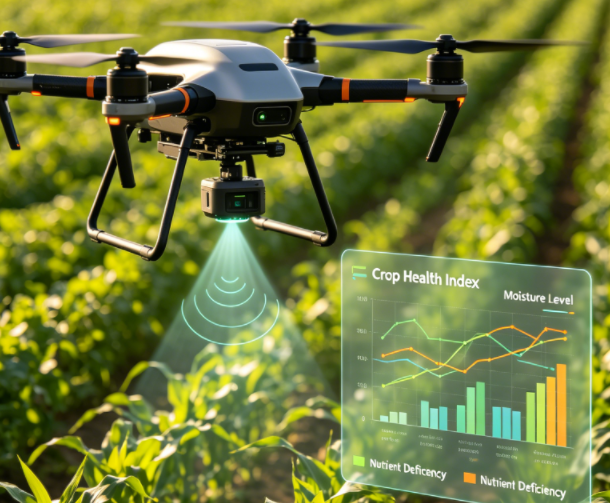
- Automatically identifies slope changes
- Marks potential obstacles
- Analyzes collected data
- Generates a terrain-following flight path
Terrain-following Flight
The drone automatically changes its height based on the real-time data about the terrain while irrigating, which ensures that irrigation is accurate and efficient regardless of the terrain type.
Key advantages in hilly areas include:
- Maintaining a constant distance from the crop surface
- Avoiding overly dense or sparse spraying due to altitude changes
- Smooth transitions between slopes and terraces
Precision Spray Control
Most irrigation drones have adjustable spray heads and variable flow rates. This makes them capable of changing their spray parameters according to the terrain in real time.
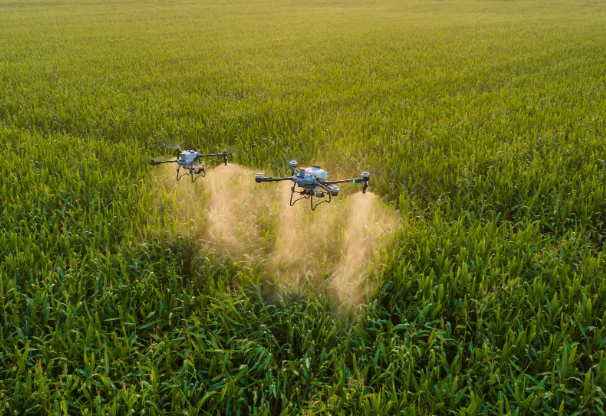
Performance in hilly terrain:
- In areas with significant slope variations, they automatically control water flow to prevent runoff loss.
- In flat areas, they control water volume to avoid waterlogging.
- They provide differentiated spraying and irrigation based on the needs of different crops, zoning the area accordingly.
Dynamic Replenishment and Circular Operation
Due to the limited water capacity of drones, a “multi-flight cyclic operation” mode is typically used in actual operations:
- Automatic return to the replenishment point or battery replacement
- Continue operation in unfinished areas
- Coordinate with ground-based replenishment systems
Even without fixed irrigation facilities, continuous operation can be achieved through mobile replenishment points.
As compared to conventional irrigation systems, drones turn the operations on the ground into operations in the air, thus changing experience-based techniques into evidence-based methods. This is basically the core behind the efficiency of irrigation drones in hilly terrain.
Which Scenarios Suit Irrigation Drones Best?
Although irrigation drones can work in almost any agriculture landscape, they prove to be most effective in situations that require higher precision and complexity.
| Scenario | Typical Examples | Why It Fits Irrigation Drones | Key Value / Conclusion |
| Hilly & Mountainous Agriculture | Mountain orchards Terraced fields Undulating farmland | No need for complex pipeline infrastructure Can operate directly across slopes Terrain-following ensures uniform spraying | Best-fit scenario where infrastructure is difficult to build |
| High-Value Crops | Vineyards Tea plantations Fruit orchards (citrus, apples, etc.) | Crops require precise water control Irregular planting density High ROI justifies equipment investment | Enables precision irrigation with variable flow control and targeted spraying |
| Fragmented Farmland | Scattered plots Irregular field shapes Multi-zone farms | No need to frequently move heavy equipment Automated path planning reduces overlap Quick switching between plots | Reduces operational and scheduling costs, not just labor |
| Areas Without Irrigation Infrastructure | Newly developed farmland Remote farms Temporary planting zones | No need for pipelines or pumping stations Can be deployed via mobile supply stations Flexible initial investment | Transforms irrigation from heavy infrastructure to flexible deployment |
| Water-Scarce Regions | Arid / semi-arid regions Water-restricted zones | Precise water control minimizes waste Supports variable rate irrigation (VRI) Optimizes usage via data-driven systems | Functions as both an irrigation tool and water management solution |
The Real Value of Irrigation Drones in Complex Terrain
In summary, drone-based irrigation is more favorable for hilly, mountainous, and scattered areas in terms of efficiency and ease of implementation. With the help of terrain sensing technology, trajectory design and variable spraying rates, the drones make conventional, structure-reliant irrigation practices more adaptable to aerial modes of operation.
Also, when it comes to water scarcity and crop valuation, drones allow for greater water usage precision, better water efficiency, and savings on labor costs. However, in cases where plains are involved, drones must work in tandem with conventional irrigation systems.
Therefore, irrigation drones are better suited as an “efficiency enhancement tool” in modern agriculture, rather than a complete replacement.
Related Products