
Agriculture Drone Weight Capacity: How Much Can an Agricultural Drone Carry?

As modern agriculture moves toward large-scale and precision farming, agricultural drones have evolved from a novel technology into an essential tool for field operations and commercial farming. However, when purchasing or operating an agricultural drone, one of the most important questions for farmers and buyers is: How should you choose the right agriculture drone weight capacity?
Payload capacity not only directly affects the efficiency of each flight but also has a significant impact on battery life, spraying performance, and overall return on investment (ROI). This article explores different agricultural drone payload levels, their advantages and limitations, and provides a practical guide to choosing the right drone for your operation.
Table of Contents
What Is Agriculture Drone Weight Capacity?
Agriculture drone weight capacity generally refers to the amount of weight an agricultural drone can safely carry. In professional applications, the more commonly used term is payload capacity.
Payload mainly refers to the agricultural materials a drone can carry in addition to its basic flight system, such as the airframe and battery. These materials may include:
- Pesticides and other spraying liquids
- Liquid fertilizers
- Granular fertilizers
- Seeds
- Other agricultural materials
It should be noted that there is a difference between payload capacity, tank capacity, and weight of a drone since these are three different things.
For instance, spraying drones might have certain tank capacities, but it doesn’t mean that tanks have to be loaded to their maximum volumes under any circumstances. The battery weight, environment, time left for flight, and other factors influence the safety of the payload.
Therefore, it should be noted that one shouldn’t only concentrate on the weight of a drone when choosing an agricultural drone.
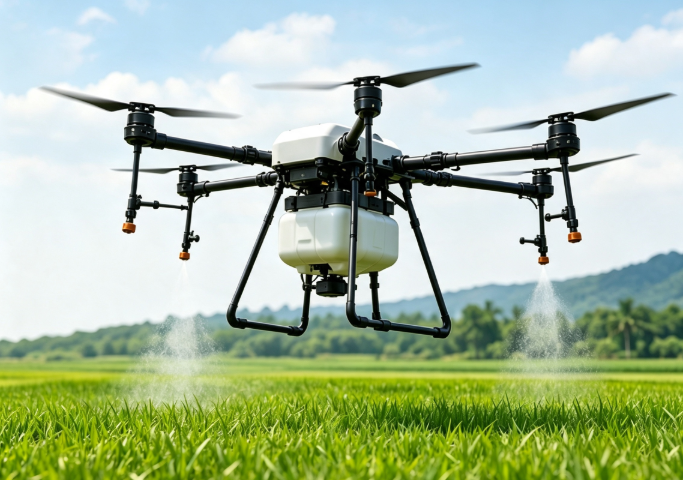
How Much Weight Can an Agricultural Drone Carry?
The payload capacity of an agricultural drone depends on its model, propulsion system, size, and intended application. Different products can have significantly different payload capabilities.
In practical applications, agricultural drones range from lightweight models to heavy-duty and ultra-heavy-duty systems. For example:
| Payload Category | Typical Payload Range | Primary Applications | Pros & Cons |
| Light-Duty | 10–20 kg | Small orchards, hilly and mountainous areas, greenhouses, and small fragmented fields | Pros: Highly maneuverable, easy to transport between locations, low requirements for takeoff and landing areas, and lower initial investment costs.Cons: Requires frequent refilling and battery replacement, which can limit efficiency when operating on large, continuous fields. |
| Mid-Duty | 30–40 kg | Standard field crops such as wheat, rice, and corn, as well as medium-sized family farms | Pros: Offers an excellent balance between operational efficiency and purchase cost, making it suitable for most conventional pesticide spraying and routine fertilizer application.Cons: Requires fast-charging battery configurations and appropriate ground support equipment. |
| Heavy-Duty / Ultra-Heavy | 50–70 kg+ | Large commercial farms, extensive flat fields, and large pastures for large-scale seeding and granular fertilizer spreading | Pros: Enables very high daily coverage, is ideal for intensive granular spreading, and helps save time and labor.Cons: Higher equipment acquisition and maintenance costs, with greater requirements for operator expertise and ground support capabilities. |
It is important to note that these ranges are only general references for understanding different agricultural drone payload levels and are not universal industry standards. The actual agriculture drone weight capacity should always be determined according to the specific product specifications and configuration.
In addition, an agricultural drone’s actual payload capacity may vary depending on battery configuration, flight time, weather conditions, altitude, and the type of agricultural operation.
What Determines Agricultural Drone Payload Capacity?
Why do agricultural drones have such significant differences in payload capacity? Several key factors influence how much weight a drone can safely and effectively carry.
Motor and Propulsion System
The propulsion system is one of the most important factors affecting agricultural drone payload capacity.
A drone needs to generate enough lift to support its own airframe and battery while also providing additional thrust to carry agricultural materials. Therefore, the motors, propellers, and overall propulsion system all have a direct impact on maximum payload capacity.
In general, a more powerful propulsion system can support a higher payload. However, higher power output can also result in greater energy consumption.
Battery Capacity and Flight Time
Battery capacity is another important factor in determining the actual payload capability of an agricultural drone.
When a drone carries more pesticides, fertilizers, seeds, or other materials, its total takeoff weight increases. As a result, it typically requires more energy during flight. Therefore, a higher payload capacity does not necessarily mean longer flight time.
In practical agricultural operations, several factors need to be balanced:
- Payload
- Battery capacity
- Flight time
- Operating speed
- Working efficiency
A drone with a very high payload capacity but significantly shorter flight time may not necessarily be more efficient than a drone with a slightly lower payload capacity and more stable endurance.
Tank or Hopper Capacity
For agricultural spraying drones, tank capacity is an important specification.
The tank capacity determines how much liquid the drone can carry during each flight. Different agricultural drones may use different tank sizes to meet the requirements of various farming operations.
For fertilizer spreading and seeding drones, on the other hand, you should pay attention to hopper capacity.
It is important to remember:
Tank capacity is not always the same as usable payload capacity.
Tank or hopper capacity refers to the volume of material that can be contained, while payload capacity refers to the weight the drone can safely carry. Since different agricultural materials have different densities, volume and weight cannot simply be treated as the same measurement.
Frame and Structural Design
As payload increases, the drone’s airframe needs to withstand greater mechanical loads.
Therefore, heavy-duty agricultural drones generally require stronger:
- Frames
- Landing gear
- Motor mounts
- Payload mounting systems
- Overall structural components
A robust structural design not only affects maximum payload capacity but also plays an important role in long-term reliability during agricultural operations.
Flight Conditions
The theoretical maximum payload and the practical operating payload are not always the same.
During actual flight operations, the following factors may affect drone performance:
- Wind speed
- Temperature
- Altitude
- Terrain
- Battery condition
- Flight speed
- Operating altitude
For instance, in case of high winds or in hilly regions, the drone may require consuming more energy in order to maintain its stability. This implies that the actual operational load capacity of the drone should depend on the particular circumstances of work.
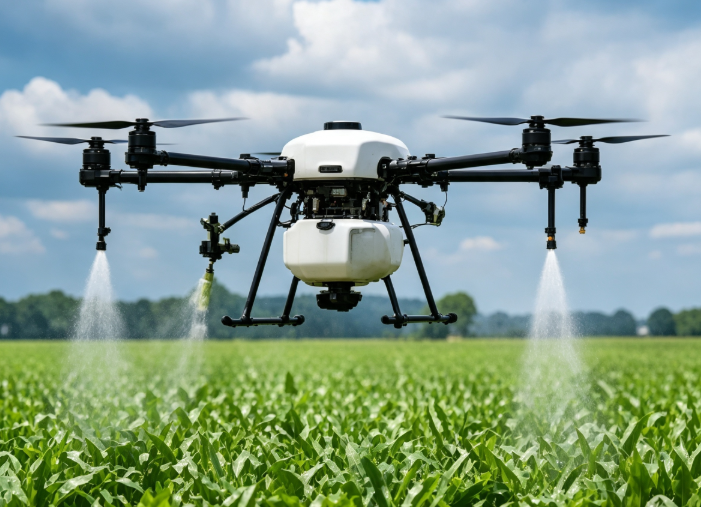
Does Higher Payload Capacity Mean a Better Agricultural Drone?
Not necessarily.
An increased payload capacity means that the agricultural drone can transport more pesticides, fertilizers, seeds, or any other agriculture supplies per flight. This may mean that there will be less need for refilling and hence more work is done in one flight. In terms of field work, high payload drones are likely to be more efficient than low payload drones.
But payload capacity is not the only factor that affects the performance of agricultural drones.
The larger the payload, the bigger the airframe, increased battery capacity, and more powerful propulsion systems may be needed in order for the drone to perform efficiently. All these are likely to lead to increased energy usage and hence reduced flight time under load.
Therefore, when choosing an agricultural drone, you should not focus solely on how much weight it can carry. Instead, consider factors such as:
- Farm size
- Flight time
- Energy efficiency
- Spraying or spreading performance
- Operating speed
- Working environment
For different agricultural applications, selecting the right payload capacity is often more important than simply choosing the drone with the highest payload.
How Does Payload Capacity Affect Agricultural Drone Efficiency?
Agricultural drone payload capacity can directly affect operational efficiency, but it is not the only determining factor.
For spraying operations, for example, a drone with a higher payload capacity can carry more liquid per flight. Under the same operating conditions, this allows it to cover a larger area before returning to refill, potentially reducing downtime and improving overall efficiency.
Simply put:
Higher Payload → More Material per Flight → Fewer Refills → Potentially Higher Efficiency
However, a higher payload does not automatically mean higher overall efficiency.
When operating at full load, a drone may consume more energy and experience shorter flight times. Therefore, actual productivity is also affected by factors such as:
- Flight speed
- Spray width
- Flow rate
- Battery endurance
- Refilling time
- Field size
- Field layout
Moreover, the stability of the flight and the efficiency of the spraying system may also have an impact on the outcomes.
As such, when comparing the agricultural drones, it is best to consider the amount of land that the drone is capable of covering during a specified period of time rather than the number of kilograms that it is capable of carrying.
Indeed, an efficient agricultural drone is one that finds the right balance between these elements.
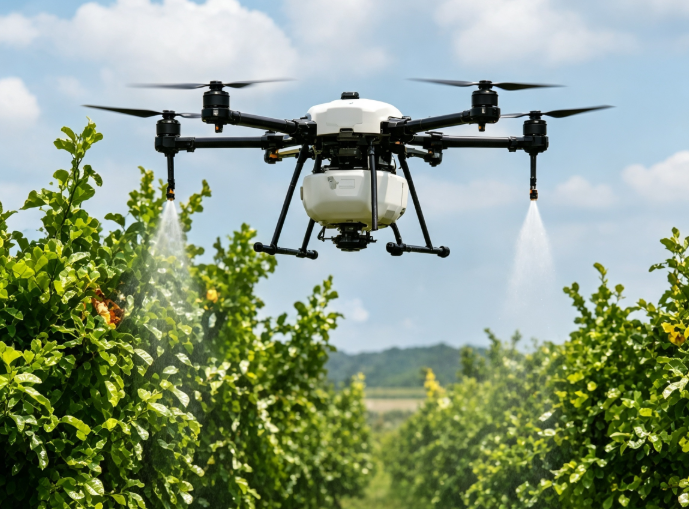
How to Choose the Right Agricultural Drone Weight Capacity?
When selecting an agricultural drone, you should not look only at its maximum payload. Instead, evaluate its capacity based on your actual application, farm size, materials, and operating environment.
1. Consider Your Application
First, determine the primary purpose of the drone, such as:
- Crop spraying
- Fertilizer spreading
- Seed spreading
- Orchard spraying
- Mountain farming
- Large-scale field operations
Different applications have different requirements for payload capacity, tank or hopper capacity, and equipment configuration.
2. Consider Farm Size
For small farms, an extremely high payload capacity may not be necessary.
For large-scale agricultural operations, a higher payload can generally reduce the number of refilling and return trips, helping improve overall operational efficiency.
3. Consider Material Density
If the drone is used for seeding or granular fertilizer spreading, material density should also be considered.
Different types of seeds and fertilizers can occupy different volumes even when they have the same weight. Therefore, in addition to payload capacity, you should also consider the actual hopper or tank capacity.
4. Consider Operating Conditions
Strong winds, mountainous terrain, high altitudes, and high temperatures can all affect the actual payload and flight performance of an agricultural drone.
Therefore, when selecting a drone, do not rely solely on the maximum payload specified under ideal conditions. Consider the actual environment in which the drone will operate.
5. Consider Overall Efficiency
Ultimately, the most important question is not:
“How many kilograms can the drone carry?”
Instead, ask:
“Can the drone efficiently complete my agricultural operations with an appropriate payload?”
Therefore, it is recommended to compare:
- Payload capacity
- Flight time
- Coverage area
- Refill time
- Spraying or spreading performance
- Operating environment
The best agricultural drone is not necessarily the one with the largest payload. It is the one that provides the right balance of payload, endurance, efficiency, and operational performance for your specific requirements.
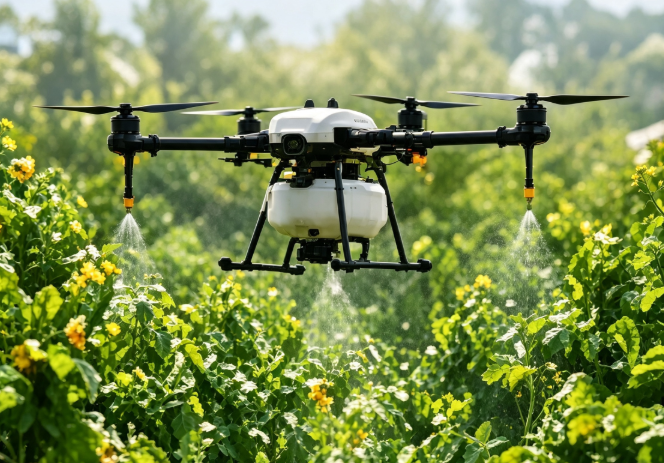
Why Choose VastArrive Agricultural Drones?
Choosing an agricultural drone requires more than simply looking at maximum payload capacity. Flight stability, operational efficiency, and actual application requirements are equally important.
VastArrive focuses on drone solutions and provides drone products and configuration options for different agricultural and industrial applications.
Regarding agricultural uses, an efficient agricultural drone design should integrate aspects like payload capability, performance, endurance, and efficiency so that users may have the ability to choose the appropriate solution.
VastArrive Agricultural Drones may be analyzed and configured depending on the needs and requirements of various applications, including agricultural use like spraying and fertilizing.
Should you be searching for the agricultural drone with the right agriculture drone weight capacity, then you will be able to choose from the right product configurations.
Looking for the right agricultural drone for your operation? Contact VastArrive to discuss your payload and application requirements.