What Water Pressure Does a Cleaning Drone Need for Effective Cleaning?

One of the most critical factors to consider when selecting a cleaning drone is water pressure. Nevertheless, higher water pressure doesn’t always guarantee efficient cleaning since its performance also depends on water pressure, flow rate, length of the hose, distance from the nozzle, cleaning height, and the type of surface to be cleaned.
When it comes to professional high-rise cleaning, the main point that should be taken into account is not the water pressure provided by the pump but the pressure maintained throughout the process.
Table of Contents
How Much Water Pressure Does a Cleaning Drone Need?
There is no universal value of working water pressure for all cleaning drones. In professional devices, it must be ensured that there is sufficient water pressure to guarantee efficient cleaning power in the nozzle taking into account pressure drops through the hose and altitude.
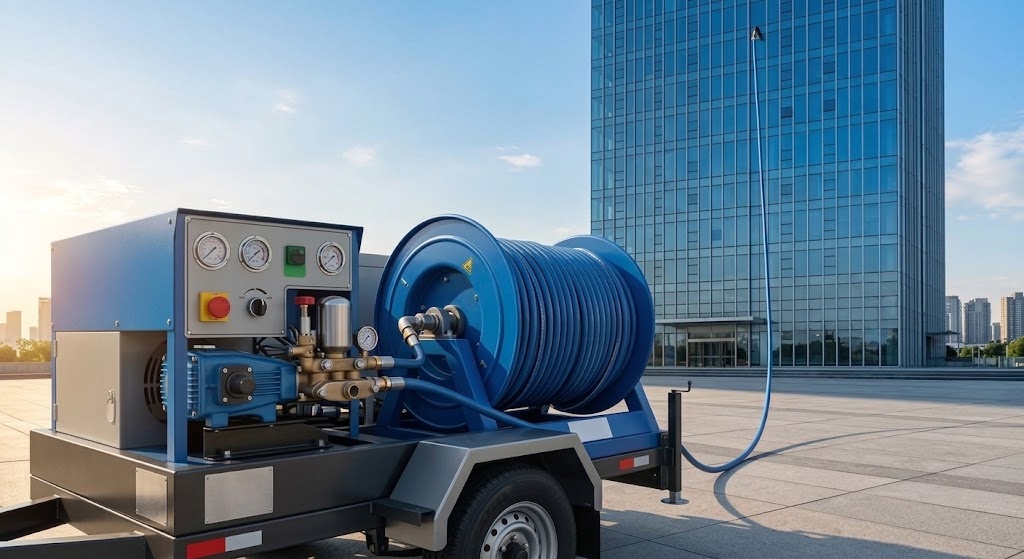
Thus, the VA-D15R cleaning drone has 12–15 MPa of working water pressure, while the water pump pressure of the device is equal to 2900 PSI. The cleaning drone has a rated water flow equal to 14 L/min, maximum flow of 15 L/min and water hose length of 100 m.
All the parameters must be considered in combination and not separately since high pump pressure does not mean high pressure in the nozzle.
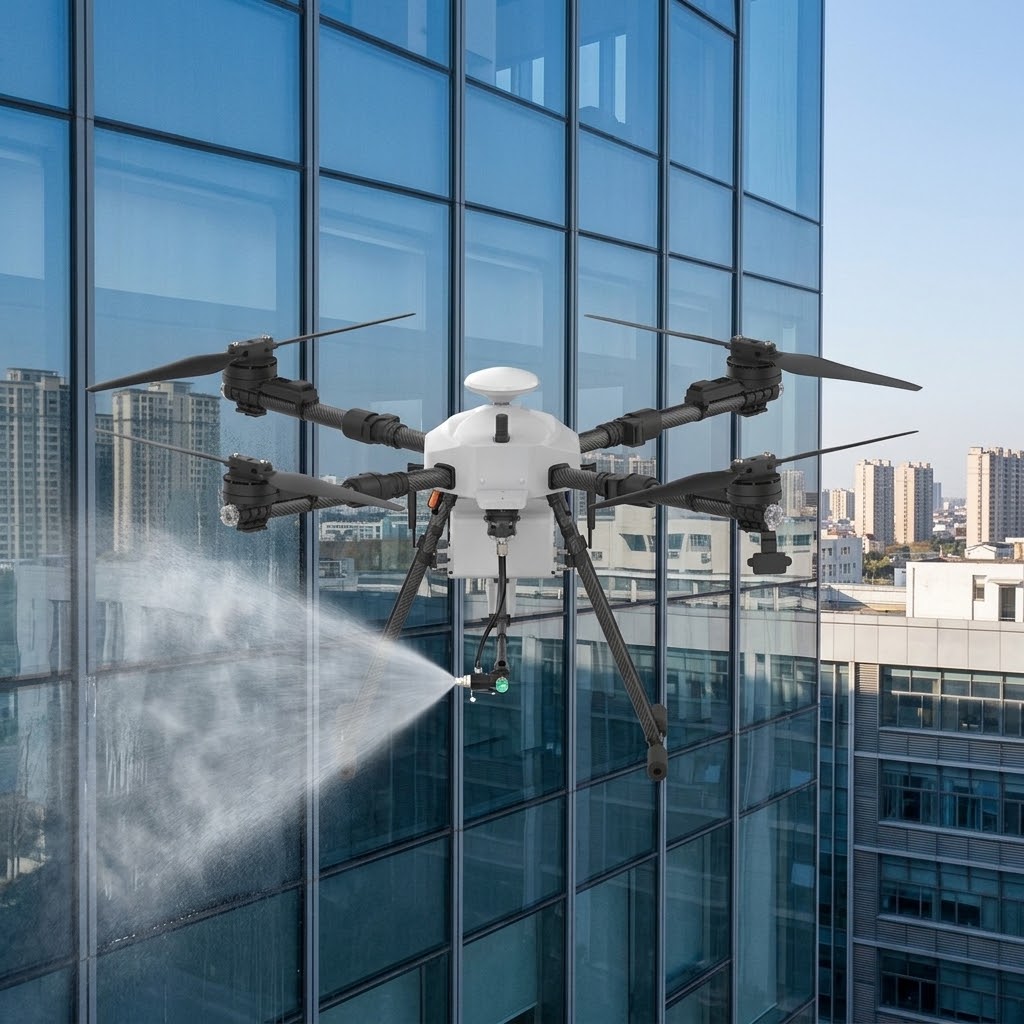
What Determines the Required Water Pressure?
Water pressure required will depend on various factors. A cleaning robot meant for low-rise glass building surface might be different from one designed to work on high-rise concrete wall surfaces.
Building Height
With increased cleaning height, the water will have to travel greater distance from the ground pump to the drone. Not only the pressure due to elevation must be accounted for, but also other losses in the water transport system.
In high-rise cleaning, what is thus more pertinent is not only the ability of the pump to provide enough pressure, but the ability of the system to provide enough pressure at the appropriate height level.
The VA-D15R model operates with a maximum flight altitude of 120 m.
Hose Length
Length of the hose directly influences pressure loss. The reason behind this is the friction loss between the water and the inner walls of the hose as water moves through.
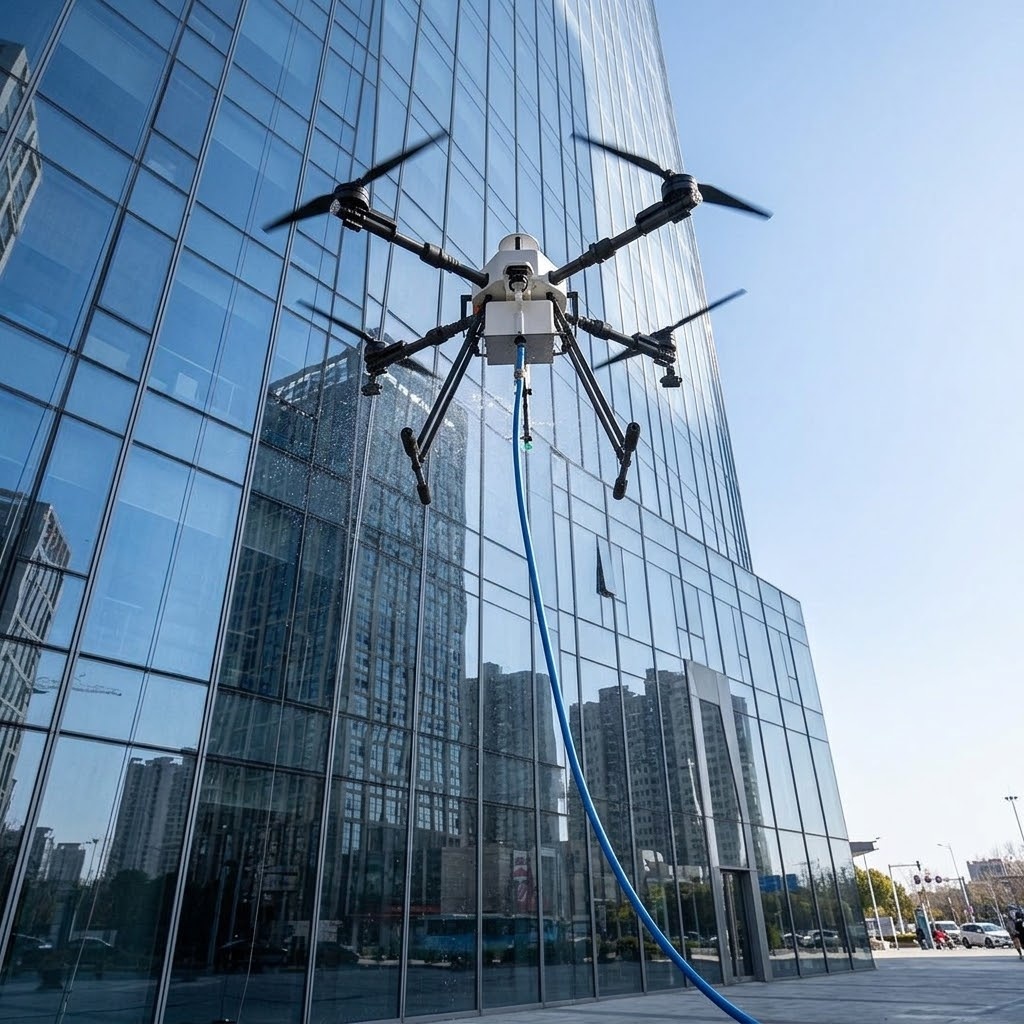
In the case of VA-D15R, a 100 m water hose is used, whereby the pump can be kept on the ground as water is being sent to the drone from above.
When buying the system, customers need to pay attention to the length of the water hose, along with the size of the hose, flow rate of water, and pump output.
Nozzle Type
The nozzle then turns the pressurized water into a particular spray form. The nozzle opening size, angle of the spray, and the nozzle design can all influence the distribution of pressure and water flow over the cleaning surface.
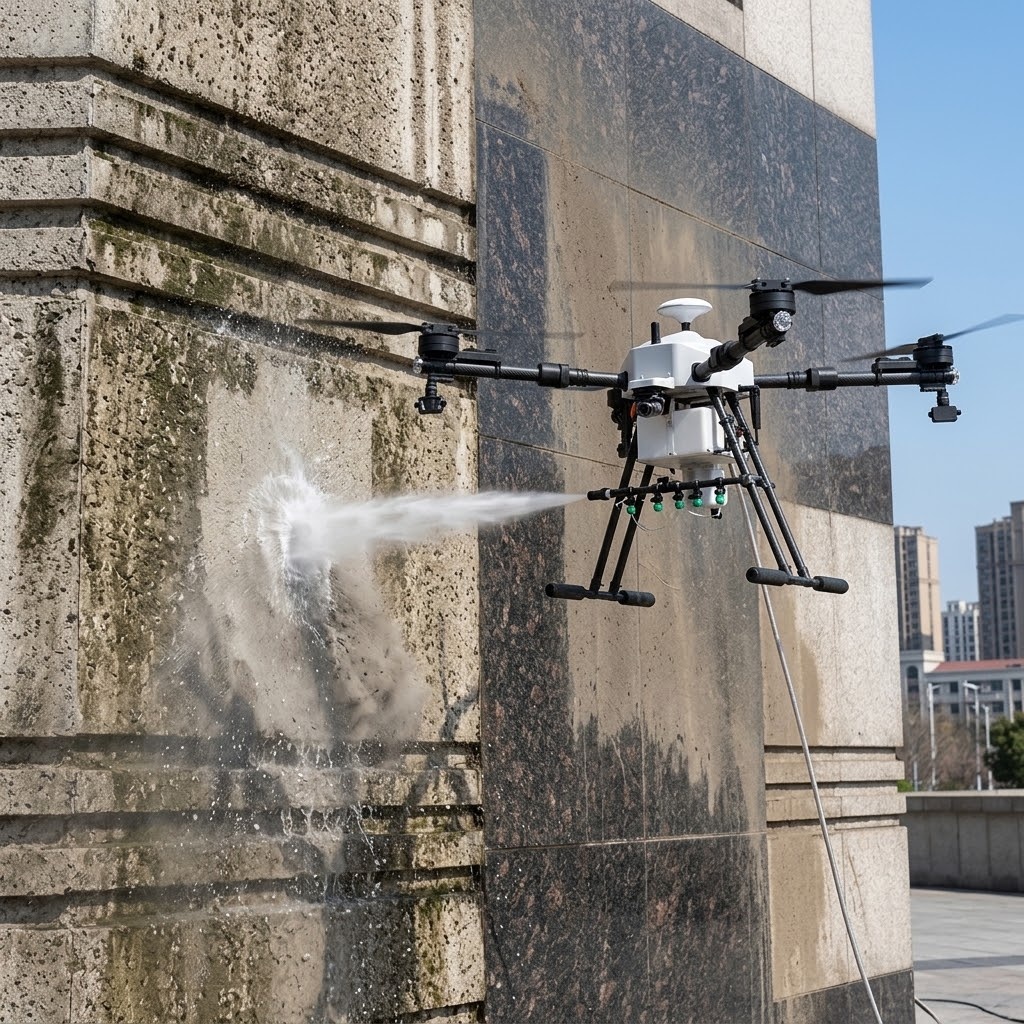
The VA-D15R keeps a distance of about 2–3 m between the nozzle and the surface being cleaned.
A proper nozzle must thus fit the needed cleaning strength as well as the cleaning area.
Water Flow Rate
The relationship between water pressure and water flow rate is synergistic.
Water pressure is mainly responsible for determining the strength and effectiveness of the water stream, whereas the water flow rate is responsible for the quantity of water applied to the surface. The VA-D15R model delivers 14 l/min of rated flow and 15 l/min maximum flow of water per minute.
Pump Pressure vs. Nozzle Pressure
Pump pressure and nozzle pressure should not be treated as the same value.
Pump pressure refers to the pressure generated by the water pump, while nozzle pressure represents the pressure available at the point where water is discharged toward the cleaning surface.
Between these two points, pressure can be affected by:
- Hose length
- Hose diameter
- Water flow rate
- Elevation
- Hose bends and connections
- Nozzle configuration
For this reason, a cleaning drone’s maximum pump pressure does not necessarily indicate its actual cleaning performance. For professional applications, buyers should focus on whether the system can maintain sufficient working pressure at the nozzle under real operating conditions.
Does Higher Water Pressure Mean Better Cleaning?
Not necessarily.
Higher pressure can increase the impact of the water jet, but maximum pressure is not always the most important factor. Different surfaces require different cleaning approaches, and excessive pressure may increase water consumption or create unnecessary stress on sensitive surfaces.
Effective cleaning depends on the balance between pressure, flow rate, nozzle design, spray distance, and cleaning speed.
For example, removing heavy dirt from a concrete facade may require a stronger water impact than removing loose dust from a solar panel. The objective is therefore not to maximize water pressure, but to provide sufficient pressure and flow for the specific cleaning task.
Water Pressure Requirements for Different Cleaning Applications
Different surfaces have different cleaning requirements, so the appropriate water-pressure setting should be determined according to the surface condition and type of contamination.
| Cleaning Application | Main Consideration |
| Glass | Controlled pressure, suitable nozzle, and spray distance |
| Building Facade | Sufficient pressure and flow for dust and dirt removal |
| Concrete | Higher cleaning impact may be required for heavier contamination |
| Solar Panels | Controlled pressure to remove dust without unnecessary force |
Therefore, the correct pressure should always be evaluated together with the cleaning method and surface material.
How to Choose the Right Water Pressure for a Cleaning Drone
When comparing cleaning drones, do not select a system based only on its maximum pressure. Check the complete water delivery and cleaning system.
Cleaning Drone Water Pressure Checklist:
- Working pressure: What pressure can the system maintain during normal cleaning?
- Pump pressure: What is the pump’s rated and maximum pressure?
- Water flow: How many liters per minute can the system deliver?
- Cleaning height: Can the system maintain effective performance at the required height?
- Hose length: Is the hose long enough without causing excessive pressure loss?
- Nozzle: Is the nozzle configuration suitable for the target surface?
- Spray distance: What is the recommended distance between the nozzle and surface?
- Cleaning efficiency: What area can the drone clean under actual operating conditions?
For the VA-D15R, the combination of 12–15 MPa working pressure, 14–15 L/min water flow, a 100 m water hose, and up to 120 m flight altitude provides the key parameters for evaluating its suitability for elevated cleaning applications.