
Electric vs Hybrid Drone: What Are Their Difference? How to Choose?
In industrial drone applications, flight endurance and operational efficiency are consistently the core metrics that determine project Return on Investment (ROI). Whether conducting pipeline inspections spanning tens of kilometers, spraying thousands of acres of farmland, or cleaning high-rise buildings and photovoltaic (PV) panels, the choice of propulsion system directly dictates whether the equipment can complete tasks efficiently and stably.
Currently, the mainstream industrial drone market is divided into two primary powertrain routes: electric and hybrid drones. When procuring equipment, many enterprises often hesitate between the “low maintenance costs of pure electric” and the “ultra-long endurance of hybrid systems.”
Which propulsion system is better suited for your specific operational scenarios? This article presents a systematic multi-dimensional comparison to serve as a selection reference for your equipment procurement and deployment.
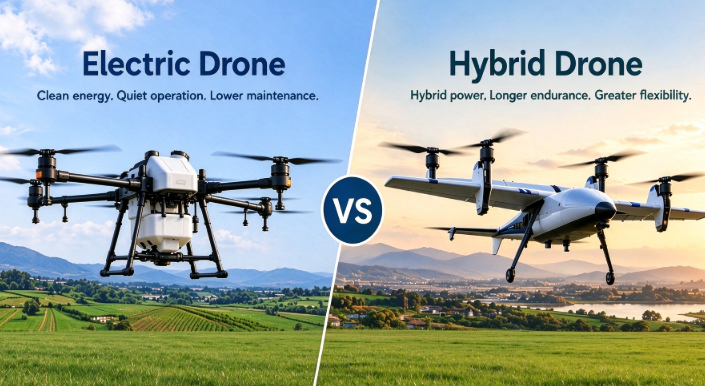
Table of Contents
What are Electric Drones?
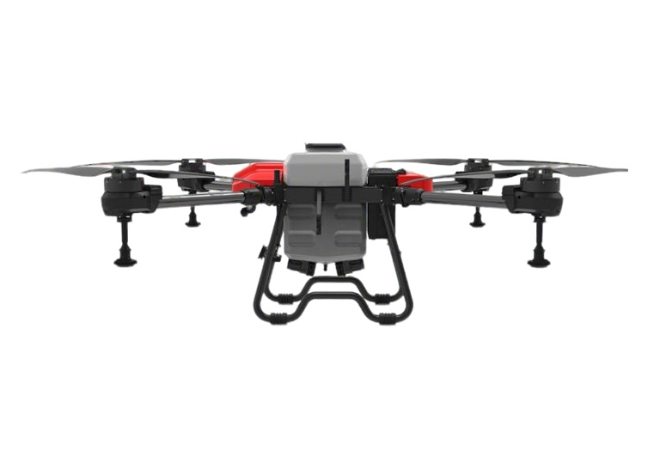
Electric drones rely primarily on high-energy-density Lithium Polymer (LiPo) batteries or increasingly mature solid-state batteries to directly drive brushless motors.
Key Advantages
Zero Exhaust Emissions & Low-Noise Operation: The propulsion system does not release any emissions, and there is also very little noise produced by the motor, as compared to internal combustion engines (ICEs). As such, they are perfect for use in urban flight, inspection of buildings located near one another, night flights, and environmental preserves.
Extremely Low Mechanical Failure Rate & Maintenance Costs: There are no intricate components such as pistons, crankshafts, spark plugs, or fuel injection mechanisms in the powertrain system. This ensures low mechanical wear and tear, making maintenance incredibly simple.
Millisecond-Level Power Response & Micro-Control Precision: Motors feature extremely fast speed response via electromagnetic adjustment. When operating close to structures (e.g., high-altitude curtain wall inspection, fine PV panel cleaning, bridge crack surveying), attitude adjustments are more agile, offering higher safety.
Performance Bottlenecks
Limited Single-Flight Endurance: With regard to the physical limitations of current battery energy density capacity, the real flight time is still limited to about 20–45 minutes when flying with regular cargo loads like camera equipment.
Heavy Field Recharging Logistics: Without access to electricity supply network, it usually takes quite a few spare batteries plus portable generators or outdoor power stations in order to recharge UAVs on the go.
What are Hybrid Drones?
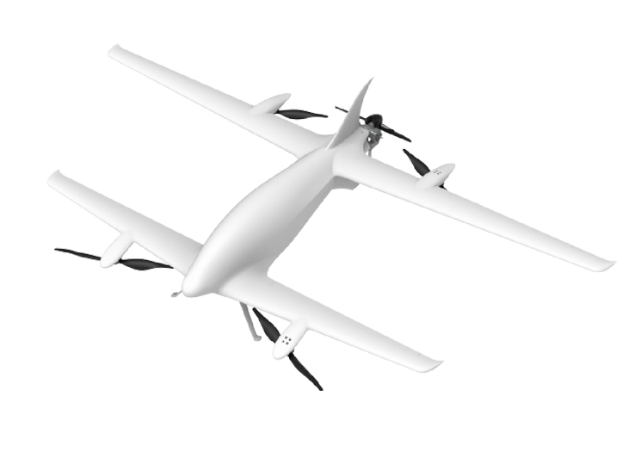
The hybrid drones consist of the series or parallel arrangement that comprises both ICE generator and buffer battery whereby the ICE generator is responsible for burning fuel to produce basic kinetic energy while the buffer battery helps in providing instant energy when climbing and in case of abrupt winds.
Key Advantages
Breakthrough Ultra-Long Endurance: They completely bypass the pure battery dilemma where “capacity is proportional to weight.” By carrying gasoline or mixed fuel, single-flight cruising or hovering times can jump dramatically to 2 to 6+ hours.
Highly Efficient “Refuel-and-Fly” Replenishment: In-situ energy replenishment process is very efficient. By simply refueling like a car, the drone can resume its flight task within 2-3 minutes. Thus it becomes very efficient for power line inspection, fire prevention in forests, and other tasks which involve large areas.
Strong Payload Capacity & Harsh Weather Adaptability: The fuel system outputs sustained high power, easily carrying heavy multi-spectral electro-optical pods, high-power LiDARs, or large-capacity liquid tanks. Meanwhile, they offer stronger ballast wind resistance in high-wind conditions.
Performance Bottlenecks
High Threshold for Routine Engine Maintenance: Internal combustion engines are highly engineered machines which need periodic cleaning of the combustion chamber for carbon deposits, replacement of spark plugs and maintenance of carburetor/fuel filter systems. Such needs add more skill requirements for pilots or aircraft maintenance personnel.
High Cost of Vibration Isolation Design: High frequency mechanical vibrations are inevitable while engine is running. In order to ensure that there is no jello effect or focusing issues in high-precision aerial survey camera or gimbal mount, a very high-precision shock absorbing suspension is necessary for the entire aircraft.
Hardcore Performance Comparison: Electric vs. Hybrid Drones
To help you make precise selections in practical industrial applications, the following table provides a comprehensive side-by-side comparison across key dimensions:
| Evaluation Dimension | Electric UAV | Hybrid UAV | Detailed Differences & Technical Analysis |
| Single-Flight Endurance | 20 – 45 minutes | 2 – 6+ hours | Pure electric is limited by the physical ceiling of lithium battery energy density; hybrid power converts chemical energy (fuel) into electricity, offering a generational advantage in energy replenishment efficiency. |
| Energy Replenishment Method | Battery swapping / charging stations (swaps take minutes, but require carrying numerous spare batteries and field power sources). | On-site rapid refueling (takes only 2–3 minutes to achieve “refuel and go”). | Hybrid systems dramatically reduce field logistics pressure, making them particularly suitable for off-grid wilderness operations. |
| Payload Scalability | Suitable for lightweight: Mainstream setups carry small visible-light cameras, infrared thermal imagers, or micro-spraying systems. | Suitable for heavy-duty: Easily carries heavy LiDAR, multi-spectral pods, or ultra-large capacity chemical/water tanks. | The vast gap in power output determines the ceiling height for bearing professional mapping or heavy-duty operational payloads. |
| Routine Maintenance Cost | Extremely Low: Simple structure; daily upkeep requires only inspecting blades, motor bearings, and battery cycle health. | Moderate to High: ICEs require regular carbon removal, spark plug replacement, and oil line/air filter maintenance. | Pure electric is virtually “maintenance-free,” whereas hybrid systems demand a certain level of mechanical knowledge and maintenance capability from operators. |
| Environmental & Noise Impact | Zero emissions, extremely low noise: Minimal disruption to surrounding residents, eco-friendly. | Exhaust emissions and engine noise: Accompanied by ICE roar during operation; unsuitable for indoor or strictly eco-sensitive areas. | Pure electric holds an irreplaceable compliance advantage in urban low-altitude economy and near-residential operations. |
| Environmental Adaptability | Vulnerable to low temperatures (lithium battery activity drops sharply in cold, limiting discharge). | Vulnerable to extreme heat or high altitude (engines experience power degradation at high altitudes). | Both have different “shortcomings” under extreme weather conditions, requiring reasonable mitigation based on the climate of the operating region. |
| Typical Application Scenarios | Urban security, building exterior inspection, close-range PV cleaning, precision agriculture small-plot spraying. | Cross-province long-distance pipeline inspection, large-scale forest fire patrol, border/coastal defense, large emergency rescue. | Clearly delineates the operational boundaries between “indoor/urban precision work” and “long-distance/large-scale macro work.” |
Hybrid vs Electric Drones: Which Drone Best Suits Different Industrial Applications?
In practice, when selecting drones for industrial operation and maintenance, “the more expensive the better” is not always the case. Scientific consideration must be taken into account regarding the compatibility of operational environment, dispatching efficiency, safety norms, and overall ROI. The following section is a selection guide for four common applications.
1. High-Altitude Building Curtain Wall / PV Panel Cleaning & Short-Range Precision Inspection
Recommended Solution: Pure Electric Platform (Electric UAV)
Expanded Typical Scenarios:
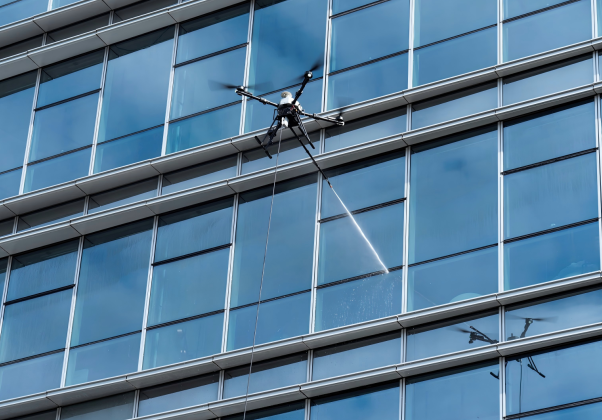
High-Rise Buildings / Commercial Real Estate: Glass curtain wall water washing, exterior wall defect (spalling, cracking) thermal imaging inspection.
Distributed PV Power Stations: High-pressure water cleaning and infrared hot-spot inspection for roof PVs in industrial parks and floating PV arrays.
Special Facility Precision Inspection: Close-range photo inspection of wind turbine blade cracks, bridge pier and underside micro-defect surveying.
In-Depth Selection Analysis:
Avoid Secondary Pollution: The pure electric operation process achieves zero exhaust emissions, leaving no unburned fuel oil stains or carbon particles on freshly cleaned glass curtain walls or PV glass.
High Precision & Anti-Proximity Risk: Operating close to buildings or wind turbine blades involves severe airflow turbulence. The millisecond-level response capacity of motors combined with RTK high-precision positioning ensures centimeter-level hovering attitude control, greatly reducing proximity collision risks.
Noise Reduction & Compliance: Urban commercial or residential areas are extremely sensitive to noise. The low-noise characteristic of electric drones makes it easier to obtain low-altitude flight permits and reduces disturbance to nearby residents.
2. Long-Distance Cross-Line Cruising & Macro Environmental Monitoring (Oil & Gas / Power / Forestry / Border Defense)
Recommended Solution: Hybrid Platform (Hybrid UAV)
Expanded Typical Scenarios:
Energy Transport Arteries: Leakage patrols along oil and gas pipelines spanning hundreds of kilometers, inspection of EHV/UHV power line crossing sections.
Large-Scale Natural Resource Supervision: Long-distance real-time monitoring for forest fire prevention, anti-poaching/anti-logging patrols in national parks and nature reserves.
Long Coastline & Border Anti-Smuggling: Maritime patrols, illegal discharge monitoring, nighttime border patrols.
In-Depth Selection Analysis:
Overcome “Range Anxiety” and Multiply Daily Operational Area: Linear inspection scenarios often present “narrow and long” or “ultra-large area” patterns. A hybrid drone can easily fly 100–200 kilometers in a single takeoff, which not only dramatically cuts vehicle transfer time and travel costs for pilots, but also boosts overall inspection efficiency by 300%–500%.
Break Free from Grid Logistics Constraints: Remote mountainous, desert, or uninhabited areas basically lack charging conditions. Hybrid drones only require bringing standard gasoline cans on-site to achieve “refuel in 3 minutes, fly continuously for 3 hours,” greatly simplifying field support logistics.
3. Large-Scale Agriculture & Forestry Protection & Remote Heavy Rescue Supplies Transport
Recommended Solution: Flexible Decision Based on Operational Scale and Infrastructure Conditions
Scenario 1: Scattered Farmland under 100 Acres / Isolated Orchards → Prefer Pure Electric Crop Protection Drones
Logic: Since the size of the land plot is small and the operation takes place frequently, it becomes possible to use electric drones which provide flexibility of take-off and landing, easy maneuverability, and quick setup.
Scenario 2: Thousands of Acres of Contiguous Large Farms / High-Intensity Concentrated Spraying Seasons → Recommend Introducing Hybrid Platforms
Logic: Entering the golden age of pest control of tens of thousands of acres of land, hybrid drones are able to carry large capacity tanks of chemicals exceeding 100 liters. Skipping the tedious process of charging generators, they do the rotational work seamlessly with the help of “continuous refueling.”
Scenario 3: Mountain Rescue / Disaster Emergency Heavy Supply Airdrops → Strongly Recommend Hybrid Platforms
Logic: In the case of natural disasters like earthquakes and landslides, the region that has been hit by the disaster faces power cuts and shortage of water. The hybrid drone is capable of carrying heavy loads (heavy generators, communication base stations, rescue kits, and so on) along with having an extremely high endurance level. Fuel supply at the disaster site would be far more sensible than the establishment of high-power charging stations.
4. Urban Security Patrol, Nighttime Emergency Lighting & Long-Duration Flood Control Command
Recommended Solution: Pure Electric (Tethered Mode) or Hybrid (Autonomous Flight Mode)
Expanded Typical Scenarios:
Large Event Security / Traffic Hub Dispatching: On-site high-altitude global perspective monitoring and real-time traffic flow coordination.
Post-Disaster Nighttime Lighting: High-power LED lighting at emergency rescue and landslide search sites.
In-Depth Selection Analysis:
Ultra-Long Station Keeping at Fixed Points (Over 12 Hours): It is suggested to use tethered electric drones that do not make any fuel sound and possess infinite endurance.
Wide-Area Mobile Patrols (e.g., Flood Control Levee Inspections): It is suggested to use hybrid drones taking advantage of their good wind resistance at high altitudes and endurance cruising capabilities.
How Should Enterprises Choose the Right Drone?
Industrial users of drones should not always buy the drone that has the best endurance or even high payload capacity, as what is needed is a drone that can do the assigned mission at an acceptable cost. Here are some considerations that are suggested:
Clarify Operational Environment and Regulatory Restrictions
In commercial and residential environments in the city, as well as other environmentally fragile regions, noiseless and non-emitting aircrafts are strict requirements; therefore, it is necessary to choose pure electrical drones. Under high-altitude curtain wall, offshore wind power plant and other tough windy conditions, pay attention to the resistance of the aircraft to wind (level 6 or above) and power reserves.
Accurately Calculate Mission Radius and Effective Payload
To start with, find out the required weight of the equipment to be mounted (for example, sensor pods, LiDAR equipment, cleaning nozzles or chemical tanks). Use pure electric drones if you need to conduct short distance missions with great precision; if your mission will include linear inspections longer than 10km, use hybrids.
Assess On-Site Energy Replenishment Conditions
Field logistics conditions directly determine operational efficiency. In areas covered by the power grid, equipping pure electric platforms with sufficient spare batteries is enough. However, in deserts, dense forests, or post-disaster sites without grid coverage, hybrid systems significantly reduce field support costs thanks to the advantage of “refueling on-site in 3 minutes to fly.”
Calculate Total Cost of Ownership (TCO)
It is essential to consider not only the purchase price but also O&M cost when making procurement assessments. For all-electric drones, it is very easy to maintain during operation, whereas later costs will be mostly related to battery replacement after completion of cycles. The post-maintenance costs for hybrid drones will mainly include fuel consumption and regular ICE maintenance (spark plugs, filters, and others).
Inspect Manufacturer Customization Capabilities and After-Sales Support
Losses caused by downtime of industrial drones can be very high. The enterprises must consider the companies which have customization ability of the OEM/ODM manufacturer to adjust to particular working conditions such as high-altitude cleaning and spraying of heavy payload.
Why Choose VastArrive Industrial Drone Solutions?
In addition to picking an appropriate means of propulsion for their industrial drones, organizations have to be equally careful about the selection of the vendor. There are many other considerations that should be taken into account, such as integration into the processes, payload, and technical support.
VastArrive fully covers both electric and hybrid powertrain routes. Tailored for tasks such as farming, industrial cleaning (PV/high altitude cleaning), logistics transportation, rescue operation, and monitoring system, we provide our business clients comprehensive advice in choosing the appropriate equipment for an economically sound fleet of operations.
Prior to buying a drone, it is crucial to identify your primary missions, the load you will have to carry, the flight time you require, and the environment where the operations will be carried out.
In case you are in need of choosing between electric and hybrid drones or selecting a drone for an industrial application, please feel free to contact VastArrive for more information on the topic.
FAQs
1. Are electric drones better than hybrid drones?
Electric drones and hybrid drones each have their own strengths. Generally speaking, electric drones have simple designs, quieter performance, and maintenance is easier to carry out. On the other hand, hybrid drones are more appropriate for missions where extended flying times are needed.
2. Do hybrid drones have longer flight times?
There are some hybrid drones that can fly for more time than electric drones that are similar, but that doesn’t always happen. The actual time a drone can fly is based on how the powertrain system was made, the energy storage capability, the weight of the whole drone, and the weight of the payload.
3. Is the fuel operating cost of hybrid drones high?
Although hybrid systems consume gasoline or mixed oil, they reduce the cost of battery charge-discharge cycle degradation and the frequent replacement expenses of purchasing costly, large-capacity lithium batteries. In large-scale continuous operation scenarios, their comprehensive energy and equipment amortization cost per unit area is actually lower.