
Can Drone Window Cleaning Scratch High-Rise Glass
Is it possible for the pressurized water of a cleaning window drone to transport solid particles on glass, causing scratches? This is a prevalent worry of property owners and professional cleaning experts in the case of sand, dust, and construction waste.
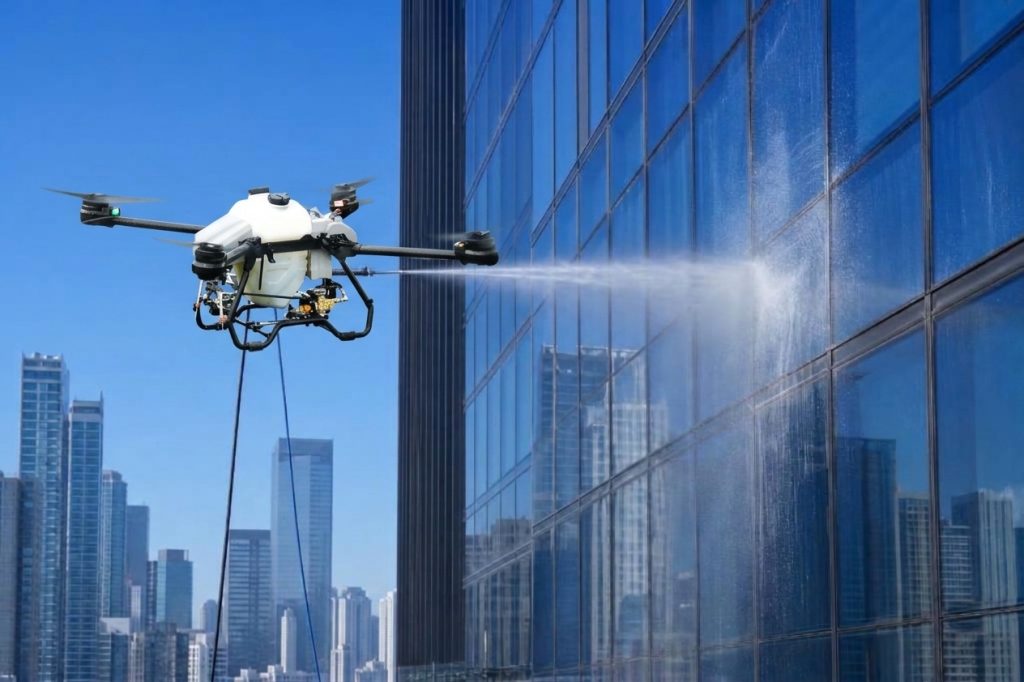
In normal circumstances, professional window cleaning using drones does not lead to glass damage. Pressurized water spraying assists in cleaning without exerting any friction. The wrong pressure, inappropriate distance of spray, or unstable operation of the drone may pose certain risks.
Table of Contents
Can High-Pressure Water Move Hard Particles and Scratch Glass?
Yes, but only under some specific circumstances. Glass panels of high-rises are subject to accumulation of solid substances like silica sand, minerals, and construction waste. In case of friction, they might lead to scratching.
However, water jets exert their impact not due to mechanical action, but because of loosening and washing off the contamination. The risk depends on a number of factors:
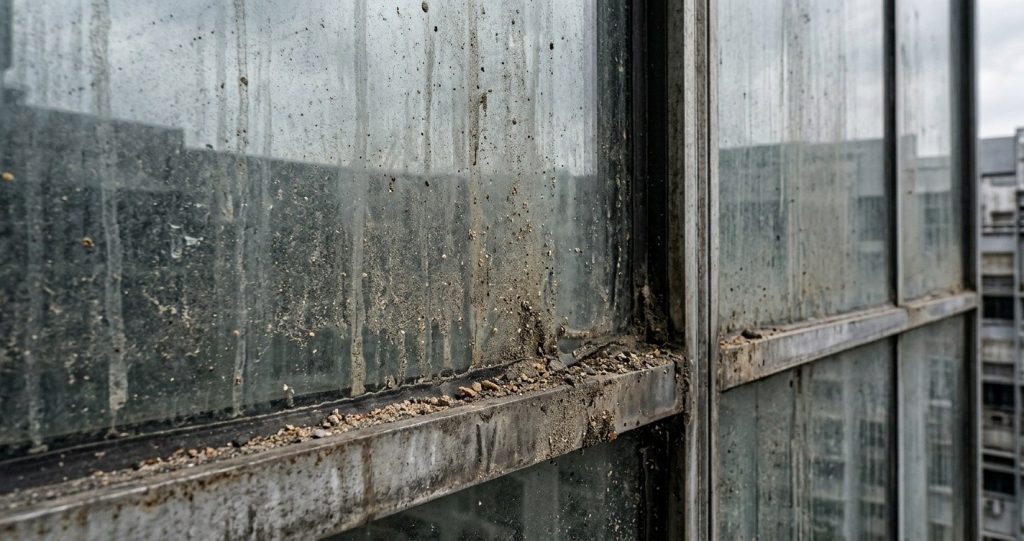
- Type of particle: Hard particles, such as silica sand, are more abrasive.
- Water pressure and distance: Overuse of pressure or incorrect distance in spraying can cause an increased effect on the surface.
- Method of washing: Any kind of contact cleaning or abrasive cleaning can lead to increased friction.
- Condition of the glass: Scratches or surface damage requires special attention.
That is why, high-pressure water does not necessarily cause damage to the glass.
Why Professional Drone Window Cleaning Is Generally Safe for Glass
Modern cleaning drones have the capability to spray liquids on the glass surface to clean it of any dirt without scrubbing it continuously. There are three things that reduce the chances of damaging the glass during cleaning.
Controlled Water Spraying
Specifically designed water spray nozzles apply water to the surface of the glass, dislodging dirt from the glass surface through water sprays and removing tough stains without physically scrubbing.
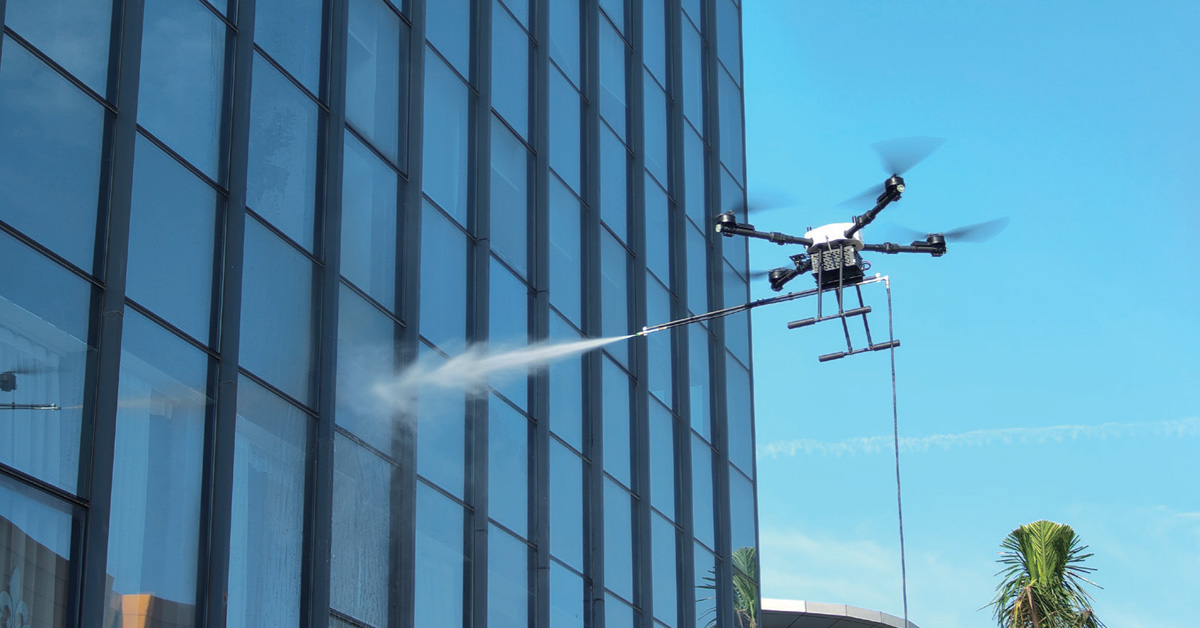
Variable Water Pressure and Distance of Spray
Different facades have different cleaning needs, and thus varying pressure and distance of spray is required to effectively clean the facade. Choosing the right pressure also depends on the cleaning surface, water flow, hose length, and spray distance. Learn more about [cleaning drone water pressure requirements] to understand how these factors affect cleaning performance.
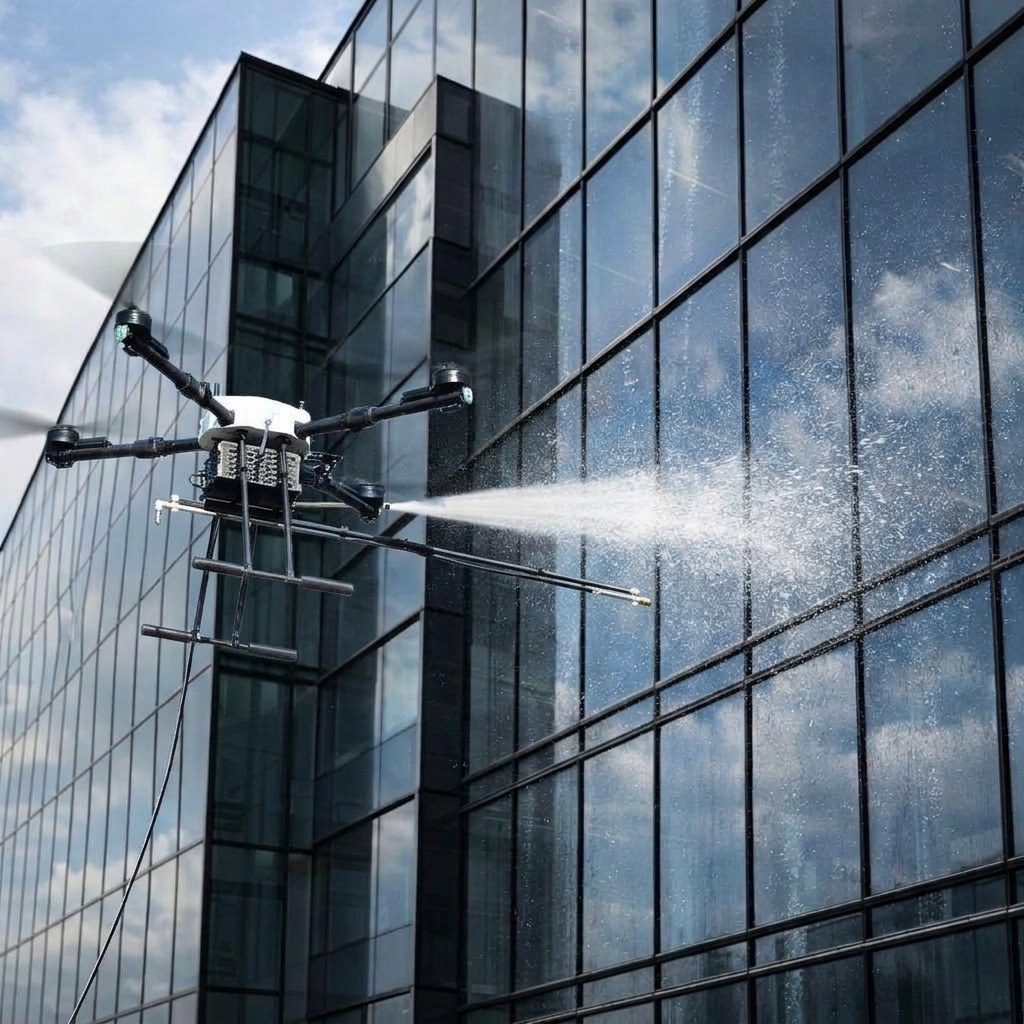
Stability of Flight and Positioning
The stability of flight and precise positioning ensure that there is a constant cleaning distance from the building. Flight planning, wind assessment, and the pilot-observer relationship minimize chances of colliding with the glass surfaces.
Real-world facade cleaning operations also demonstrate why positioning accuracy and controlled spraying matter when working around different building structures. See how the VA-D15R performs in real-world drone facade cleaning operations in Korea.
Under What Conditions Can Drone Cleaning Damage Glass?
Despite the low likelihood of scratches with the equipment operating correctly, there are certain instances that must be considered.
Excess Pressure on the Glass and Sealant
In high-rise buildings, silicone sealants, gaskets, and structural joints are used to ensure weatherproof performance.
With excess water pressure and water being sprayed on joints that could get damaged due to the deteriorated sealant, there will be water penetration.
Special Glass Coatings
Certain office buildings employ solar control glass, anti-reflective glass, hydrophobic coatings, or some other special surface coating.
The special surface may have varying resistance to chemical attack or physical wear.
Inappropriate cleaning materials or excessive force may scratch or damage some coatings. Cleaning should be done as per instructions of the manufacturer of the glass.
Drone Impact or Poor Drone Stability
Damage to the glass may also occur due to a direct impact on the surface by the water, and not because of the water pressure itself.
Such an impact may occur due to high winds, reflection of light, poor positioning, equipment failure, or operator error, causing the drone or its accessories to impact the glass surface.
Use of Inappropriate Cleaning Agents
Cleaning agents that contain strong acids or alkaline can harm the glass coating and adjacent metallic parts. Using appropriate cleaning solutions ensures no damage to the facade. Most often, it is recommended that the type of chemicals used be determined by the glass supplier.
How to Minimize Glass Damage Risks During Drone Window Cleaning
For building owners and professionals involved in cleaning services, there are some measures that can help make the process of using drones for cleaning safer:
- Examine the exterior: Look for any scratches, loose debris, construction waste, broken glass, or degraded sealants.
- Select proper pressure settings: Do not use high pressure everywhere. Regulate the flow of water depending on the condition of the glass and degree of contamination.
- Maintain proper spraying distance: Respect the guidelines on the machine operation so as to prevent excess impact on the glass and facade joints.
- Examine the environment: Do not perform in unsuitable wind conditions which may interfere with drone positioning.
- Perform pre-cleaning: Perform a test cleaning in a small area, particularly on coated or new glass.
It will help to guarantee that cleaning efficiency will not lead to facade destruction.
Is Drone Window Cleaning Safe for High-Rise Glass?
Professional drone window cleaning is usually considered safe for regular glass windows if done using correct water pressure, spray distance, and drone flight. Even if hard substances can potentially scratch the window surface under specific conditions, proper water spray will help to wash off dirt without excessive physical rubbing.
The main point here is to conduct safe window cleaning by controlling not only the water pressure but also the spraying process and stability of drone flight.
If you are a window cleaning contractor or commercial cleaning company, then selecting the right equipment becomes important for achieving successful cleaning results and reducing the risk of facade damage.
Are you looking for a professional drone window cleaning service for your business? Please, feel free to contact us to learn more about our cleaning drones and equipment options.