
Hard Water vs. Pure Water: Which Is Better for Glass Facade Cleaning?
While cleaning the glass curtain walls of tall buildings by using drones, the quality of water greatly influences the results of the cleaning process. This is because water of poor quality becomes a very common issue while using tap water or hard water for cleaning the external glass. Although the high-pressure water system of the drone can efficiently clean the surface from dust and dirt, which gets absorbed in water, this will leave minerals on the surface after evaporation.
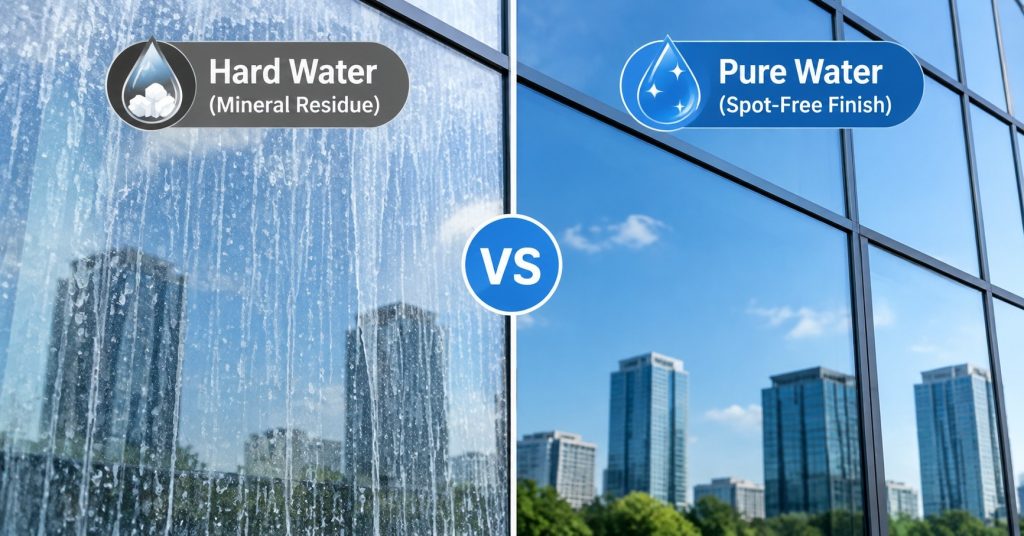
So, should we use hard water or purified water for cleaning?
Table of Contents
Why Does Glass Have Water Spots After Cleaning?
Water stains on glass facades result primarily from dissolved minerals in the cleaning water. Regular tap water has high concentrations of calcium and magnesium minerals that stay behind on the glass after evaporation of the water, thus leaving white marks. According to the USGS, water hardness is primarily determined by the concentration of dissolved calcium and magnesium ions, which are common naturally occurring minerals in groundwater.
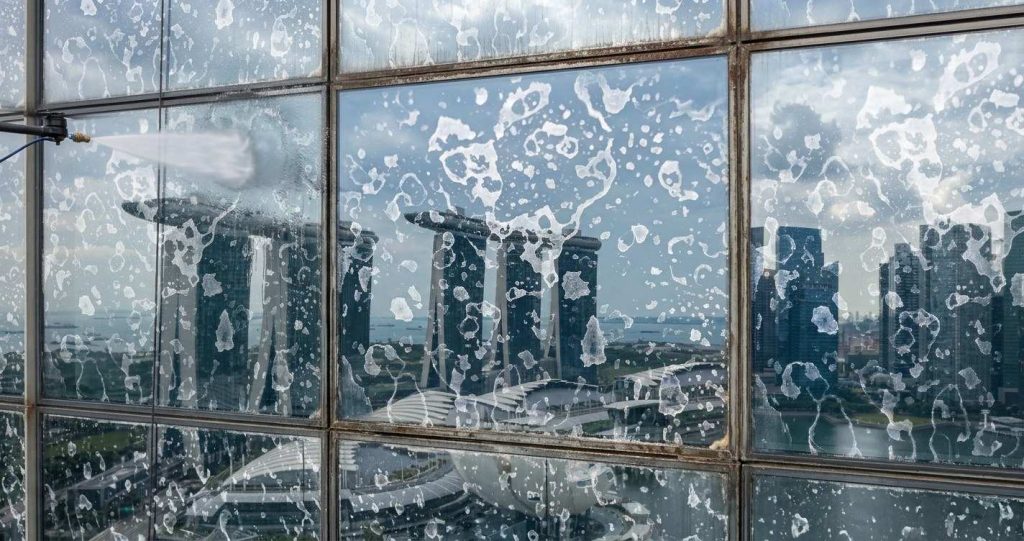
Several issues may aggravate this effect:
- High water hardness: This leads to higher mineral concentrations, which in turn lead to stains after evaporation.
- Inconsistent water coverage: This leads to inconsistent run-off and thus possible streaks.
- High temperatures: This causes fast evaporation and more visible mineral stains.
- Incomplete rinsing: Residue of minerals and cleaning substances affects the final results.
In the case of high-rise building glass washing, these spots affect the clarity of the facade and can need further rinsing.
Hard Water vs. Pure Water: What Is the Difference?
What differentiates hard water from pure water is the amount of minerals present in them.
Hard water is rich in minerals such as magnesium and calcium. In the case of pure water for professional cleaning of glasses, it can be purified using reverse osmosis (RO) and deionization (DI).
| Comparison | Hard Water | Pure Water |
| Mineral content | Relatively high | Very low |
| Total dissolved solids (TDS) | Usually higher | Very low |
| Residue after evaporation | Can leave mineral deposits | Minimal mineral residue |
| Water spots | More likely to form | Significantly reduced |
| Glass appearance after drying | May show white spots or streaks | Cleaner, clearer finish |
| Suitability for spot-free rinsing | Less suitable | Highly suitable |
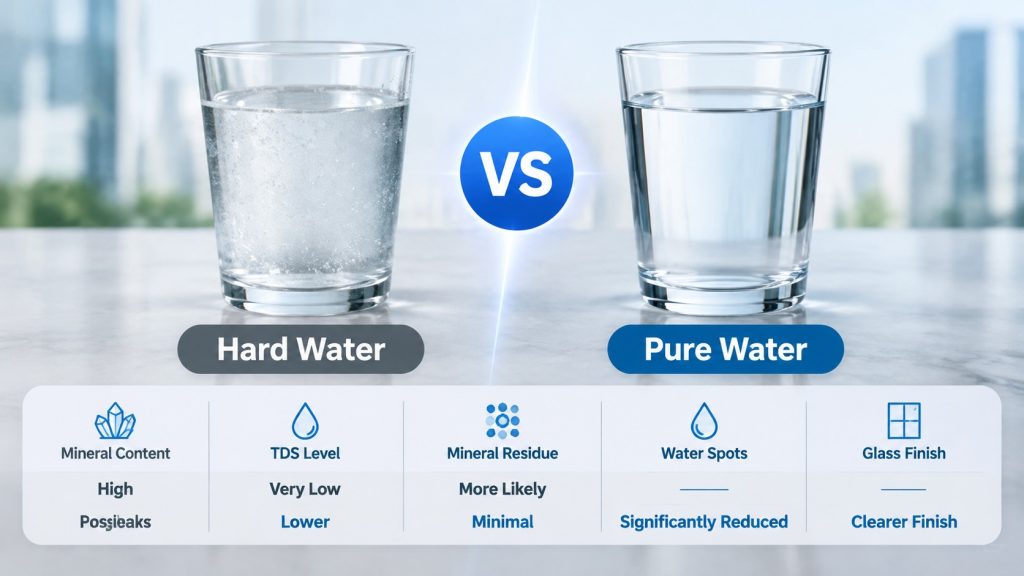
The important thing is what is left behind after all the water is gone.
Water that is hard leaves behind minerals deposited on the glass. Water that is pure, however, has very few mineral deposits in it at all.
Why Is Pure Water Better for Drone Glass Facade Cleaning?
When it comes to professional cleaning of glass facades, not only should dirt be cleaned off the glass, but it should remain clear even when the cleaning water dries up.
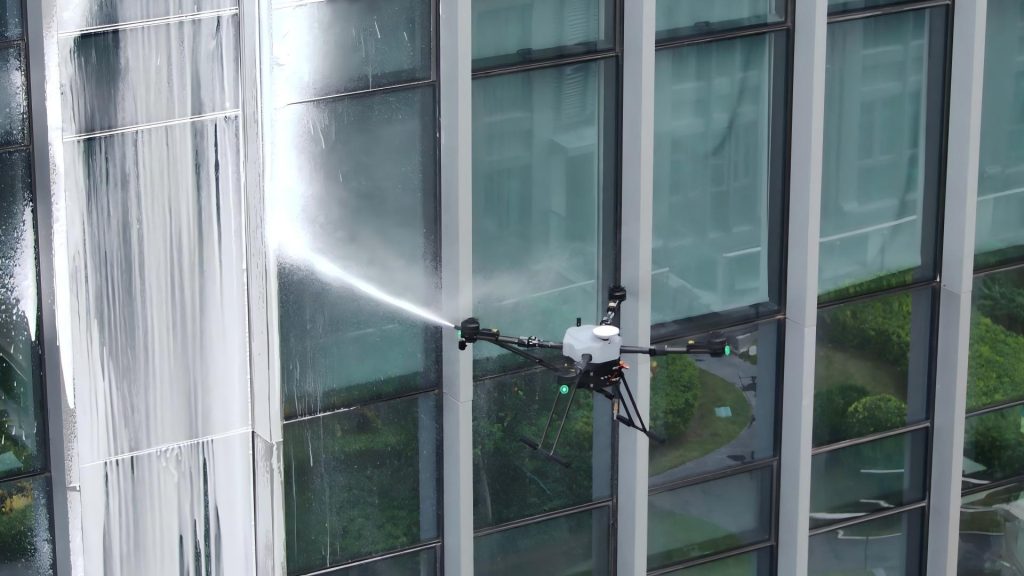
Pure water ensures that happens in three ways.
Minimizes mineral build-ups and white water marks
In the case of pure water, most of the dissolved minerals are already eliminated through the water treatment process. Once this water is sprayed on the glass surface, very few minerals are left to deposit themselves on the surface.
Once it dries up, there will be lesser deposits left by the pure water compared to the untreated water which contains hard water minerals. It will thus minimize the chances of white marks, chalky stains and mineral streaks on glass exteriors.
Enhances the quality of the final results
When even if dust and dirt have already been removed, the mineral content will cause glass to look cloudy or uneven.
The use of clean water in the final rinse will ensure that no deposits are formed, ensuring that the glass will look more clear and even.
It is especially essential for business establishments such as office towers, hotels, and commercial buildings with lots of glass surfaces. For professional contractors, using the right drone window cleaning system is also important when maintaining large commercial glass facades.
Lessens the requirement for repeating the cleaning process
If there are any traces left by hard water once dried, then it is likely that the cleaning service providers would have to clean the same glass surface twice.
Using purified water is one way to avoid this hassle right from the start.
What Type of Pure Water Should Be Used for Drone Glass Cleaning?
Purified water does not contain the same levels of minerals. Treatment of water for professional facade washing is an important factor to consider.
The three types of water treatment are:
Water treated with Reverse Osmosis (RO)
In RO water purification method, there is used a semi-permeable membrane, which allows to filter out the majority of dissolved salts, minerals and other contaminants.
The RO water has significantly reduced TDS value compared to ordinary tap water and is suitable for glass cleaning. But its real mineral composition depends on the quality of the source water and the filtration system.
Deionized (DI) Water
Deionization systems work through ion-exchange resins that strip out all the dissolved mineral ions from the water, which include calcium and magnesium.
It is, therefore, a very ionic water and ideal for spot-free rinse water for glass.
RO + DI Water
In cases where glass cleaning requires even more stringent standards, RO and DI water can be used together.
RO removes most of the dissolved elements first, and then the DI process further removes the ionic content of the water.
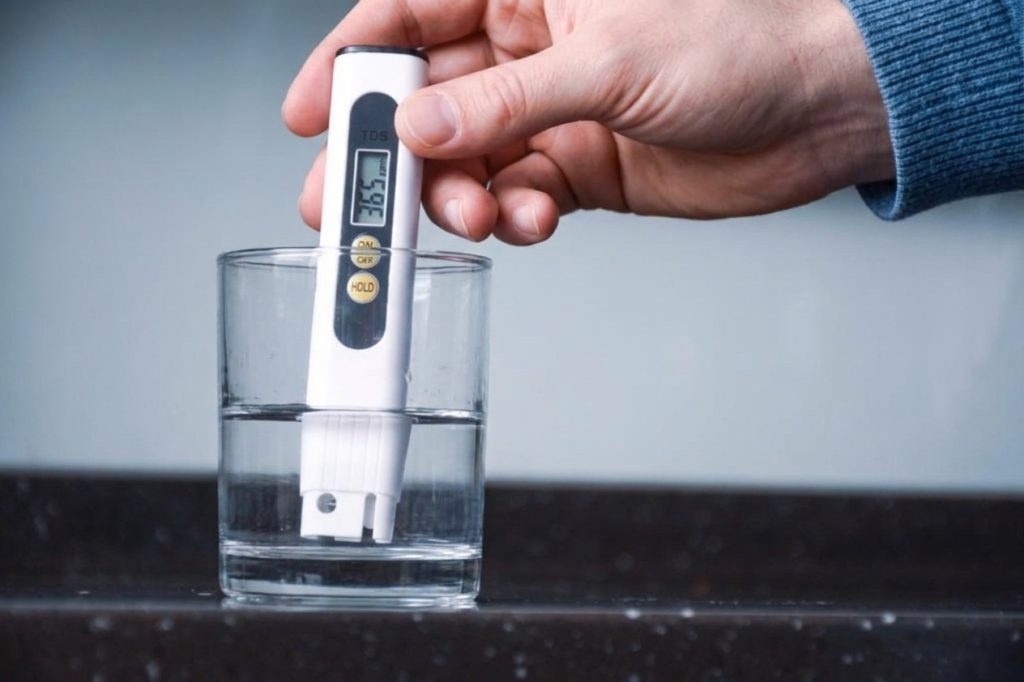
For contractors aiming to minimize water spots, monitoring the final water quality with a TDS meter is a practical way to check treatment performance.
How to Achieve Spot-Free Results When Using a Cleaning Drone
Using pure water is crucial, yet it is not the only element that influences the efficiency of the cleaning process.
These steps will assist in making the glass facade cleaning process more efficient:
- Test water quality prior to cleaning: Assess the TDS of the filtered water and make sure that the filtration process is working correctly.
- Rinse from loose dirt first: Before the final step, remove all heavy dirt, sand, and other contaminants from the surface.
- Rinse the glass with low TDS water: Rinse the surface using low-TDS water after the main cleaning process.
- Make sure that there is enough water coverage: Check if the water covering is even and sufficient.
- Pay attention to weather conditions: Try to avoid cleaning in case of strong direct sunlight or fast evaporation, if possible.
In regard to drone based facade cleaning systems, water treatment needs to be taken into account along with pump pressure, water flow rate, hose layout, and nozzle choice. Understanding how water pressure and flow rate work together is also important when selecting a cleaning drone system.
Conclusion
Purified water is more ideal for cleaning high-rise glass facades than hard water, especially where spotless results are desired. The reason is that hard water may leave mineral deposits and stains as well as streaks due to its evaporation, whereas RO water and DI water can assist in ensuring fewer residues from evaporation.
The use of proper water quality, coupled with the appropriate drone cleaning system, can be vital in assisting contractors in ensuring better results and less re-cleaning tasks.
In search of a drone for high-rise glass facade cleaning? We offer professional cleaning drones made in China to all global clients. If you plan to start a drone cleaning service or upgrade the existing system, please contact us to know more about your cleaning needs and available drones as well as receive a quote.