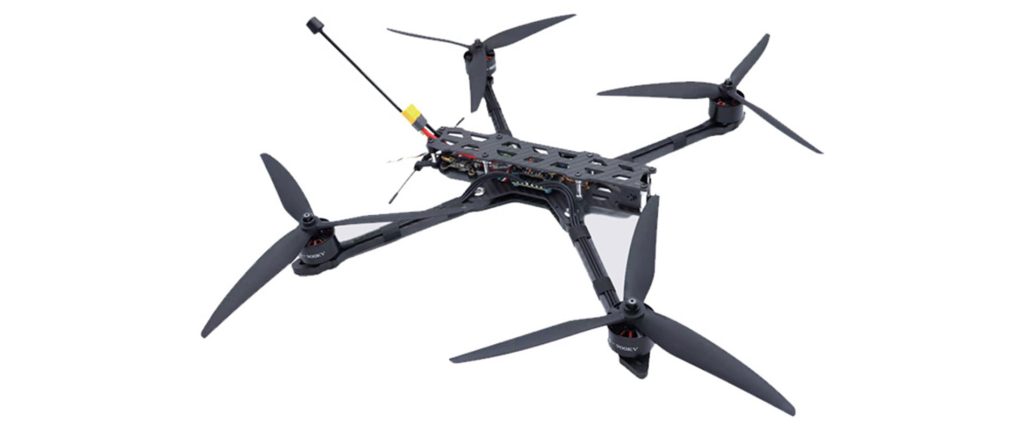
Can You Fly Drones at Night? Key Tips for Safety and Compliance

With the widespread use of drones in agriculture, surveying, power line inspection, and security monitoring, more and more users are asking an important question: Can drones fly at night?
The answer is: Yes, drones can fly at night, but only if they comply with relevant regulations and safety requirements.
So, what exactly do you need to pay attention to? Today, we will provide a comprehensive overview of drone night operations from the perspectives of regulations, technical requirements, safety considerations, and industrial applications.
Is It Legal to Fly Drones at Night?
When discussing the question “can drones fly at night legally?”, the answer varies depending on the country or region. However, the general trend worldwide is clear: night drone operations are allowed, but they are subject to stricter safety and compliance requirements.
Taking the United States as an Example: FAA Regulations
In the United States, the Federal Aviation Administration (FAA) regulates all civil aviation activities, including drone operations. Under Part 107, industrial drone pilots are permitted to fly at night without applying for a separate waiver, provided that they meet specific requirements.
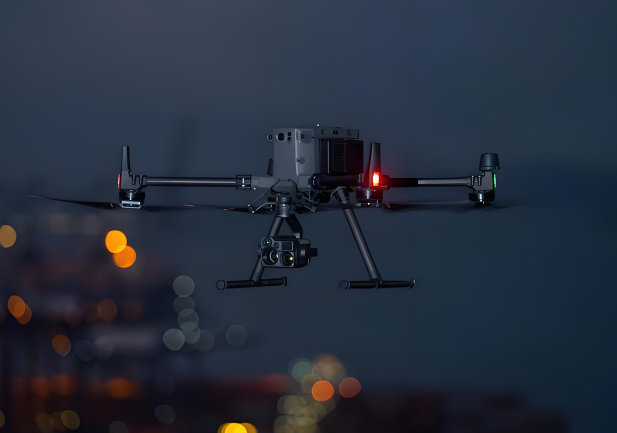
To operate legally at night, drone pilots must comply with the following core conditions:
Anti-Collision Lighting Is Required
Drones operating at night must be equipped with anti-collision lights to improve visibility and reduce the risk of mid-air collisions. The FAA requires that:
- The light must be visible from at least 3 statute miles (approximately 4.8 km)
- The light must have a flashing function
- The lighting must provide 360-degree visibility
The primary purpose of this rule is to ensure that the drone can be clearly seen by other aircraft and observers in low-light conditions.
Night Operation Training Is Mandatory
Under updated FAA regulations, Part 107 pilots must complete training that includes night operation knowledge. The training covers topics such as:
- Human visual limitations at night
- Reduced depth perception and situational awareness
- Risk recognition and mitigation strategies
For new pilots, night operations are included in the initial certification exam. Existing pilots must complete recurrent online training to remain compliant.
Visual Line of Sight (VLOS) Must Be Maintained
Even at night, pilots are required to maintain Visual Line of Sight (VLOS). This means:
- The drone must be visible to the pilot with unaided vision
- Pilots cannot rely solely on FPV or monitor screens
- A visual observer may be used if necessary
Since visibility is naturally reduced at night, this requirement becomes especially critical for safety.
Remote ID Is Required
Most drones operating in U.S. airspace must comply with Remote ID regulations. During flight, the drone must broadcast:
- Identification information
- Location data
- Takeoff location
- Flight status
This requirement applies to both daytime and nighttime operations and is designed to improve airspace transparency and regulatory oversight.
What About Recreational Flyers?
Recreational drone operators are also permitted to fly at night, but they must:
- Follow airspace restrictions
- Avoid restricted or controlled airspace without authorization
- Ensure operations do not pose a threat to public safety
- Comply with Remote ID requirements
Although recreational pilots are not fully governed by Part 107, they are still responsible for safe and lawful operation.
What Are the Technical Requirements for Night Drone Flights?
Night flying is more difficult than day flying. For instance, at night, there is low illumination, a few visual references, and lower temperatures. Therefore, to work under low-light conditions, drones are supposed to require higher levels of competence, stability, and intelligence.
Anti-Collision Lighting System
This is the most basic but essential device needed for night flight operations. Using the Federal Aviation Administration regulations on drones flying at night, it is established that these drones need to be mounted with lights visible from a distance of 3 miles and should be provided with flashing functionalities and full visibility of 360 degrees.
Apart from compliance with regulations, high-intensity strobe lights are also quite useful for flight safety. Use of these lights during low-altitude flights reduces the risk of collisions.
High-Precision GPS / RTK Positioning
At night, visual reference points on the ground are greatly reduced, making it difficult for pilots to judge position and distance. Therefore, drones rely heavily on high-precision positioning systems.
Stable hovering and flight paths require high-precision GPS systems or the usage of a Real-Time Kinematic (RTK) system. This is particularly essential for task completion in surveying missions, power line inspection, and precision agriculture. In cases of low light operation, a reliable navigation system is necessary for flight stability.
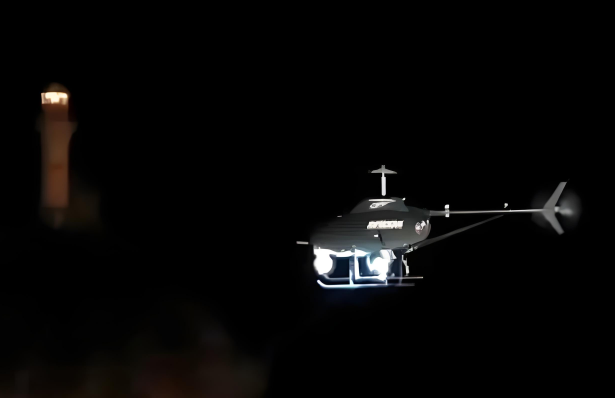
Obstacle Perception and Avoidance System
In nighttime conditions, standard visual sensors may have reduced recognition capabilities. Advanced obstacle avoidance systems, such as infrared sensing, radar detection, or multi-directional sensor fusion, are typically required.
These systems can identify obstacles like power lines, trees, or buildings in low-light environments and automatically adjust the flight path, greatly reducing collision risks. For urban inspections or complex terrain operations, intelligent obstacle avoidance is especially critical.
Intelligent Battery Management System (BMS)
Usually, the night temperature levels are lower, and this might affect the efficiency of the discharge of a lithium-ion battery, which in turn affects the flight time and even causes voltage instability. It is for this reason that a professional drone should always have an intelligent battery management system.
A BMS can monitor the temperature, charge level, and health of the battery in real-time, including the capability to actively use pre-heating modes in cold temperatures. Low battery RTH features are used to improve safety during night flight operations by avoiding disconnections or crashes due to low power levels.
Thermal Imaging or Night Vision Equipment
In security patrol, search and rescue, or power line inspection, cameras are generally ineffective at night. But, in night operations, thermal imaging or infrared night vision cameras are absolutely necessary.
Thermal cameras detect heat signatures rather than relying on ambient light. For example:
- In search and rescue, they can quickly locate people
- In equipment inspections, they can identify overheating issues
- In security monitoring, they can detect unusual activity
Overall, the technical requirements for night drone flights are significantly higher than for daytime operations. Only drones equipped with reliable anti-collision lighting, high-precision positioning, intelligent obstacle avoidance, and effective battery management can ensure safe and efficient night operations.
Is Night Drone Flight Safe?
Safety is the core question when considering “can drones fly at night.” Compared to daytime operations, night flights present unique risks and challenges, requiring more careful planning and operation.
Key Risks of Night Drone Flights
Reduced Visibility
Low visibility of light generates difficulties for pilots regarding the proper visibility of the drone and its environment. For example, there are difficulties related to maintaining Visual Line of Sight.
Problems of Recognizing Buildings, Power Lines, and Obstacles
The shapes or outlines of buildings, power lines, and trees are harder to perceive at night. Even with any kind of ant-collision lighting, the obstacles like the smaller or lower ones might not be easily identified at all, resulting in collision.
Changes in the Number of Birds and Nature Wildlife
Many nocturnal birds and animals are virtually as active at night as they are by day, suddenly appearing in the flight path of the drone and subsequently leading to some collisions.
Changes in Wind and Airflow at Night
Lower nighttime temperature levels might cause local air currents and wind shifts. Instability in flight might be experienced by drones in windy conditions under low-visibility conditions.
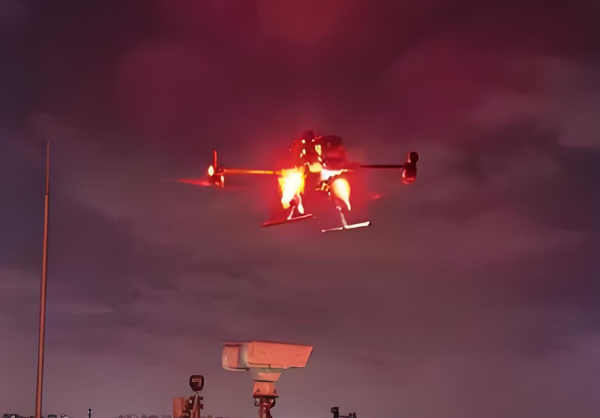
Best Practices for Night Drone Operations
Conduct a Thorough Pre-Flight Check
Before takeoff, inspect battery levels, anti-collision lights, sensor systems, GPS/RTK positioning, and camera equipment. Pay special attention to battery performance in low temperatures.
Avoid Densely Populated Areas
Choose open and unobstructed areas for night flights. Avoid flying over residential zones, roads, or industrial areas to reduce potential risks to people and property.
Control Flight Altitude
Maintain an appropriate altitude to avoid obstacles while ensuring stable control and visibility. Flying too low increases collision risk, while flying too high can make signal control more difficult.
Set Return-to-Home (RTH) Points
Ensure the drone’s return-to-home function is active and accurately configured before takeoff. In low-light conditions, RTH provides an emergency safety measure to prevent the drone from getting lost or crashing.
Maintain a Stable Signal Link
The night flight is more unreliable as it is affected more readily by radio interference. You must use quality antennas, be it dual-frequency transmission links or the control and video connection are of reliability.
Plot Your Flight Plan in Advance
Flight routes should be planned, with obstacles and danger zones avoided. In the event that the environment is complex, consider having a visual observer assist with drone monitoring.
Can Industrial Drones Operate at Night?
As there are continuous improvements witnessed in modern drones, the industrial use of night operations for drones has become a typical trend for many sectors. Drones have the capability to improve value beyond what is obtainable. In addition, nighttime operations also improve efficiency coupled with its precision.
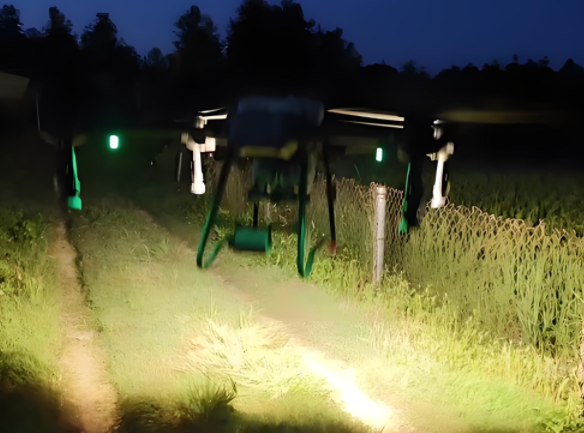
Agricultural Crop Protection
Lower temperatures and winds on a nightly or early morning flight are good for the uniform spray of chemicals, like pesticides, or fertilizers. This minimizes the effect of evaporation, which would be greater during the day.
This provides a much better and more efficient use of the chemicals, minimizing the chances of the chemicals drifting away and affecting the neighboring areas, unlike the case during the day. A drone, therefore, would be best used on a nightly flight for the protection of the crops.
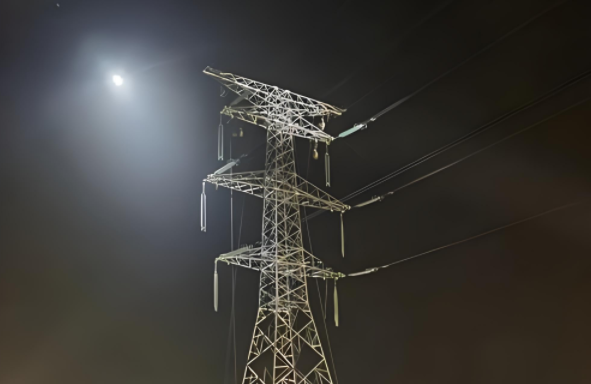
Power Line Inspection
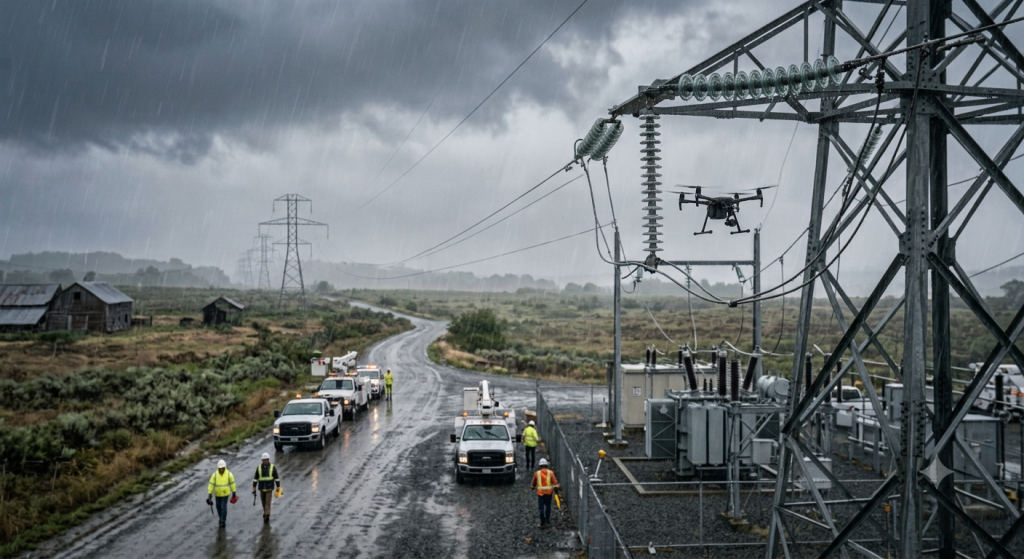
In the power industry, night inspections can bring about a number of key advantages, particularly when thermal imaging technology is used. This technology will not only clearly identify any overheated spots on the power lines, which are usually evident at night, but will also help to identify any damage in the power line connections that are not clearly visible in the daytime. Such night inspections will ensure the safety of the power lines.
Security and Surveillance
Drones are commonly utilized for nighttime security operations such as patrolling facilities such as factories and warehouses and for providing border patrol and event security. It is possible for the drone to monitor the area of interest with the use of night vision or infrared cameras and improve the level of security.
Search and Rescue Operations
Night search and rescue activities are performed with drones with infrared cameras. This helps locate individuals with unusual body heat distribution. The drones are effective in navigating and undertaking the rescue activities with increased efficiency and therefore minimize any risks involved in the process for a successful outcome. Emergency management and public safety are achievable by using night time search and rescue drones.
From a industrial point of view, the question “can drones fly at night” is not only about laws and regulations, but also about how we can make use of the opportunities provided by night flight for the improvement of flight efficiency, accuracy, and coverage, since the implementation of high-intensity anti-collision lights, night vision cameras, and highly accurate position systems on the drone would enable night flight for the improvement of coverage, accuracy, and efficiency. Safety and regulatory requirements are the basic conditions for night flight.
Advantages of Drone Fly at Night
In comparison to day operations, night flying provides several advantages, particularly for agricultural, industrial, line surveillance, and security applications. Making the most of night flying would bring greater efficiency and minimize interference for drone technology, making it highly useful.
Less Airspace Traffic
The air traffic at night is usually less as well. This reduces interference for the drones. When the drones are over an urban area or an industrial area, the reduced air traffic congestion minimizes the risk of collision for the drones in operation.
More Stable Temperatures
Generally, night flying will have more consistent temperatures and fewer atmospheric turbulence issues. This will provide drones with more consistent and predictable flying and hovering. This is particularly important in drone application for spraying crops. It will prevent issues that might come up because of thermal expansion and contraction.
Lower Wind Speeds
Wind speeds at night are generally lower than during the day. Calm conditions improve flight stability and operational accuracy. For agricultural drones, lower wind speeds reduce chemical drift and ensure uniform coverage. For inspection drones, it allows for stable hovering and precise imaging.
Better for Thermal Imaging
Where there is little to no natural light after dark, thermal cameras and infrared detectors operate better. For nighttime power line or search and rescue operations, clearer and more accurate information is presented with a better use of night thermal images, thus increasing efficiency and preciseness in detection.
Improved Security Monitoring
It should be noted that some of the frequency of such activities is more likely to be at night. Drones for security patrols and monitoring would be more effective in detecting anomalies during such hours. Night vision or infrared cameras would be more effective in monitoring during such hours compared to manual patrols during the day.
Summary
In summary, drones can fly at night, provided that operations are legal, compliant, and safe. Night flights require adherence to aviation regulations, equipped high-intensity anti-collision lights, operators trained in night flight procedures, and drones capable of stable nighttime performance. For industries such as agriculture, inspections, and security, night operations are not only feasible but often offer clear advantages in efficiency, precision, and monitoring. As drone technology continues to advance, nighttime flight is set to become a key trend in industrial drone applications.
Related Products