
Drone Methane Leak Detection vs Manual Inspection: Which Method Finds Leaks Faster?

Each hour methane leaks go unnoticed can lead to product loss in terms of regulatory risk as well as greenhouse gases emissions. Drone methane leak detection is helping operators inspect oil and gas pipelines, compressor stations, landfills, and biogas facilities more efficiently by covering large areas in less time than traditional methods.
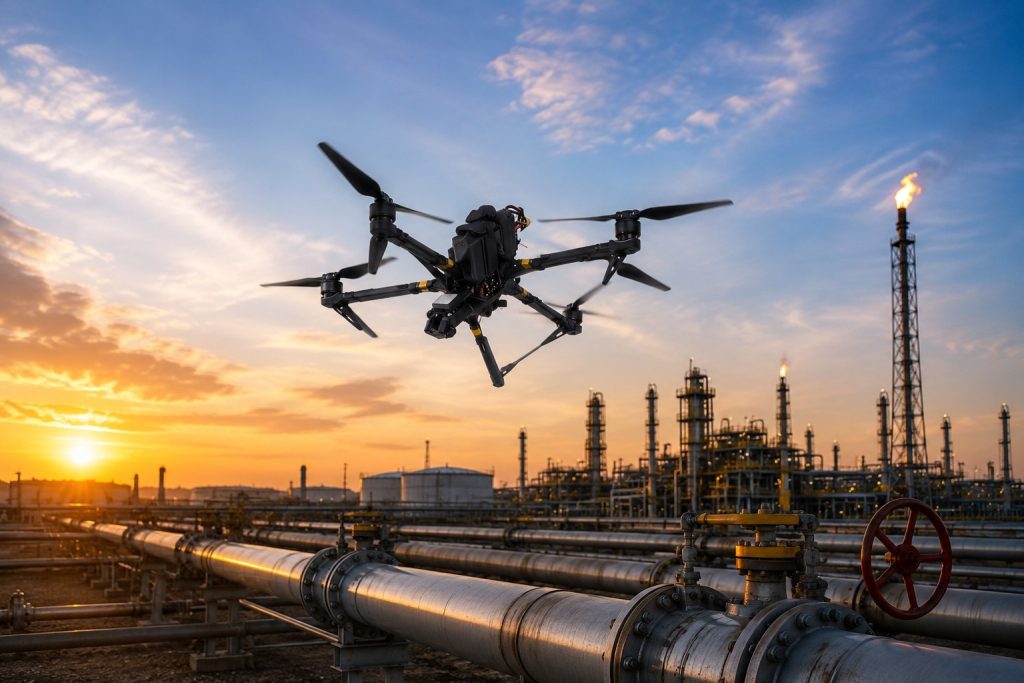
Although handheld instruments are still crucial for leak detection the growing infrastructure and hard-to-access resources have made traditional methane leak detection much more difficult and lengthy. The issue isn’t whether drones are able to detect methane leaks, but rather the place where they can provide tangible advantage over manual examination.
Table of Contents
Where Traditional Methane Leak Detection Loses Efficiency
Handheld gas detectors continue perform a crucial role in leak-proofing However, their effectiveness decreases dramatically as facilities grow bigger and more complicated.
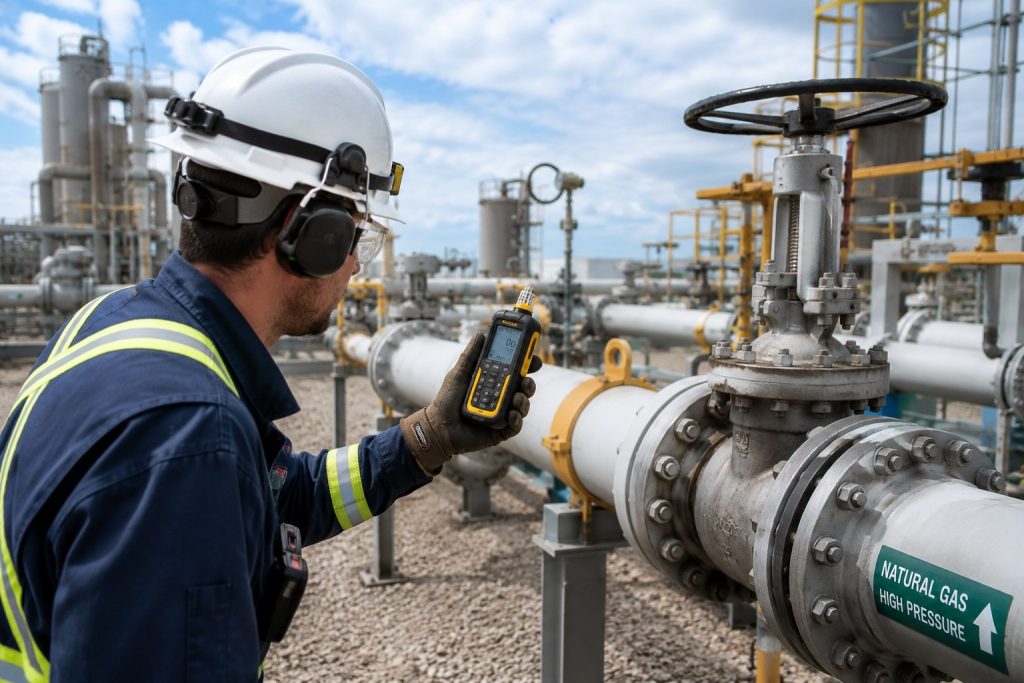
Walking Time Often Exceeds Detection Time
In large industrial sites, inspectors typically spend more time moving between inspection points than actually measuring methane concentrations.
Routine inspections may involve:
- Walking long pipeline corridors
- Climbing equipment platforms
- Waiting for safe access permits
- Recording inspection data
- Returning to the next sampling location
In the end, the measurements are often only one-third of the total time spent on inspections, which limits the quantity of infrastructure that could be inspected during a shift.
Point Sampling Leaves Inspection Gaps
The handheld detectors measure methane concentrations only at specific sampling sites.
In between two points of inspection, leaks that are intermittent or sources of low emission could go unnoticed, particularly when winds change quickly. Facilities with thousands of flanges and valves storage tanks and pipe joints need multiple measurement points, making the complete coverage of these facilities difficult in regular inspections.
Inspection Frequency Is Often Limited by Labor Availability
Many facilities monitor methane emissions on a regular basis, not due to equipment limitations however, because certified inspectors aren’t as plentiful.
While industrial equipment continues to grow and expand, ensuring that they are regularly inspected becomes more difficult and not worth the increasing the cost of labor.
Why Drone Methane Leak Detection Finds Leaks Earlier
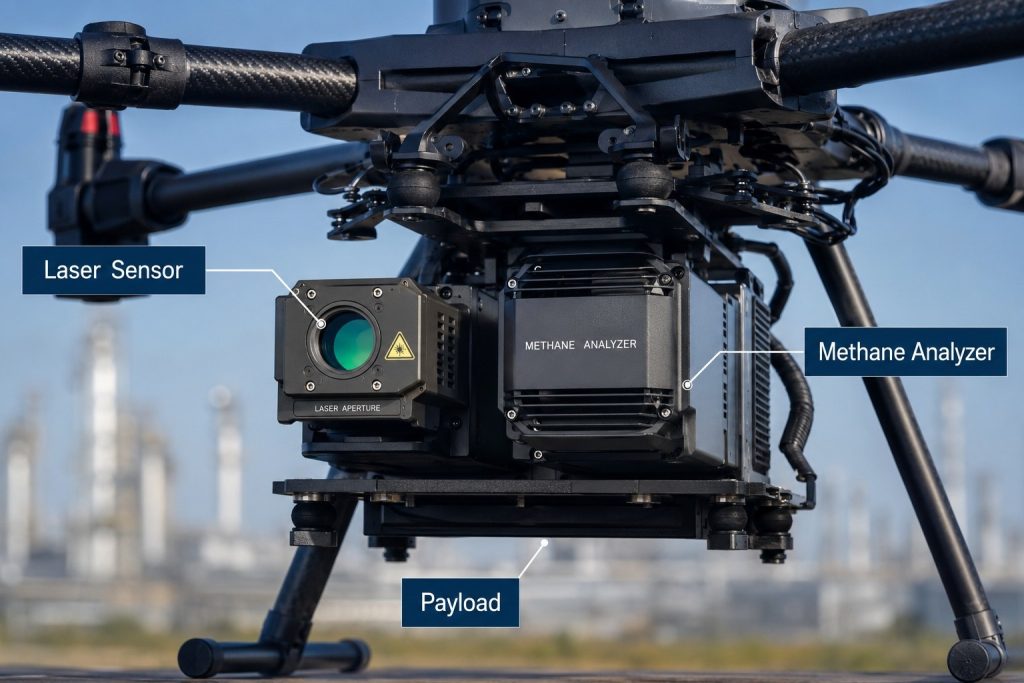
Modern drone methane leak detection systems use remote sensing technology to permit the inspectors to determine methane emissions, without physically stepping on each asset.
Remote Laser Measurement Instead of Contact Measurement
The latest methane drones for inspection usually include technologies such as Tunable Diode laser absorption spectroscopy or laser absorption sensing or an open path measurement of lasers.
In contrast to contact-based instruments remote laser sensors are able to detect methane levels from an uninvolved distance, without having to ask inspectors to go into potentially dangerous leak zones. This increases operational security as well as allowing quick screening of high or hard-to-access equipment.
Continuous Survey Instead of Point Inspection
Instead of collecting readings at intervals of several meters, drones take continuous measurements on predetermined flight routes.
Continuous data collection minimizes the risk of methane plumes being missing from the transient phase and gives a complete emission profile for pipes, storage facility or processing devices.
Flight Path Standardization Improves Repeatability
Manual inspections are often different based on the individual inspector as well as daily operational conditions.
Drone missions may follow the same GPS flight paths throughout each inspection.
This consistency makes it simpler to compare datasets from different periods to identify the gradual changes in emission and help with the long-term management of asset integrity.
Factors That Affect Drone Methane Leak Detection Accuracy
Even the most sophisticated methane sensors are dependent on accurate flight planning. Many operational variables significantly impact the measurement quality.
Flight Altitude
A flight that is too high can lower methane concentrations prior to them get to the sensor, which can reduce the sensitivity of the detection.
Low-flying increases sensitivities, but reduces efficiency of inspections and can pose safety risks within industrial structures.
Wind Direction
Methane is dispersed as a gas plume which alters with the wind’s conditions.
Professional inspection teams usually design their missions according to the prevailing winds, allowing drones to fly either downwind or crosswind based on the purpose of inspection and the expected leak behaviour.
Flight Speed
Laser sensors require a long reaction time to determine the gas concentration with precision.
Speedy flight can decrease the accuracy of data or cause distortions in methane concentration maps, especially when examining small leaks.
Sensor Warm-up
Many methane analyzers that use lasers require an initial stabilization time before the measurements can be considered reliable.
The absence of warm-up routines can cause an unneeded measurement uncertainty in the initial stages of an inspection.
GPS Positioning Accuracy
A precise positioning is crucial for finding the exact where the emissions are detected.
Precision GNSS and RTK positioning lets maintenance teams immediately return to leaks, which reduces time spent on troubleshooting during repair.
Best Practices for Professional Drone Methane Leak Detection
Professional inspection teams follow standardized drone methane leak detection procedures to improve consistency and reduce false positives.
Instead, they typically follow a layered workflow:
- Screening Flight – Quickly inspect large areas to find out if there are any unusual methane emissions.
- Verification Flight Check Flight Reinspect potential leak sites at lower altitudes for more reliable measurements.
- Ground Confirmation Utilize handheld gas detectors to determine leaks and their sources.
- Maintain and repair – Fix damaged valves and fittings, seals or pipelines.
- Post-repair Inspection – Conduct an inspection of the drone that will confirm that methane emissions are gone.
This approach is designed to increase inspection effectiveness while maintaining confidence in the regulatory process and reliable maintenance records.
Drone vs Manual Inspection
| Evaluation Factor | Drone Inspection | Manual Inspection |
| Coverage | Rapid inspection of large facilities | Limited by walking distance |
| Repeatability | Standardized GPS flight paths | Varies between inspectors |
| Safety | Remote measurement reduces personnel exposure | Requires close access to equipment |
| Labor Cost | Fewer personnel required for routine screening | Labor-intensive |
| Inspection Frequency | Easier to perform frequent inspections | Often limited by staffing |
| Leak Localization | Quickly identifies abnormal emission zones | Pinpoints leak source after close inspection |
| Documentation | Automatic flight logs, imagery, and sensor data | Mostly manual records |
| Data Traceability | Historical flight data supports trend analysis | More difficult to compare consistently |
Drone inspections have distinct advantages in coverage, reliability in documentation, coverage, and efficiency of operation. Manual inspections are essential to confirm leaks, making repairs, as well as conducting precise measurements which remote sensors can’t substitute for.
Together, these approaches make for a more comprehensive and reliable inspection plan than each approach by itself.
Combining Drone Methane Leak Detection with Manual Inspection
The most efficient methane leak detection systems include drone-based methane leak detection and targeted manual verification instead of relying on each method by itself.
Drones are able to quickly inspect large facilities and pinpoint potential sources of emission While handheld devices are utilized to identify leaks, help with repairs and check the results of maintenance. This method of layering improves inspection efficiency, minimizes the risk of exposure to personnel and produces more accurate reports of inspections.
As industrial facilities continue to grow and environmental regulations grow more stringent, integrating the two techniques is a feasible and adaptable strategy to provide faster safe, more efficient detection of methane leaks.
FAQ
Q1: Can drones detect very small methane leaks?
Yes, but the ability to detect is contingent on a variety of variables, such as the sensitivities of the methane detector and airspeed, the conditions of the wind and the magnitude of leak. The methane detection systems of industrial lasers detect low-rate emissions in acceptable conditions. However, very small leaks might require confirmation at a close range using handheld devices.
Q2: What types of facilities benefit most from drone methane inspections?
Drone-based methane inspections are especially beneficial for large and difficult-to-access locations, like:
- Oil and gas pipelines
- Compressor stations
- LNG terminals
- Landfills
- Biogas plants
- Refineries
- Petrochemical facilities
- Natural gas storage sites
They typically have a large infrastructure, where manual inspections take considerable time and effort.
Q3: How often should methane inspections be performed?
The frequency of inspections is based on regulations, asset condition and risk of operation.
Critical facilities can inspect weekly or every day, whereas lower-risk facilities generally follow monthly or quarterly inspection schedules. Since drones drastically cut down inspection times, many companies can boost inspection frequency, without correspondingly raising labor costs.
Q4: Can methane detection drones operate at night?
Yes. The majority of industrial drone platforms are able to carry out methane inspections in nighttime hours, provided that local aviation regulations allow for the flight, and the system is able to handle low-light conditions. In certain instances inspections conducted at night provide more stable conditions for the atmosphere that aid in the detection of gas plumes.
Q5: Are drone methane inspections affected by weather?
Yes. Weather can have a direct impact on the quality of inspection.
Strong winds can scatter methane plumes prior to reaching the sensor, and heavy fog, heavy rain or extreme weather can hinder flight safety and decrease the reliability of measurements. Professional inspection teams generally organize their work based on forecasts of weather conditions to ensure consistently good outcomes.
Q6: Can drones replace handheld methane detectors completely?
No. Drone inspections are ideal for quickly screening large areas and for identifying possible leak points. Handheld gas detectors are still crucial for close-range verification repairs as well as regulatory compliance and final confirmation following maintenance. The most efficient inspection programs incorporate both technology rather than relying on one or the other on its own.