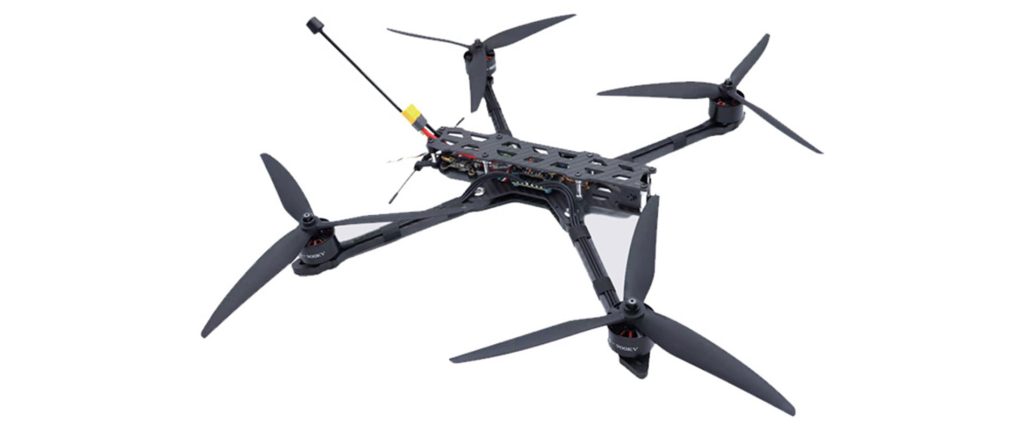
The Efficiency of Agricultural Spraying Drones Is Reflected in These 5 Key Areas

As the application of agricultural drones in global agriculture continues to expand, “efficiency” has become an unavoidable keyword. However, in actual consultations and industry discussions, many users still raise a very practical question: where exactly does the efficiency of agricultural drones lie?
Compared to traditional ground spraying equipment or manned aircraft, agricultural drones are not advantageous in terms of payload or flight time. Frequent battery swaps and refills can also easily create the impression of “low efficiency.” To truly understand the value of agricultural drones, we must move beyond simple speed comparisons and assess them from the perspectives of operational effectiveness, resource utilization, and long-term operational efficiency.
Precision Operation Boosts Drone Efficiency
The most important operational advantage of agricultural spraying drones comes from their ability to execute precise spraying operations. The conventional approach to spraying requires workers or heavy machinery to apply treatments across extensive agricultural areas. Agricultural spraying drones achieve their operational capabilities through three key technologies which include their ability to determine locations, their systems for planning flight paths, and their systems for controlling pesticide spraying operations. The system operates according to established flight paths and scheduled parameters which permit operators to control pesticide distribution with greater accuracy than traditional methods.
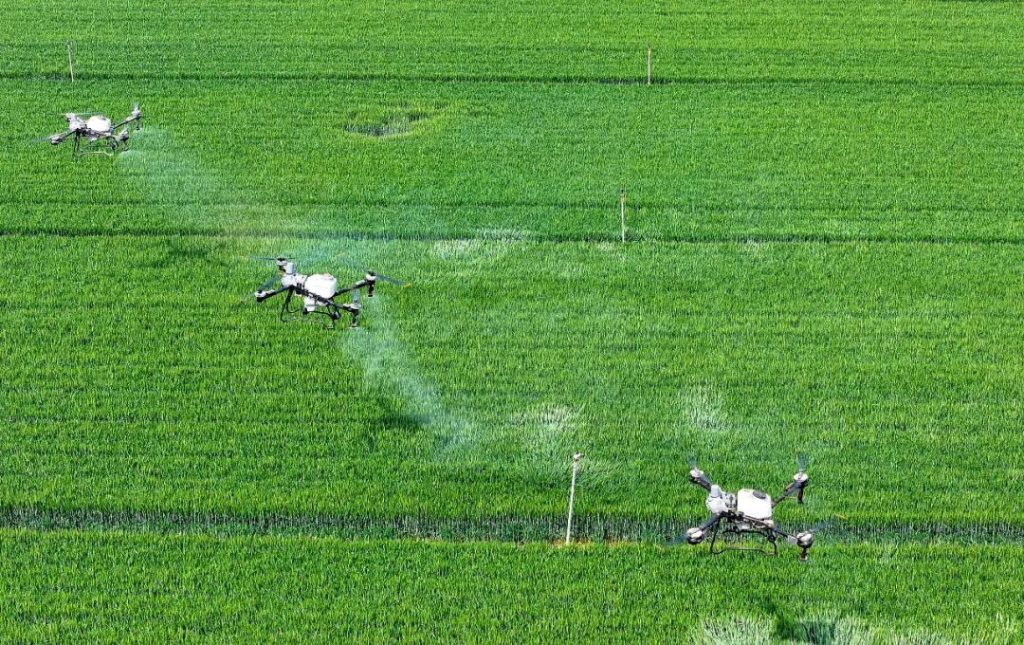
The current applications of precision spraying technology enable users to apply targeted treatment across multiple areas which match specific crop needs together with their current farming operations. The system achieves better results because it decreases both the areas where spray overlaps and the regions which remain untreated while enabling users to manage pesticide applications with greater precision. The effectiveness of agricultural drones depends on their ability to produce the desired outcomes from every spraying operation instead of measuring their performance through the total area treated within a specific time frame.
Efficiency Shines in Special Terrains
Agricultural spraying drones provide superior operational efficiency when used in difficult-to-navigate areas and distinct agricultural fields. The operational capabilities of large machinery face major restrictions in mountainous areas because hills and terraced fields and orchards remain inaccessible to these vehicles which create risks of damaging both crops and soil. Although people can use manual spraying methods to apply pesticides, this approach requires excessive work because it needs workers to spray multiple times when they fail to complete the job.
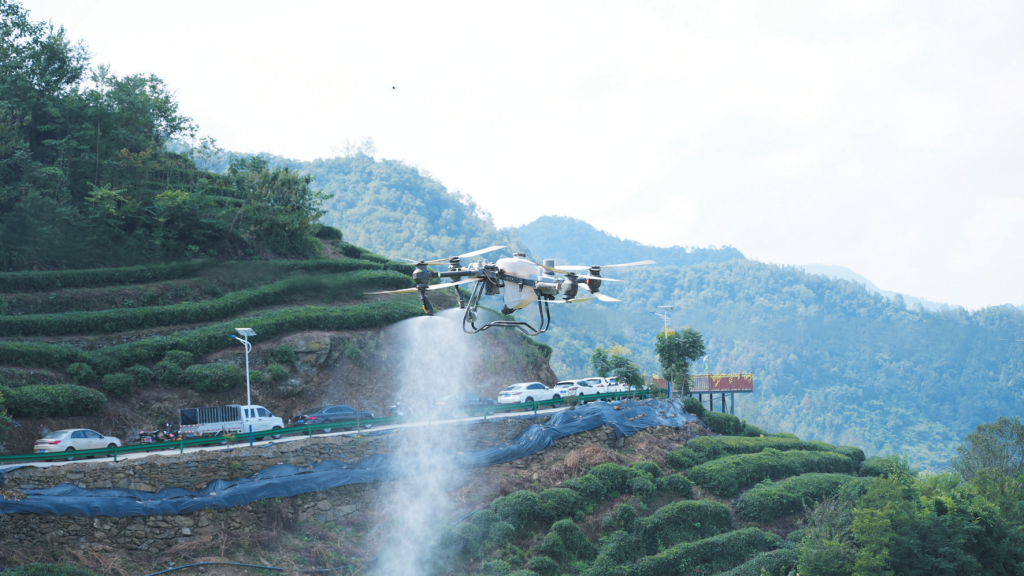
Drones accomplish their spraying operations through airborne methods which prevent any ground contact with agricultural fields. The ability to access this information directly delivers operational efficiency to organizations. The current situation requires organizations to measure their efficiency through their ability to execute tasks successfully while keeping their operational expenses at the lowest possible level.
Minimizing Crop Disturbance Improves Efficiency
The agricultural operations encounter multiple efficiency losses which take time to become visible. The continuous movement of ground equipment through farmland leads to two problems, which include crop destruction and soil compaction, which affects how roots develop and water enters the ground. The yield of crops experiences permanent negative effects because these issues develop throughout the entire growth period of the plants.
The use of agricultural drones enables operators to prevent hidden losses through their ability to operate without any contact with the earth. This advantage provides agricultural systems with vital benefits because it helps maintain stable soil structure and uniform crop growth conditions, which leads to better agricultural system performance.
Rapid Deployment Enhances Response Efficiency
The process of managing pests and diseases together with crop production requires that its timing needs to be executed with greater accuracy than its execution speed. The initiation of response operations after the problem has already begun to spread will result in increased expenses for problem resolution. Agricultural drones provide farmers with essential benefits because they need no complicated equipment for their operations which lets them become operational within a brief period.
The system provides rapid response capabilities which enable users to detect and control problems during their beginning stages, thereby decreasing total operational expenses. Efficiency here manifests as reducing the probability of problem escalation, not merely shortening the time of a single operation.
Data Accumulation Strengthens Long-term Efficiency
Agricultural drones in their current form function as spraying equipment while performing vital data collection operations. Drones use aerial photography together with operational recording to gather continuous information about crop development and changes in field conditions. The data obtained through this process enables the organization to make operational decisions which result in more effective pesticide application and management practices.
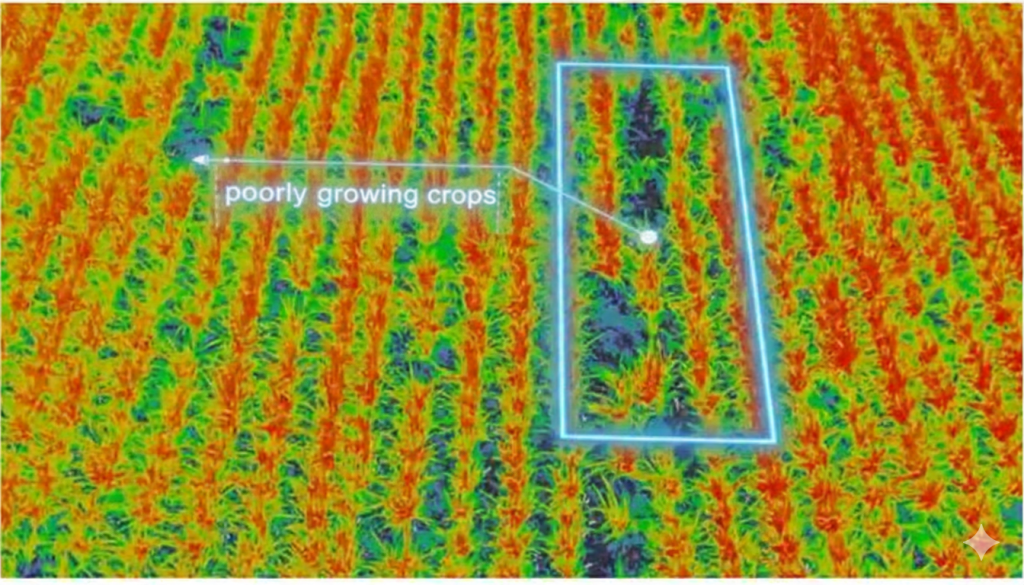
The process of accumulating data leads to better operational strategies which help organizations reach stability by decreasing their need for redundant work. The system uses data to enhance agricultural drone operations because the efficiency of these drones will keep increasing through different production cycles.
Defining the Limits of Drone Efficiency
The efficiency of agricultural drones should be evaluated through unbiased assessment because their performance does not always surpass traditional agricultural methods. High-capacity ground equipment and manned aircraft systems provide superior coverage efficiency in large flat areas of concentrated farmland. Agricultural drones demonstrate their greatest value in agricultural settings that demand precise management and have restricted access and need operational adaptability. The efficiency advantages of agricultural drones can be completely achieved only when they operate in appropriate application situations.
Conclusion
The operational capabilities of agricultural drones function as a supplementary resource for traditional farming equipment because they provide improved operational precision and decrease resource consumption while delivering stable results during particular farming activities. Agricultural drone performance derives from five essential elements which include precision spraying capabilities, their ability to navigate difficult landscapes, their compatibility with both crops and soil, their capacity for immediate operation, and their system of ongoing performance improvement through data analysis.
The correct standards and suitable application environments show that agricultural drones function as essential equipment which brings actual productivity enhancements to contemporary agricultural operations.
Related Products