
How to Evaluate the Environmental Reliability of a Cleaning Drone

Reliability in the environment is also essential in addition to flying time, load capacity, and efficiency for professional cleaning drones. Cleaning in an outdoor environment may put a drone through conditions such as wind, humidity, spraying of water, temperature variation, and complicated flow dynamics around buildings or photovoltaic structures.
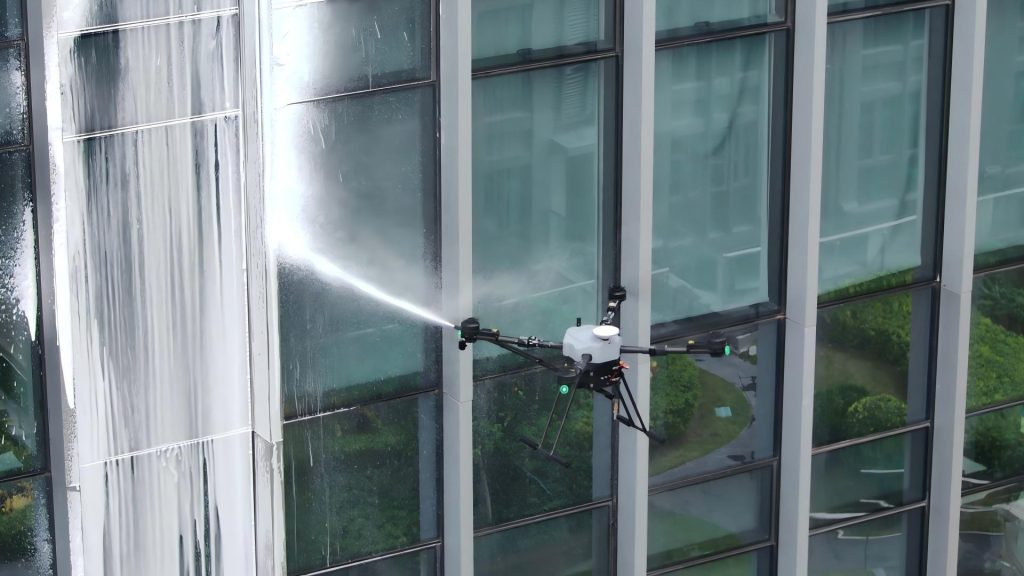
This implies that when one wants to buy a cleaning drone, one has to consider more than just flight characteristics of the drone.
Table of Contents
Why Environmental Reliability Matters for Cleaning Drones
These drones are used in very different settings compared to the traditional use cases for indoor and recreational drones. The facade cleaning drone is likely to be operated near glass or concrete surfaces while the photovoltaic cleaning drone would be operating in large open spaces under windy conditions.
Environmental conditions can affect:
- Flight stability and positioning accuracy
- Distance between the drone and the cleaning surface
- Spray consistency
- Battery consumption
- Cleaning efficiency
- Operational continuity
Therefore, environmental reliability is not simply a specification on a datasheet. It directly affects whether a cleaning drone can maintain consistent performance during actual projects.
What Does the IP Rating Mean for a Cleaning Drone?
IP (Ingress Protection) rating gives an idea about how well the electrical enclosure can safeguard the inner components from solids and liquids penetration.
The first digit indicates protection from solids and dust; the second digit indicates protection from water penetration.
However, an important distinction should be made:
IP rating is not the same as overall weather resistance.
Having a particular rating for an IP does not necessarily guarantee that the drone is capable of functioning without problems during heavy rains or winds and in all moist environments. Similarly, just because the cleaning drone employs a water cleaning method does not automatically mean that the whole unit is waterproof.
Where projects require a certain IP level such as IP65, IP66, or even higher, it would be wise to verify the protection level required from the manufacturer.
How Wind Resistance Affects Cleaning Drone Operations
Wind resistance is one of the most important environmental specifications for a high-altitude cleaning drone.
Wind can affect the aircraft’s ability to:
- Maintain a stable hover
- Hold its position near a structure
- Maintain a consistent cleaning distance
- Control spray coverage
- Manage the cleaning hose
Wind resistance for the VA-D15R Cleaning Drone is 12 m/s and Level 6 wind resistance rating. Also, the drone employs dual RTK positioning system, closed loop flight control, and front radar positioning for stable positioning at high altitude cleaning.
The VA-D50R Photovoltaic Cleaning Drone also has a maximum wind resistance of 12 m/s. Its dual RTK positioning and radar sensing system are designed to support stable operation at different working heights and around photovoltaic structures.
It is important to understand that a maximum wind-resistance value should be treated as a technical limit rather than a recommended continuous operating condition. Actual deployment should also consider gusts, building geometry, altitude, surface distance, payload, and site-specific weather conditions.
VA-D15R: Environmental Reliability for High-Altitude Cleaning
The VA-D15R has been developed for facade cleaning, photovoltaic panels, towers, traffic infrastructure, and other elevated installations. Specifications for the operation of the drone are a working temperature range of about -10°C to 40°C and operating humidity 0 to 90%.
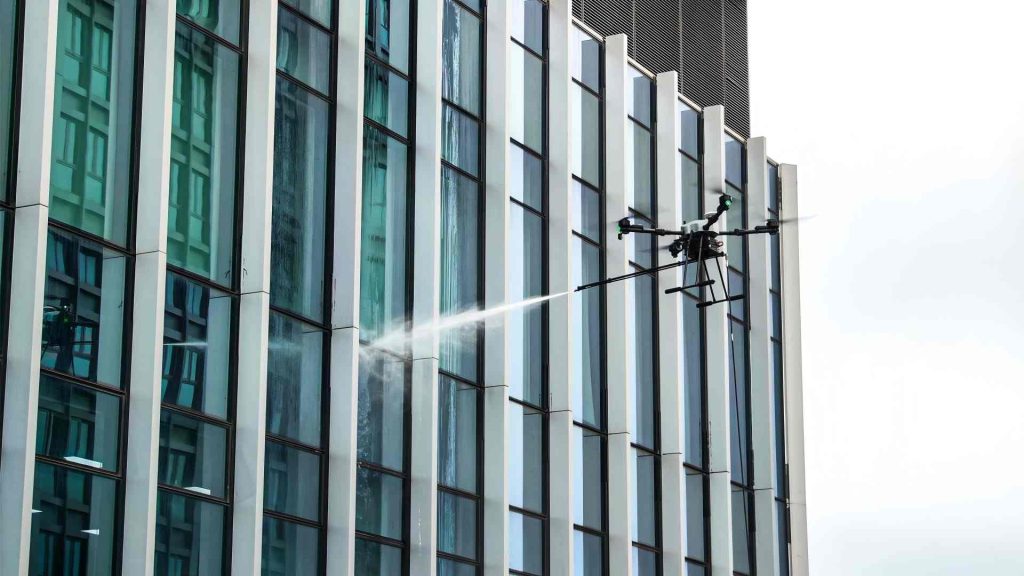
When it comes to facade cleaning, the reliability of the drone will also depend on the stability of its flight control. The D15R is equipped with dual RTK modules for positioning and obstacle avoidance radar which tracks the distance to the structures all the time.
The drone has been provided with a 100 m water hose and high-pressure cleaning system which means that the water source can stay on the ground while the drone does cleaning from the air.
VA-D50R: Environmental Reliability for Photovoltaic Cleaning
VA-D50R is mainly developed for cleaning PV modules, including utility scale ground mounted PV, commercial & industrial rooftop PV, distributed PV, and fishery-solar combination.
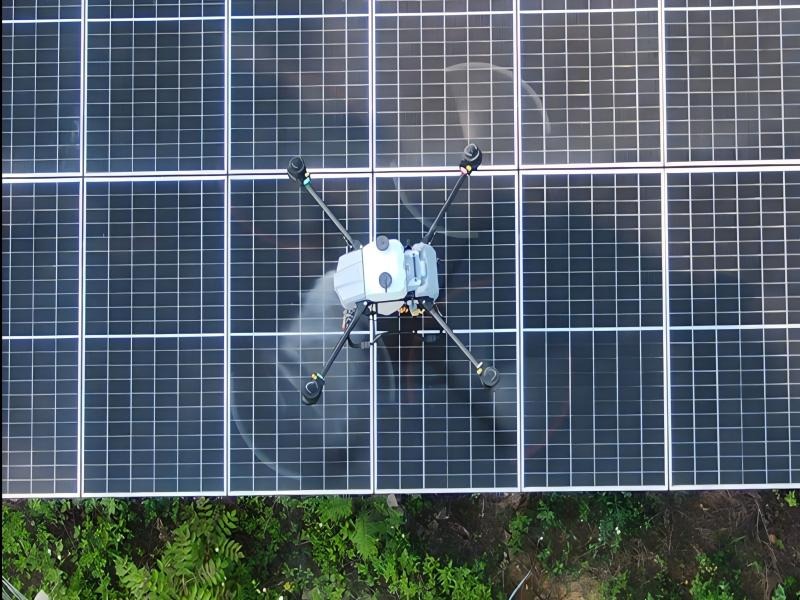
Its technical specifications include:
| Parameter | VA-D50R |
| Maximum Wind Resistance | 12 m/s |
| Operating Temperature | -10°C to 40°C |
| Operating Humidity | 0–90% |
| Water Tank Capacity | 50 L |
| Maximum Takeoff Weight | 105 kg |
| Cleaning Efficiency | Up to 690 m²/h |
The 50L water tank enables extended cleaning cycles, while RTK dual-positioning and intelligent obstacle detection ensure steady flying and accurate spraying.
This feature is very useful for solar power plant projects since environmental reliability should guarantee not only the safe flying of a drone but also the efficiency of its cleaning operations.
How to Evaluate a Cleaning Drone for Your Environment
Before purchasing a cleaning drone, buyers should evaluate the actual working environment rather than relying on a single specification.
Consider these five questions:
- What is the typical and maximum wind speed at the working site?
- Will the drone be exposed to water spray, splash, or high humidity?
- What temperature range will the equipment experience?
- Will the drone operate close to buildings, panels, towers, or other structures?
- Does the project require a specific certified IP protection level?
For high-altitude applications, wind resistance should also be evaluated together with RTK positioning, obstacle sensing, flight control, payload, and hose management.
Environmental Reliability Should Be Evaluated as a System
A reliable cleaning drone is not defined by one number alone.
Wind resistance + water protection + temperature range + humidity tolerance + flight stability + application conditions together determine whether a drone is suitable for a specific project.
Both of these cleaning drones have the same wind resistance specification, which is 12 m/s, and also they can work within certain temperature and humidity limits. The D15R is intended for cleaning at high altitudes and under different scenarios of work. The D50R is intended for cleaning photovoltaic modules.
If the project has some specific weather or environmental conditions, it is recommended to contact the supplier to check whether these operating conditions match the requirements.