Why Industrial Facilities Are Switching to Cleaning Drones for Cooling Tower Cleaning

Maintenance of cooling towers for facilities such as power plants, chemical plants, and data centers is never an easy job.
Manual cleaning involves the use of scaffolds and work platforms, and downtime as well. Particularly in the case of larger cooling towers, the combination of high humidity, high temperature, and confined space makes the maintenance even harder.
However, with increasing numbers of industrial organizations incorporating cooling tower maintenance drones to ensure safety and efficiency, we can see positive changes in this area.
What Problems Are Traditional Cooling Tower Cleaning Methods Facing?
Conventional cooling tower cleaning methods are widely used in industries and civil air-conditioning equipment. However, due to higher standards of environmental protection and equipment efficiency, the issues of conventional cooling towers are getting increasingly serious.
High Risk of Working at Height
However, most of the cooling towers are placed at elevated places or within limited spaces, which make the cleaning process a risky one.
Moreover, the conventional process of cleaning involves the participation of more than one person to work within dangerous environments. Thus, the time taken for construction becomes excessively high. Also, there are increased chances of hazards for the employees since biological matter present in the cooling tower can be spread by splashing of water.
High Downtime Costs
From the point of view of the customer, the issue is not the cost of the cleaning process but the cost of the machine being down. In cases such as power generation facilities, HVAC units, computer data centers, and petrochemical complexes, the cost of one long-term outage of the air conditioning unit will have a direct effect on productivity.
High Maintenance Costs
As industrial facilities expand, cooling towers also grow larger. Traditional methods are beginning to reveal problems:
- Uneven cleaning coverage
- Inability to reach hard-to-reach areas
- Unstable manual efficiency
- Longer maintenance cycles
This is why customers are looking for new solutions, and drone cleaning is at a crucial juncture, offering customers a new approach.
How to Clean A Cooling Tower Using A Cleaning Drone?
Unlike cleaning methods that require manual entry into cooling towers, the key advantage of cleaning drones lies in their ability to perform high-altitude and complex area cleaning without the need for external facilities.
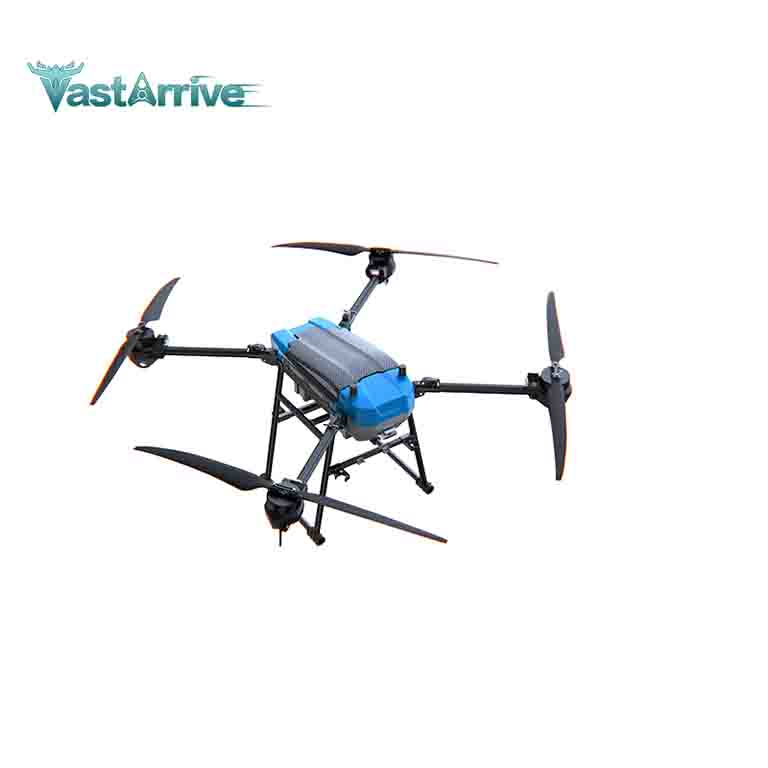
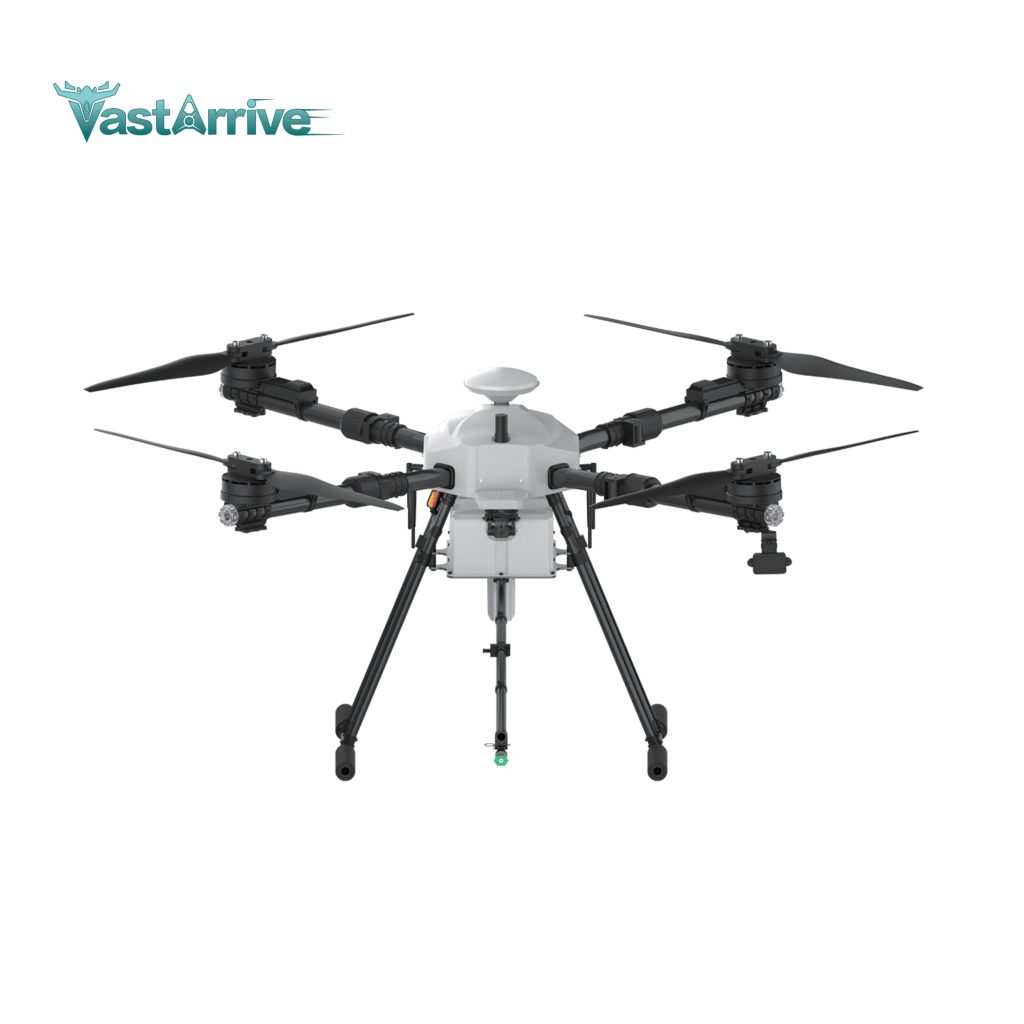
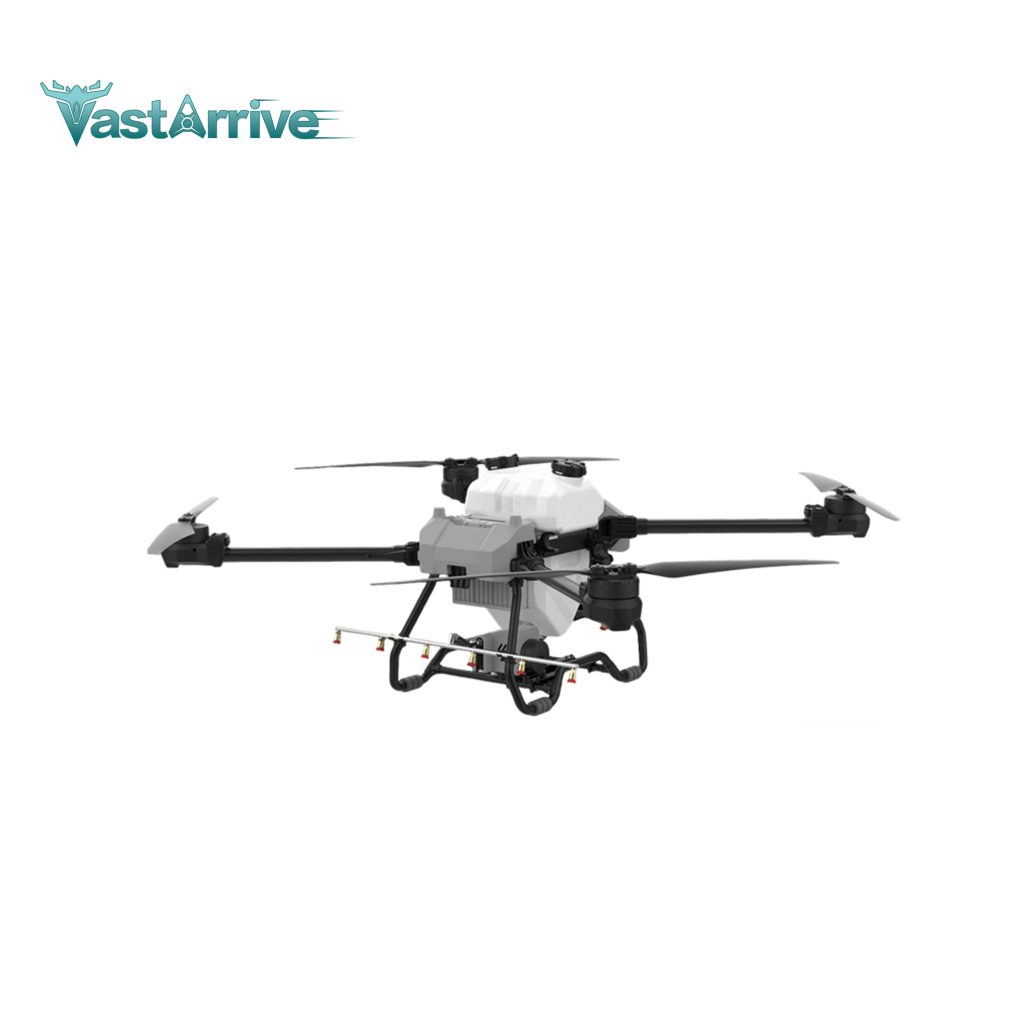
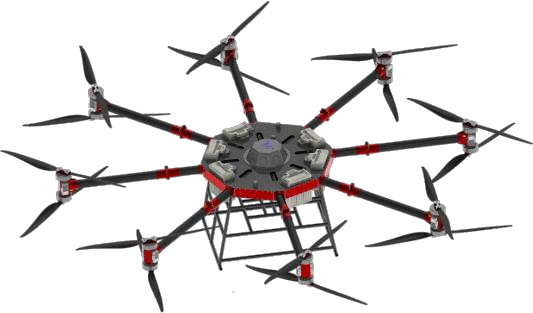
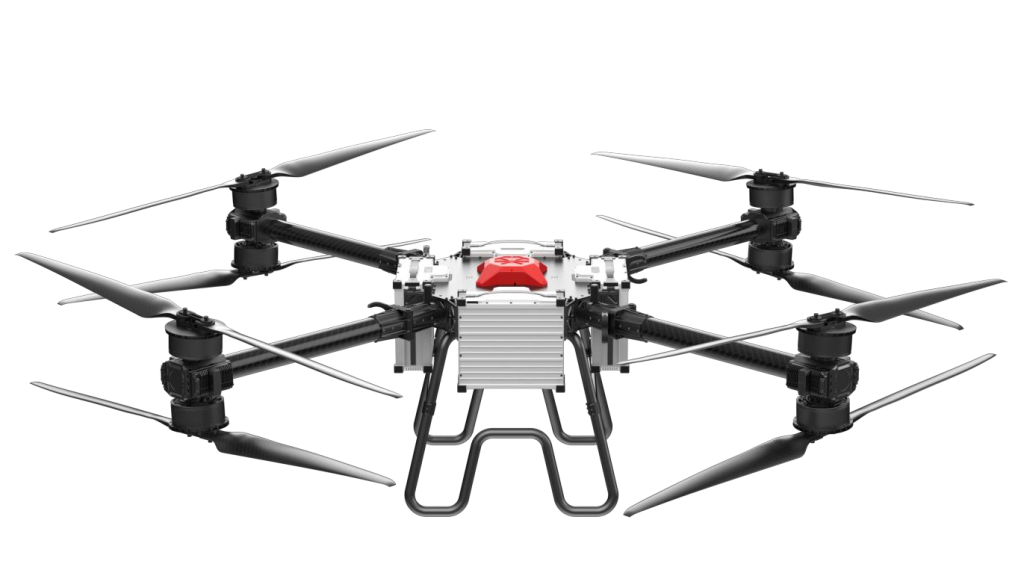
Taking VastArrive’s cleaning drone solution as an example, our drones are specifically designed for the maintenance of various industrial facilities, high-altitude structures, and complex environments. Once users purchase our products, they can successfully complete their designated tasks.
Step 1: On-site Assessment and Flight Route Planning
Before conducting the cleaning process, the operations team will make a visit to the site and map out the flight path of the drone prior to its mission, considering the height, structure design, contamination spots, fan placement, and distribution of ducts of the cooling tower.
This is an important procedure for huge industrial cooling towers since it prevents issues such as continuous manual movement.
Step 2: Connecting the Tethered Water Supply and High-Pressure Cleaning System
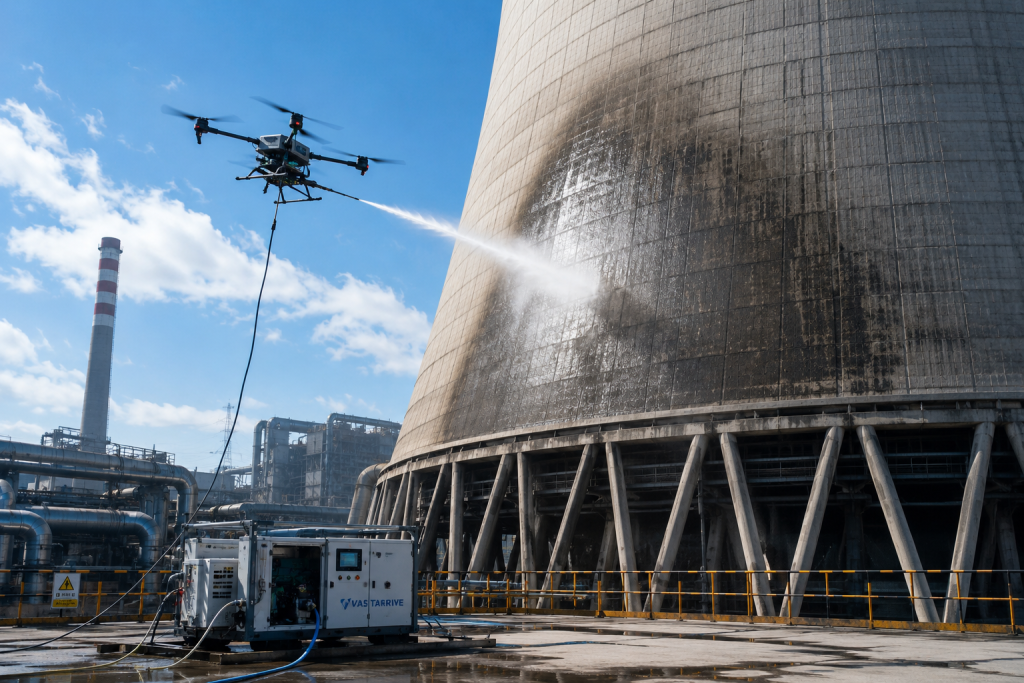
For the cleaning operation, the VastArrive drone uses a tethered water delivery system that provides continuous supply of pressurized water, cleaning agent, and steady power supply to the drone through ground-based machinery. Alternatively, a drone option with a 50L large-capacity water tank is also available.
Compared to ordinary backpack cleaning equipment, cleaning drones can achieve longer continuous operation, more stable spray pressure, and are more suitable for continuous cleaning of large cooling towers, without requiring frequent return trips for water replenishment.
Step 3: Entering the Cooling Tower Area
Once the drone is airborne, it moves into the upper part of the cooling tower following a predefined flight path, where it focuses on tackling problems such as dirt, biologic growths, scaling, and upper dust deposition in the cooling tower’s exterior surface. The drone is capable of hovering for extended periods and maintaining a consistent spraying distance.
Step 4: Continuous High-Pressure Spray Cleaning
After arriving at the destination, the cleaning drone continues to spray water through high-pressure nozzles. Some benefits of the VastArrive system include stable water pressure, uniform cleaning coverage, continuous long-term running, and minimized missed spots.
It is effective in flushing off the long-accumulated algae, sludge, scale, and dust inside the cooling tower.
Step 5: Secondary Spot Cleaning for Key Areas
For places that have been excessively contaminated like near the fan area, packaging area, unsealed area, and edge area, the drone operator can use his/her remote control to maneuver the drone to perform a secondary clean-up mission. Unlike manual climbing techniques, drones will maneuver faster compared to people.
Step 6: Complete Cleaning and Quick Deployment
The drone, once finished, lands back down on earth without having to remove much of the scaffolding or even aerial equipment used before.
For power plants, data centers, and even large industrial facilities, such kind of maintenance is free from the risk of long periods of time being off-line, as fast maintenance is now possible. This fast method of maintenance is becoming increasingly common.
Unlike the conventional ways of cleaning, the use of cleaning drones does not only enhance the process of maintaining cool towers, but most importantly reduces the danger involved in working at high altitudes.
This is why many industrial plants are increasingly relying on cleaning drones for their cooling tower maintenance.
Changes Brought About by Cleaning Drones
Compared with traditional manual cleaning methods, industrial cleaning drones are not only changing how cooling towers are cleaned, but also significantly improving maintenance efficiency, safety management, and operational costs.
| Comparison Item | Traditional Manual Cleaning | Cleaning Drone Cleaning |
| High-Altitude Safety Risk | Workers must operate at height, increasing safety risks | Ground-based remote operation reduces worker exposure |
| Scaffolding Requirements | Requires extensive scaffolding and lifting equipment | No large-scale scaffolding required |
| Cleaning Preparation Time | Long setup and deployment time | Faster deployment and operation |
| Downtime Duration | Longer maintenance shutdown periods | Reduced downtime and maintenance interruption |
| Cleaning Coverage | Difficult to reach high or confined areas | Easier access to complex structures and hard-to-reach areas |
| Cleaning Consistency | Uneven cleaning with possible missed spots | More stable and consistent spray coverage |
| Labor Requirements | Requires multiple high-risk workers | Reduces dependence on manual labor |
| Suitability for Large Cooling Towers | Cleaning efficiency limited by structure complexity | Better suited for large and complex cooling tower structures |
| Continuous Operation Capability | Manual cleaning is physically demanding and easily interrupted | Tethered water supply supports long-duration operation |
| Industrial Safety Management | Higher safety management pressure | Better aligned with modern smart maintenance trends |
FAQ
How often should cooling tower cleaning be performed?
The cleaning frequency depends on the operating environment, water quality, and industrial application. In most industrial facilities, cooling tower cleaning is recommended at least twice a year to prevent scale buildup, biological contamination, and reduced cooling efficiency.
Why is cooling tower cleaning important for industrial facilities?
Without regular cooling tower cleaning, facilities may experience:
- Reduced heat exchange efficiency
- Increased energy consumption
- Corrosion and scaling
- Bacterial growth such as Legionella
- Unexpected maintenance shutdowns
Regular maintenance helps improve system performance and equipment lifespan.
What is a cleaning drone used for in cooling tower cleaning?
A cleaning drone is designed to perform high-altitude and hard-to-reach cleaning tasks remotely. In cooling tower cleaning applications, drones are commonly used for:
- Exterior surface cleaning
- High-position washing
- Hard-to-access structure cleaning
- Reducing manual high-risk operations
Can cleaning drones clean inside cooling towers?
Yes. Industrial cleaning drones can access many difficult areas inside cooling towers, especially high or confined sections that are challenging for traditional manual cleaning methods.
Are cleaning drones safer than manual cooling tower cleaning?
Compared with traditional high-altitude cleaning methods, cleaning drones significantly reduce worker exposure to dangerous environments, including:
- High elevations
- Slippery surfaces
- Confined spaces
- Wet industrial environments
Ground-based remote operation improves overall maintenance safety.
Can cleaning drones reduce cooling tower downtime?
Yes. One of the biggest advantages of using cleaning drones for cooling tower cleaning is faster deployment and reduced setup time, helping facilities shorten maintenance shutdown periods.
What contaminants can cleaning drones remove from cooling towers?
Cleaning drones are commonly used to remove:
- Dust buildup
- Algae
- Sludge
- Mineral scaling
- Surface contamination
The cleaning effectiveness depends on the severity of buildup and the cleaning pressure used.
Do cleaning drones require scaffolding for cooling tower cleaning?
In many cases, no large-scale scaffolding is required. This is one of the major advantages of industrial cleaning drones, especially for tall cooling towers and complex industrial structures.
What industries commonly use cleaning drones for cooling tower cleaning?
Cleaning drones are widely used in industries such as:
- Power plants
- Petrochemical facilities
- Manufacturing plants
- HVAC systems
- Data centers
- Heavy industrial facilities
These industries often require safer and more efficient maintenance solutions.
Can cleaning drones fully replace manual cooling tower cleaning?
Not completely. Cleaning drones are highly effective for routine maintenance and high-altitude cleaning tasks, but severe corrosion, internal repairs, or heavy scaling may still require manual intervention.
In most facilities, drones are becoming part of a hybrid maintenance strategy.
What are the biggest advantages of using a cleaning drone for cooling tower cleaning?
The main benefits include:
- Reduced high-altitude risk
- Faster deployment
- Lower labor requirements
- Shorter downtime
- Better access to difficult areas
- More efficient maintenance operations
Is cleaning drone technology becoming more common in industrial maintenance?
Yes. As industrial facilities focus more on safety, automation, and operational efficiency, cleaning drones are becoming increasingly popular in cooling tower cleaning and other industrial maintenance applications.
Related Products