Are Agricultural Spray Drones Worth It for Small Farms?

As modern agriculture rapidly evolves toward intelligence and automation, more and more farmers are beginning to consider a practical question: Are agricultural spray drones worth it for small farms?
Traditional manual spraying is not only inefficient but also involves high labor intensity, significant pesticide waste, and potential safety risks for workers. The emergence of agricultural drones appears to offer a more efficient and precise solution.
So the question is: Is it truly cost-effective for small farms to use agricultural spray drones?
In this article, we will provide a comprehensive analysis from multiple perspectives.
What is an Agricultural Spray Drone?
An agricultural spray drone is an unmanned aerial vehicle (UAV) specifically designed for farming operations. It is mainly used for:
- Pesticide spraying
- Foliar fertilization
- Seeding (supported by some models)
Common drone payload capacities include 10L (small-scale), 20L (mainstream), 30L and above (for large-scale farms)
Compared to traditional equipment, spray drones offer features such as autonomous flight, route planning, and precise spraying. They are considered one of the key tools in precision agriculture.
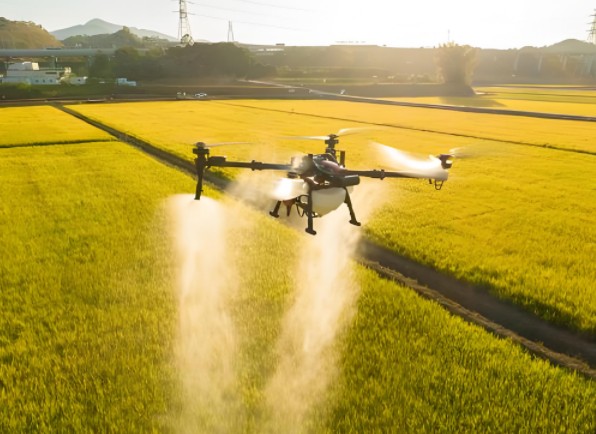
Key Advantages of Agricultural Spray Drones for Small Farms
As more pressure is placed on small farms to increase efficiency without breaking the bank, agricultural spray drones have emerged as an attractive and viable option. The following are some of the main benefits that justify the use of spray drones on small farms.
1. Enormous Savings on Labor Expenses
Whereas manual spraying will require the employment of a number of people, drone spraying requires only one individual to operate the drone.
It is particularly beneficial for areas characterized by high labor costs. It will help save money in the future.
2. Increased Efficiency
In comparison with manual spraying, drones are highly efficient as:
They can cover several acres within a short span of time.
Time is crucial during the peak season of farming; hence, efficiency leads to profitability.
3. Precision Spraying with Less Waste
Equipped with intelligent control systems, drones enable:
Targeted spraying, uniform coverage, and avoidance of repeated application.
This not only reduces pesticide usage but also minimizes environmental pollution and improves crop health.
4. Strong Performance in Complex Terrain
Drones offer clear advantages in challenging environments such as:
Mountainous areas, terraced fields, irregularly shaped farmland, and muddy or hard-to-access locations.
Where traditional equipment struggles to operate, drones can easily complete the task.
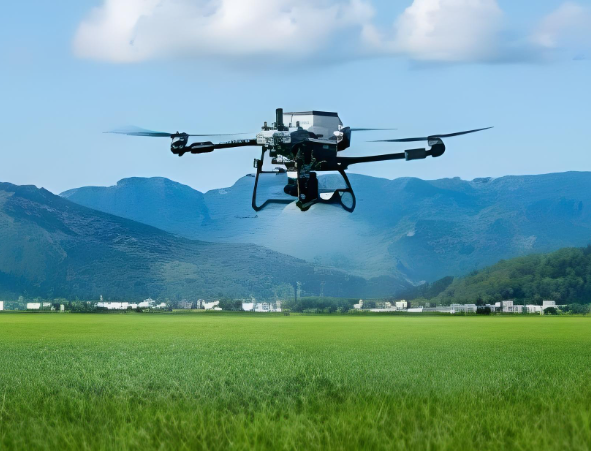
Cost Analysis of Agricultural Spray Drones
Before deciding whether agricultural spray drones are “worth it,” it is essential to fully understand their cost structure. Compared to traditional equipment, drones may require a higher initial investment, but their overall cost advantages become more apparent over time. The main costs can be analyzed from the following three aspects:
1. Initial Purchase Cost
The price of agricultural spray drones usually falls within the range of $3,000 and $15,000 and above.
The major determinants include:
Payload: This could be 10L, 20L, or 30L tank capacity, among others, that will affect the price of the drone
Brand: High-quality brands tend to be expensive due to their reputation and level of technology incorporated
Automated: This involves automated flying, automatic detection of obstacles, and RTK navigation system
In case of small farm use, a 20L model will be sufficient and cost-effective for you.
2. Operating Costs
The operating expenses of drones per day are rather affordable and consist of:
Expenses on batteries: batteries are expendable goods that need to be replaced or replenished periodically; also, there are expenses on recharging
Costs on pesticides: using drones makes it possible to save about 10% – 30% of pesticides due to their more precise application and higher atomization rate
Training: a bit of training may be needed, but the learning process is short enough, and a user can become skilled in a matter of days
Generally, drones increase efficiency and save on hidden costs, such as labor and time.
3. Maintenance Costs
Maintenance costs for agricultural drones are fairly low because they include:
Routine maintenance: Cleaning of nozzles, motor and electrical system check
Part replacement: Such as nozzle replacement, battery replacement, and propeller replacement
Software update: Many manufacturers update and optimize the system
Compared to large farming equipment, drones have fewer components and therefore experience lesser malfunctions. This leads to reduced maintenance costs and increased efficiency.
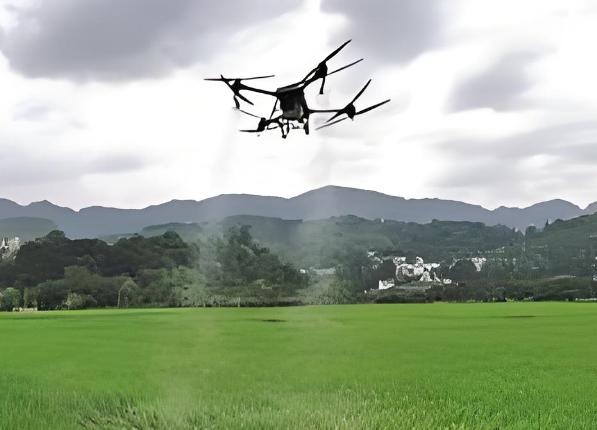
Return on Investment (ROI) Analysis of Agricultural Spray Drones
This is the key factor in determining whether agricultural spray drones are truly “worth it.” Rather than focusing only on the purchase price, it is more important to evaluate the long-term return on investment. For small farms, drones can deliver significant value in several areas:
1. Labor Cost Savings
Under traditional spraying methods, 2–3 workers are typically required for tasks such as mixing chemicals, spraying, and moving equipment. With a drone, one operator can handle the entire process.
If a farm requires multiple spraying sessions each year, the accumulated savings in labor costs can be substantial. This advantage is even more significant in regions where labor costs are rising or workers are scarce. In some cases, part of the investment can be recovered within one or two farming seasons.
2. Increased Crop Yield
With precise control over spray volume and coverage, drones ensure that pesticides or fertilizers are distributed more evenly across crops:
Reduced missed spots and overlapping applications
More effective pest and disease control
More consistent and healthier crop growth
As a result, crops are less affected by pests and diseases, creating a more stable growing environment and indirectly increasing both yield and quality. For high-value crops, this improvement can translate into higher market returns.
3. Reduced Pesticide Costs
Due to precise spraying and improved atomization, drones can significantly reduce pesticide waste:
- Avoid over-application
- Minimize drift and runoff
- Improve chemical utilization efficiency
In general, pesticide usage can be reduced by 10% to 30%. Over time, this not only lowers production costs but also helps reduce environmental impact, aligning with the goals of sustainable agriculture.
Best Use Cases of Agricultural Drone for Small Farms
Agricultural spray drones are not equally suitable for all farming scenarios, but in certain crops and terrain conditions, their advantages become especially significant. They are particularly well-suited for small farms that prioritize efficiency and precision management.
1. Orchards (Fruit Trees, Vineyards)
For crops grown in canopies, manual spraying does not ensure even and sufficient distribution of pesticide because the crops have a rather complex structure where some areas may be hard to reach.
Spraying drones can work at a low altitude and use fine mist application to cover evenly both sides of canopies. In particular, valuable crops, such as apple orchards and vineyards, would greatly benefit from this method of applying pesticides since their quality would improve.
2. Rice Fields
These areas of farmland are quite vast, have a lot of mud, which prevents efficient and timely spraying by hand or with the help of other machines.
With agricultural drones, the spraying process could be performed without damaging the crop and the soil, thus becoming rather efficient in terms of time and labor costs.
3. Cash Crops (Tea, Vegetables, etc.)
The quality standards for cash crops like tea and vegetables are quite high, and any contamination from pesticides becomes very crucial and sensitive.
With the drone spraying method, one can ensure that there will be no problem of over-spraying, making it safe for the crop and profitable too.
4. Mountain Farming
In mountainous or hilly areas, traditional machinery often cannot access farmland, and manual labor is both dangerous and inefficient.
Drones can easily adapt to complex terrain, operating across slopes and uneven landscapes. This greatly reduces labor intensity while improving safety and operational feasibility.

Comparison: Drone Spraying vs Traditional Spraying Methods
In agricultural production, the choice of spraying method directly affects operational efficiency, cost control, and crop health. With the growing adoption of agricultural drones, traditional manual spraying is gradually being replaced. A clear comparison highlights the differences between the agricultural UAV spraying vs traditional human spraying approaches.
| Item | Drone Spraying | Manual Spraying |
| Efficiency | High | Low |
| Labor Cost | Low | High |
| Precision | High | Low |
| Safety | High | Low |
| Pesticide Utilization Rate | High | Low |
Detailed Explanation
Starting with efficiency, drone sprayers will manage to spray an extensive area within a relatively short period due to their ability to work faster than manual spraying, which is limited by human capacity. This difference is even more pronounced when dealing with expansive farmlands.
Concerning labor costs, only one person would be needed to operate the drone during spraying, while traditional methods need multiple people, hence incurring more costs on labor.
As for precision, drone sprayers use intelligent spraying mechanisms and uniform mist spraying to be efficient, while manual spraying cannot guarantee uniformity in the process.
Speaking of safety, there would be reduced contact between humans and pesticides in case of drone spraying, unlike traditional methods, which pose a greater risk to the operators’ health.
Finally, concerning the efficiency of pesticide utilization, the drone sprayers guarantee no wastage compared to traditional methods.
Recommended Solution: VastArrive Agricultural Drone
In selecting an appropriate agricultural drone for your farm, it is not only necessary to look at performance and price, but you must also take into account the reputation and expertise of the company that manufactures the drone.
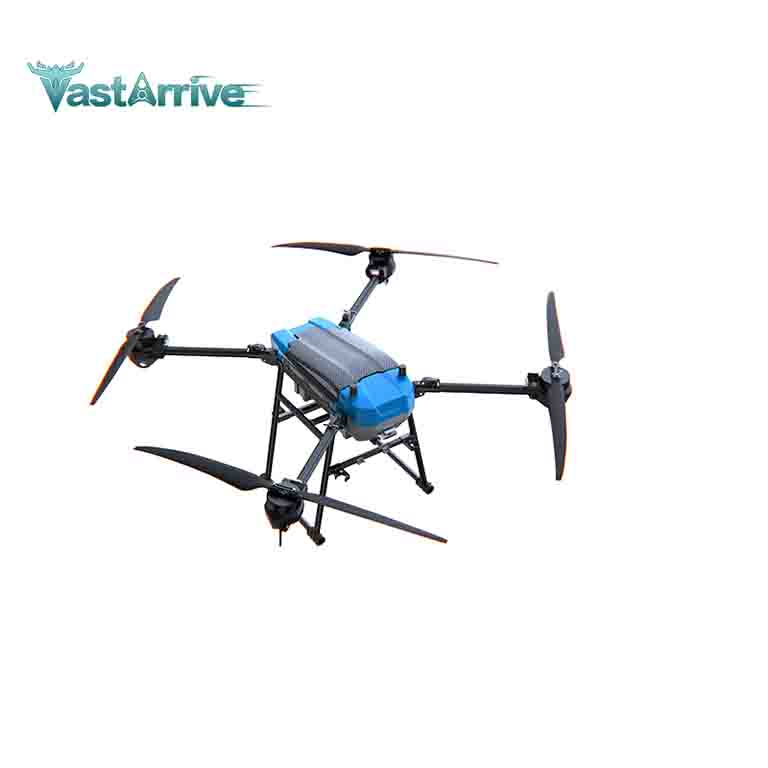
VastArrive Agricultural Drone is a specialized drone solution, developed to meet the needs of modern precision agriculture and to supply reliable and convenient spraying systems for farms of different scales.
These agricultural drones have several advantages:
Efficient spraying system: It comes with an advanced nozzle design that improves pesticide distribution and increases productivity.
Stable flight performance: Capable of adapting to complex farmland environments, including orchards, hillsides, and irregular field layouts.
Intelligent control system: Supports automatic flight path planning, reducing operational difficulty and allowing even beginners to get started quickly.
Farm-adapted design: Balances cost and performance, making it well-suited for small and medium-sized farm applications.
For users evaluating whether are agricultural spray drones worth it for small farms, solutions like the VastArrive Agricultural Drone can effectively lower the initial adoption barrier while improving overall return on investment (ROI).
If your farm is looking for a more efficient and precise spraying method, this type of professional agricultural drone is undoubtedly a solution worth serious consideration.
Related Products