How Are Drones Used For Agricultural Purposes?

Against the backdrop of global agriculture facing labor shortages, rising production costs, and increasingly frequent extreme weather events, the traditional farming model is gradually fading. In its place emerges a new era of agriculture driven by data and intelligent decision-making. At the heart of this transformation, agricultural drones are rapidly reshaping the landscape of farmland.
So, how are drones used for agricultural purposes? What tangible value can they bring to farmers and agribusiness operators?
Let’s start from the fields themselves and take a deeper look at this agricultural revolution that is quite literally taking flight.
What Are Agricultural Drones?
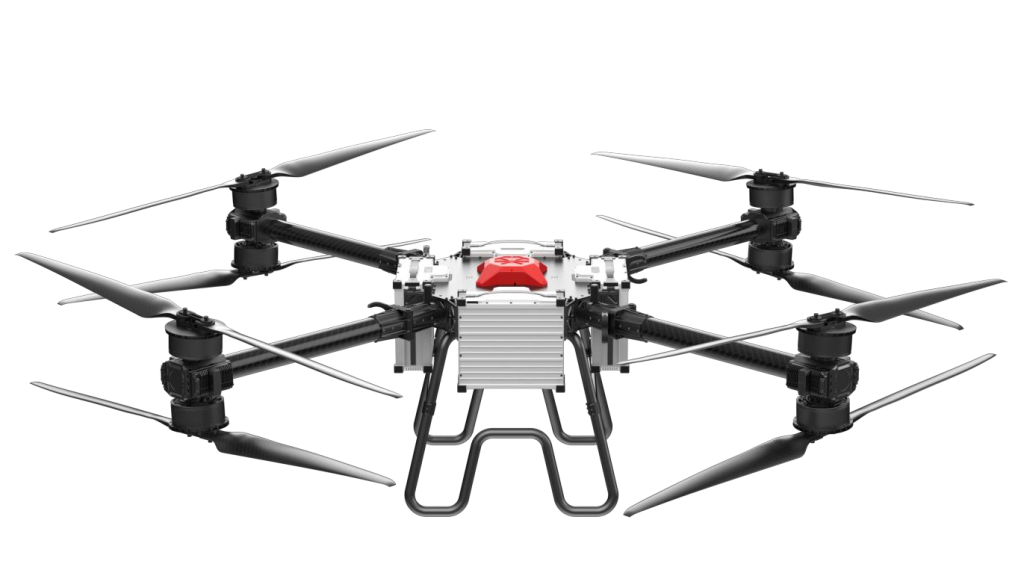
Agricultural drones are autonomous aircraft designed mainly for agricultural production and farm management. These are prepared to work in the remote areas, commonly having the core components of flight controller system, high precision GPS/RTK positioning system, multispectral or thermal imaging sensors, pesticide/fertilizer spraying system, data analysis and farm management software.
Depending on the specific service requirements, the agricultural drones can be classified into two basic types:
- Consumer-grade agricultural drones are suitable for small, and mainly used for basic aerial monitoring and crop inspection.
- Industrial-grade agricultural drones are perfect for big farming operations, giving emphasis on payload capacity, flying hours, and automated operation capabilities.
In our modern age, agricultural drones are much more than just “flying equipment.” They now operate as multifaceted farm management platforms related to data collection, intelligent analysis, and automated execution.
How Are Drones Used for Agriculture?
The role of agricultural drones has long gone beyond simple aerial photography. Today, they are deeply integrated into every critical stage of agricultural production, from pre-planting planning to post-harvest evaluation, creating a complete data-driven management cycle. The following five core applications represent the most valuable use cases of agricultural drones.
1. Crop Monitoring and Health Analysis: Giving Fields a “Visual Health Check System”
Modern agricultural drones are typically equipped with multispectral cameras, high-resolution RGB cameras, and even thermal imaging sensors. By analyzing data models such as NDVI (Normalized Difference Vegetation Index), farmers can accurately assess crop vitality and overall health conditions.
Compared with traditional manual field inspections, drones offer clear advantages:
Early detection of pests and diseases: Spectral data can reveal abnormal areas before visible symptoms appear.
Identification of water stress or nutrient deficiencies: Differences in light reflection across wavelengths indicate moisture and nutrient status.
Monitoring uneven crop growth: Precisely locating underdeveloped zones helps prevent overall yield loss.
Building long-term growth records: Periodic flights generate time-series data for trend analysis.
In real-world operations, drones can scan hundreds of acres within minutes, dramatically reducing labor time. More importantly, they provide quantifiable data rather than subjective judgment, making farm management more scientific and data-driven.
2. Precision Spraying and Fertilization: From Blanket Coverage to On-Demand Application
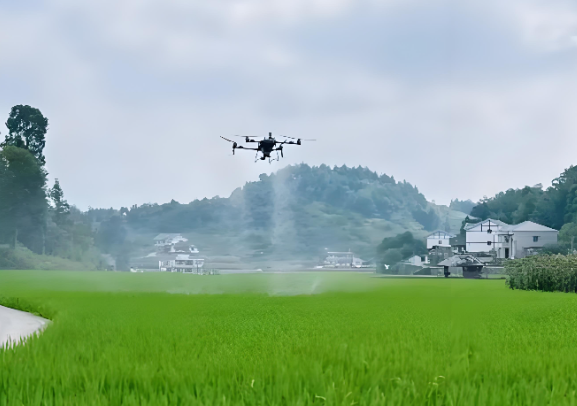
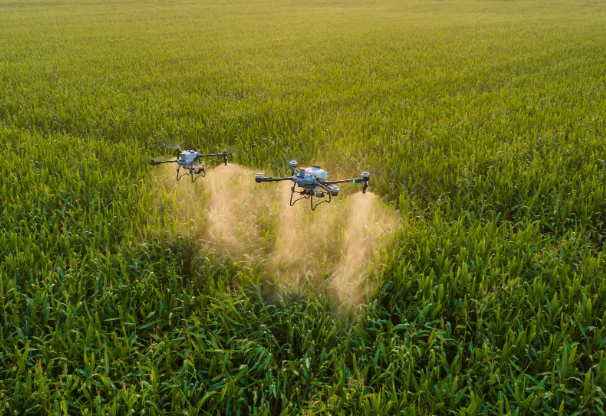
Drones for crop spraying have become essential equipment for modern farms. Through Variable Rate Application (VRA) technology, drones can apply pesticides or fertilizers differently across field zones based on crop growth data.
Key advantages include:
Reduced pesticide and fertilizer usage: Higher doses are applied only where necessary, while healthy areas receive less input.
Prevention of over-application and repeated spraying: Minimizing chemical damage risks.
Lower labor costs and improved safety: No need for workers to enter high-temperature or chemically exposed environments.
Improved crop uniformity and quality stability: Precision management leads to more balanced growth.
For large-scale farms, this targeted approach not only reduces costs but also significantly improves return on investment (ROI) while minimizing environmental impact.
3. Soil and Terrain Mapping: The Scientific Foundation of Planting Strategies
Fixed-wing or hybrid agricultural drones offer longer endurance and wider coverage, making them suitable for large-scale terrain surveying and 3D modeling.
Through aerial mapping and data modeling, farmers can achieve:
- Soil moisture and drainage analysis
- Elevation and slope measurement
- Precision seeding route planning
- Irrigation system optimization
In hilly or complex terrain areas, traditional surveying methods are time-consuming and labor-intensive. Drones can quickly generate high-precision topographic maps, providing scientific data to support agricultural planning.
During the pre-planting stage, such data helps farmers rationally divide planting zones and improve land-use efficiency.
4. Irrigation Management: Protecting Every Drop with Data
Water resource management is becoming increasingly important in modern agriculture. Drones equipped with thermal imaging systems can detect temperature differences across fields, helping assess soil moisture distribution.
Specific applications include:
Precise irrigation control: Adjusting water volume according to actual needs rather than uniform watering.
Detection of drought or waterlogging areas: Addressing issues early to prevent root damage.
Optimization of irrigation system efficiency: Reducing energy and water waste.
Improvement of crop resilience: Maintaining stable moisture conditions.
In regions facing water scarcity or frequent drought, precision irrigation management is not only about yield, it is essential for sustainable agricultural development.
5. Yield Prediction and Data Analysis: Moving Beyond Experience-Based Decisions
The large volume of data collected by agricultural drones can be analyzed using artificial intelligence algorithms to provide forward-looking insights.
Applications include:
Growth trend forecasting: Identifying slowing growth zones for early intervention.
Harvest timing decisions: Optimizing harvesting schedules and labor allocation.
Yield estimation: Planning sales, storage, and logistics in advance.
Risk assessment: Predicting the spread of pests, diseases, or potential climate impacts.
Decision-making based on data has become an essential trait in modern agriculture. In agriculture analytics, with consistent data accumulation and analyses, certain farmers are making advancements in season-wise profitability through better planting strategies every year after year, it further guarantees long-term competitiveness.
From “seeing clearly” to “understanding precisely,” and hence to “acting accurately,” agricultural drones are changing the agricultural landscape. Not only do they streamline operations, but they also lead agronomy into a new era of data and intelligent technology-driven advancements.
Types of Agricultural Drones
The various types of agricultural drones do not come without their unique attributes that could be suitable for the varied farming conditions and operational aspirations. Herein, a detailed description of three main types of drones is placed to further assist the farmers when selecting the most suitable type of drones.
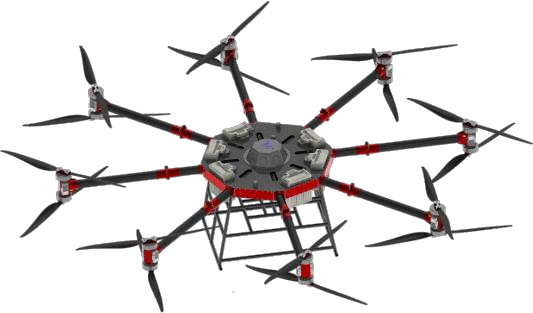
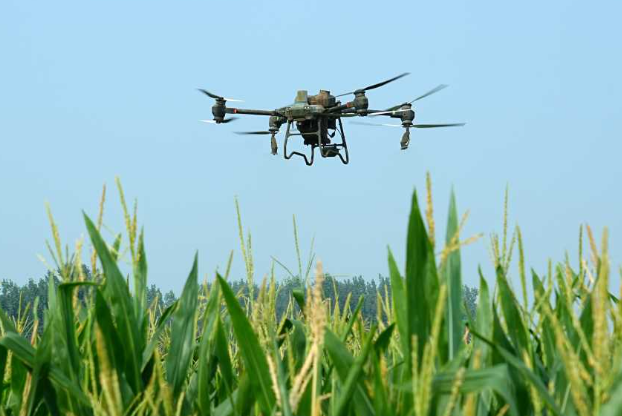
Multi-Rotor Drones
Multi-Rotor drones are the most commonly used type of drones in agriculture, with mostly four to eight rotors and offer excellent hovering stability and flight flexibility. They can hover over steadily low altitudes, making them the right choice for fine precision inspection or spraying in a specified area. Extolled for their endurance (limited in general) and usually operate over tens to hundreds of acres.
Multi-Rotor drones can usually find place to use in pest and disease monitoring, crop growth analysis, and small-scale precision spraying. For identification of areas affected by water stress or nutrient deficiency, drones can target field interventions to lead to uniformity in crop growth and enhance the overall yield. These drones are very easy to operate, minimal training, and this conveniently likens them to small farms and precision management phases.
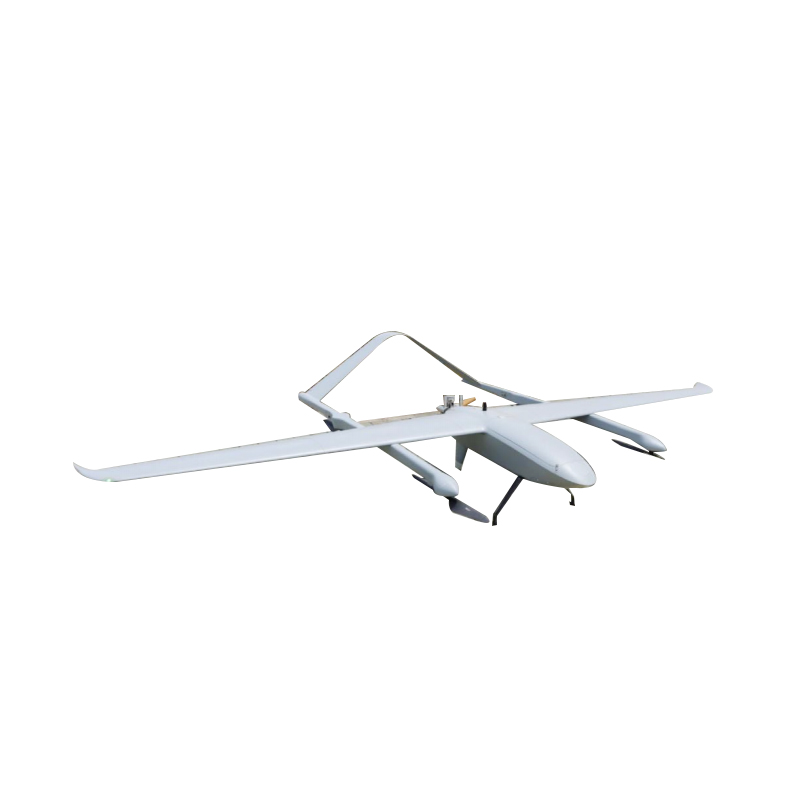
Fixed-Wing Drones
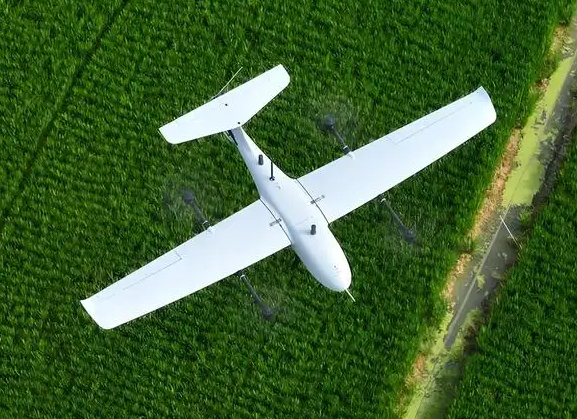
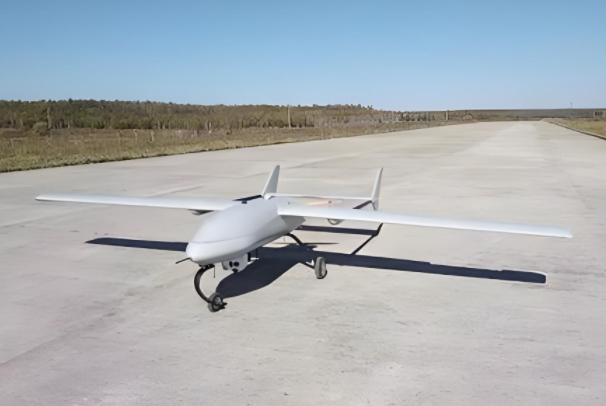
Fixed-wing drones are designed with wings that produce lift like that of an airplane. This design makes them, by default, highly efficient. Flying for very long distances is not a challenge for them. Fixed wing drones can be optimized for flight time and energy-saving, and large areas can be covered in one single stretch of their flight. This also helps in the flying speed-directly offering huge benefits of being faster.
Their primary applications include large-scale field surveying, soil moisture analysis, terrain modeling, and planning of seeding routes and irrigation systems. Fixed-wing drones are capable of rapidly generating high-resolution topographic maps and data relating to crop growth, thus providing a scientific basis for farm planning and decision-making.
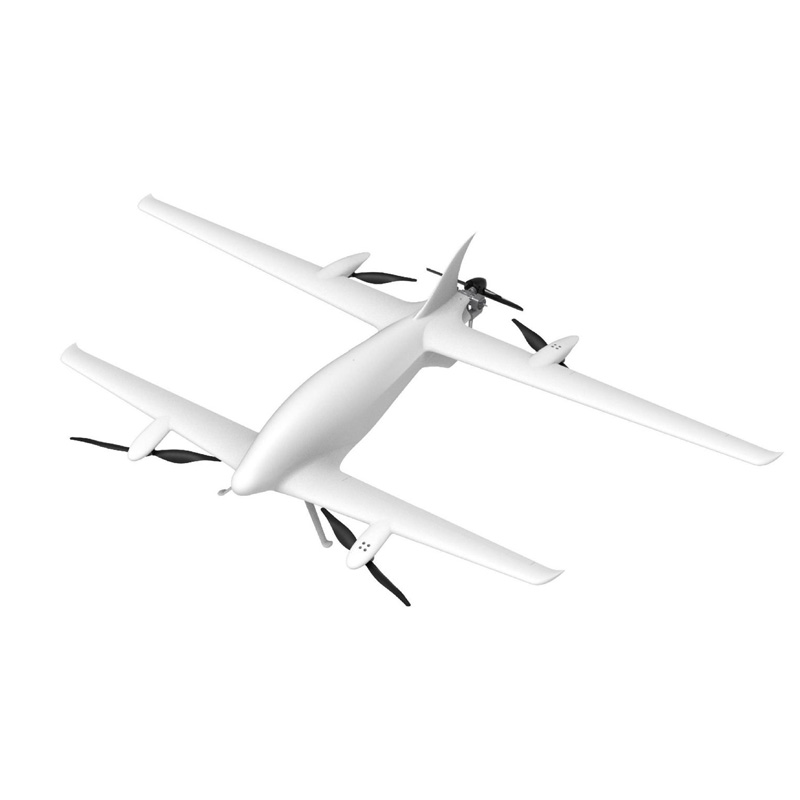
Hybrid VTOL Drones
Hybrid VTOL (Vertical Take-Off and Landing) drones allow you to have the best features of a multi-rotor and a fixed-wing configuration. There is the possibility that they can be launched and landed on space efficiency but travel long distances if need be. These hybrids work like multi-rotors and fly efficiently in distance paths when needed.
Hybrid VTOL drones have found a special application in comprehensive field operations especially in big farmers. They are particularly helpful in carrying out all the tasks like crop monitoring, precision spraying, and land survey simultaneously. The drones bring in much flexibility along with long endurance, making the very ken instruments for modern-day large-scale farms that deal with an intelligent approach to data-driven management.
Benefits of Agricultural Drones
The adaptation and integration of agricultural drones into traditional farming practices bring more efficiency, precision, cost savings, and sustainability, all to develop and enhance present farming practices. Below follows an overview of the main advantages.
Higher Operational Efficiency
Tasks that would historically have taken days or weeks to accomplish through human labor are now executed by drones in just a few hours. Field surveying, crop health imaging, and weed control can be conducted at high rates over big areas. The high efficiency saves lots of labor and accelerates farming operations, uncovering problems far earlier.
More Precise Decision-Making
The data collected by drones can be processed for information on crop status, soil moisture and moisture stress, threats from pests and diseases, etc. This would also lead to a session for informed decisions on various situations for farmers. This resulted in more even crops, higher total yield, and less field risks.
Stronger Cost Control
Precision fertilization and spraying enable drones to apply pesticides and fertilizers only where they are actually needed, thereby avoiding wasting them on extra and redundant applications. Cost is undoubtedly cut as well, compared to the traditionally blanket-applied alternatives, potential harm to the people and the environment is further minimized, eventually raising return on investment (ROI).
Supporting Sustainable Agriculture
Agricultural drones contribute to the environment by reducing chemical input, hence reducing pollution, structural advantage, and soil degradation. The management should also include precision water use, so as to ensure that nothing is wasted. And these are the same advantages and opportunities that make drones an important technology for sustainable farming.
Real-Time Monitoring Capabilities
Drones surveillance in locations such as around-the-clock field locations, during day-or night-time operations are indications of pests or drought stress or are showing noteworthy symptoms of growth is all happening during that time. Strict surveillance enables quick response to issues and long-term data for better management thus strengthening a highly efficient loop in agricultural management:
Drones reduce costs, promote sustainability, expand farm management sooner, and drive efficiency are aggie’s claims in general. Without these animals in your pocket, it is next to impossible to march toward modernized smart agriculture.
Agricultural Drones vs Traditional Farming
The integration of agricultural drones has truly swept the most traditional ways of any farming aspect. These newer overlords realize what drives efficiency through any channel at a specific place in time, with only benefits of managing the farm optimal. The table below compares the agricultural UAV and traditional human farming:
| Comparison Dimension | Traditional Farming | Agricultural Drones |
| Field Monitoring | Relies on manual inspection, time-consuming and labor-intensive, prone to oversight | Automated aerial monitoring, quickly covers large areas and generates quantifiable data |
| Pesticide and Fertilizer Application | Uniform spraying across the entire field, fixed dosage, prone to waste | Variable precision spraying, applies inputs according to crop needs, reduces waste |
| Decision-Making | Based on experience and intuition, lacks data support | Data-driven decisions, real-time analysis of crop health, irrigation needs, and yield predictions |
| Labor Costs | High labor input, low efficiency, especially on large farms | Automated operations reduce labor dependency, improve efficiency, and lower costs |
| Response Speed | Slow problem detection and handling, delays may cause losses | Real-time data feedback enables rapid issue detection and timely intervention |
VastArrive: Agricultural Drone Solutions
VastArrive is committed to offering innovative and well-calibrated drone systems that cater to farms. Our diverse cost catalogue includes a variety of multi-rotor spraying drones and fixed-wing types for simple or very extensive plantations.
A drone equipped with multi-spectral imagery and smart data processing technology, VastArrive drones are the limbs of the farmer to help them monitor crop health in real-time, manage a proper watering ratio, nurture growth, and mitigate buildings while supporting sustainable farming practices, reducing the cost of irrigation, too. Among our other services for clients in the future, whether we are selling crop monitoring services, precision agriculture surveys, or bumper forecasts, VastArrive will have a corner of trustworthiness in the management of modern smart agriculture.
Final Thoughts
Agricultural drones have changed the way contemporary agriculture is carried out. Precision agriculture systems are no longer about development without the inclusion of drones.
Agricultural drones not only better modern agriculture systems in comparison but also exceed conventional methods. Artificial Intelligence will bring agriculture data to a new stage, unleashing drivers like big data and IoT to lead agriculture into being a smart, green, and sustainable sector this time.
In addition, farm stands will no longer be able to fish for high returns while playing off costs and without a lot of current modish management machineries that are a very much important in making the farm competitive.
Related Products